 Spotify
 Apple Podcasts
 Podcast Addict
 Overcast
 Podcast RSS
BlackSky to accelerate broad-area collection work under NRO contract modification
Original Publication Date: 2026-06-09 12:30
The National Reconnaissance Office has awarded a contract modification to BlackSky Technology to speed up the development of its AROS broad‑area‑collection satellites. This new funding paves a direct path toward a flight‑ready system, enhancing the U.S. Space surveillance capabilities. BlackSky will focus on rapid deployment and integration of these high‑resolution imaging platforms. The move underscores the NRO’s commitment to expanding real‑time space situational awareness.
Iceye raises 1 billion euros to expand SAR satellite systems
Original Publication Date: 2026-06-09 11:24
Finnish radar‑satellite firm Iceye has raised more than €1 billion in a Series F round, valuing the company at over €10 billion. The funding, led by General Atlantic with a broad group of investors, will help the company double its annual satellite production from 50 to 100 by 2028. Iceye already secured multi‑hundred‑million‑euro contracts with Poland and Germany, and its 2025 revenue topped €250 million with a €1.5 billion backlog largely in national‑security work. The capital boost comes as Europe ramps up space‑defence spending, positioning Iceye at the forefront of sovereign intelligence from space.
Preview: NASA to unveil Artemis 3 crew, provide updates on mission
Also covered by: Spaceflight Now, NASA
Original Publication Date: 2026-06-09 10:03
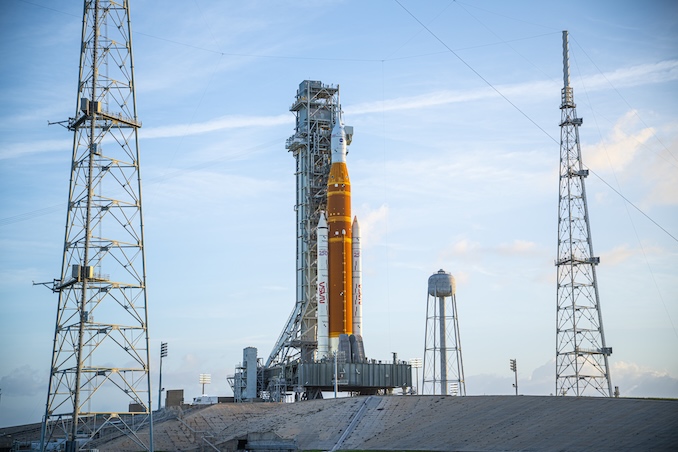
NASA has announced the crew for Artemis III, the 2027 test flight that will validate Orion’s rendezvous and docking with test landers from Blue Origin and SpaceX. The mission will stay in low‑Earth orbit, docking with either Blue Origin’s Blue Moon or SpaceX’s Starship to decide which vehicle will carry the first U.S. Crewed lunar landing. Details such as mission duration, docking times, and whether the crew will transfer to the landers remain undisclosed, while both companies are keeping their lander specifics tight‑lipped. Meanwhile, the Space Launch System and Orion spacecraft are poised at Launch Complex 39B, and a Blue Origin New Glenn rocket recently exploded at Cape Canaveral.
Investor Scrutiny Mounts for York Space Systems Following Pentagon Contract Turmoil
Original Publication Date: 2026-06-09 20:35

Pomerantz Law Firm has launched a full investigation into alleged securities fraud involving York Space Systems, representing investors who claim they were misled. The firm announced the inquiry on June 9, stating it will scrutinize the company’s financial disclosures and any potential insider trading. Early indications point to possible misstatements about the firm’s revenue and product development timelines. The investigation aims to determine whether investors suffered losses due to deceptive practices.
Eutelsat and Tototheo Global Forge Partnership to Deliver LEO Connectivity Across Maritime and Government Sectors
Original Publication Date: 2026-06-09 16:23

Eutelsat, the global satellite operator, has signed a strategic partnership with Tototheo Global, a leading maritime technology and communications provider, to distribute its low Earth orbit satellite services. The collaboration will enable Tototheo to offer Eutelsat’s LEO connectivity to maritime customers, enhancing coverage and reliability at sea. By combining Eutelsat’s advanced satellite infrastructure with Tototheo’s expertise in maritime solutions, the alliance aims to deliver faster, more secure communications to ships worldwide. This partnership marks a significant step in expanding LEO satellite reach across the global maritime industry.
Marlink Equips Groupama-FDJ Cycling Team with Hybrid Starlink and LTE Network
Original Publication Date: 2026-06-09 16:05

Marlink, a global managed services provider, has been chosen by French cycling powerhouse Groupama‑FDJ United to install a cutting‑edge hybrid communications network on its race vehicles. The new system will combine satellite and LTE connectivity to deliver real‑time data, navigation, and media streaming during races. By ensuring reliable coverage across all terrains, the partnership aims to give riders a tactical edge and enhance fan engagement. This deployment marks a significant step forward in high‑performance sports communications.
Astroscale Launches Industry Initiative to Study Atmospheric Impact of Spacecraft Reentry
Original Publication Date: 2026-06-09 14:38

Tokyo-based Astroscale Holdings has launched the Atmospheric Impact of Reentered Spacecraft (AIRS) initiative, a new collaborative effort to study the environmental effects of spacecraft reentry. The program brings together industry leaders, research institutions, and regulatory bodies to develop strategies for mitigating pollution from space debris. By mapping atmospheric impact, AIRS aims to inform safer deorbiting practices and reduce future environmental risks. This partnership marks a significant step toward responsible space operations.
Qorvo Unveils Compact X-Band Radar Module to Enhance Defense System Performance
Original Publication Date: 2026-06-09 14:30

Global connectivity and power solutions provider Qorvo unveiled a new X‑band radar front‑end that boosts operational performance for defense systems while keeping size, weight and power consumption unchanged. The compact module delivers higher sensitivity, broader bandwidth and advanced signal processing to support advanced radar applications such as surveillance, target tracking and electronic warfare. Qorvo’s solution is designed for rapid integration into existing platforms, reducing development time and cost. The company says the new front‑end will help defense contractors meet evolving mission requirements without adding bulk.
Flight Dynamics Research Facility Characteristics
Original Publication Date: 2026-06-09 20:47

NASA’s Flight Dynamics Research Facility, a 131‑foot tall subsonic wind tunnel, features a 20‑foot diameter by 24‑foot high vertical test section for studying aircraft stability, controllability, free‑fall, spin, and spin‑recovery dynamics. The tunnel operates at speeds up to 172 ft/s (117 mph) and dynamic pressures up to 35 psf, with a Reynolds number range of 0 to 1.10 × 10⁶ per foot. It uses air as the test gas, maintains an actively cooled temperature of 79 °F, and provides a controlled atmospheric environment for advanced flight research. This facility supports NASA’s ongoing efforts to refine flight dynamics and safety for atmospheric vehicles.
Booster 20 into Cryogenic Testing ahead of Starship Flight 13
Original Publication Date: 2026-06-09 12:59

SpaceX’s Booster 20 has rolled out from Mega Bay 1 to Massey’s test site, where it is beginning a rigorous cryogenic campaign to verify the integrity of its liquid oxygen and methane tanks and internal systems. The move was delayed by power‑pack hiccups on the SPMTs, but the booster arrived without engines or grid fins, as these tests do not require propulsion. Meanwhile, the upper‑stage Ship 40, the first Starship to carry Raptor 3 engines, is re‑rolling in engines after an extended pause to incorporate lessons from Flight 12. If all goes well, both vehicles will return for final checks and a wet dress rehearsal, with Flight 13 slated for launch between July and August.
FCC Gives Amazon Leo More Time to Launch
Original Publication Date: 2026-06-09 17:25
The FCC has granted Amazon Leo a waiver, extending its deadline to deploy half of its 3,232 planned satellites but still requiring full deployment by July 30, 2029. Amazon has only launched 331 satellites—about 10%—and cited launch capacity limits and other delays as reasons for falling behind. The waiver removes Amazon's priority spectrum access after July 30, 2026, unless it hits the 50% milestone by March 30, 2028, or can prove 50% built and launched by October 30, 2027. This move aims to boost competition against SpaceX's Starlink while encouraging timely satellite deployment for the American public.
Artemis III Astronauts Will Meet SpaceX, Blue Origin Landers in Earth Orbit
Also covered by: SpaceNews, NASASpaceFlight, NASA, Space.com
Original Publication Date: 2026-06-09 17:24
NASA has announced the crew for its Artemis III mission, a two‑week low‑Earth‑orbit test flight that will dock the Orion capsule with prototypes of Blue Origin’s Mark 1/Mark 2 and SpaceX’s Starship V3 landers.
Reflex Aerospace Taps Arkadia Space for 2027 Mission
Original Publication Date: 2026-06-09 12:35

Reflex Aerospace has selected Spanish startup Arkadia Space to supply the chemical propulsion system for its 200‑kg satellite, slated to launch on SpaceX’s Transporter‑20 rideshare mission in 2027. This will be the first time Reflex uses a chemical propulsion system, and the first commercial mission to employ Arkadia’s green hydrogen‑peroxide engine, the Triton 5N. Arkadia’s rapid build capability and ITAR‑free status gave Reflex the speed and supply‑chain independence needed for its tight schedule. The partnership also positions Arkadia as a growing player in the propulsion market, following recent contracts for launcher reaction‑control thrusters and plans for larger bipropellant systems.
ICEYE, Isar Aerospace Announce Significant Funding Rounds
Original Publication Date: 2026-06-09 12:30

This morning, European space firms ICEYE of Finland and Isar Aerospace of Germany announced multi‑hundred‑million euro funding rounds, raising a combined €720 million. ICEYE secured €450 million in a Series F at a €10 billion valuation, with a secondary placement pushing the total above €1 billion, while Isar raised €270 million in a Series D ahead of its Spectrum rocket’s qualification flight. Both rounds were led by prominent investors—General Atlantic for ICEYE and a consortium of European funds for Isar—underscoring growing continental support for sovereign space capabilities.
These record-breaking black hole winds could create a category 79 hurricane on Earth
Original Publication Date: 2026-06-09 21:04

Astronomers have spotted the fastest black‑hole wind ever seen in ultraviolet light, blowing from the quasar J2318 at a staggering 30% the speed of light. The wind, driven by intense radiation from a 1.7‑billion‑solar‑mass black hole three billion light‑years away, is likened to a “category 79 hurricane” – far beyond any Earthly storm. These powerful outflows can sweep away the gas that fuels star formation, offering a crucial clue to how supermassive black holes regulate the growth of their host galaxies. The discovery, made using data from the Sloan Digital Sky Survey, underscores the dynamic interplay between black holes and the cosmos.
Thruster breakthrough? New 2-in-1 propulsion system is about to get an in-space test
Original Publication Date: 2026-06-09 20:00
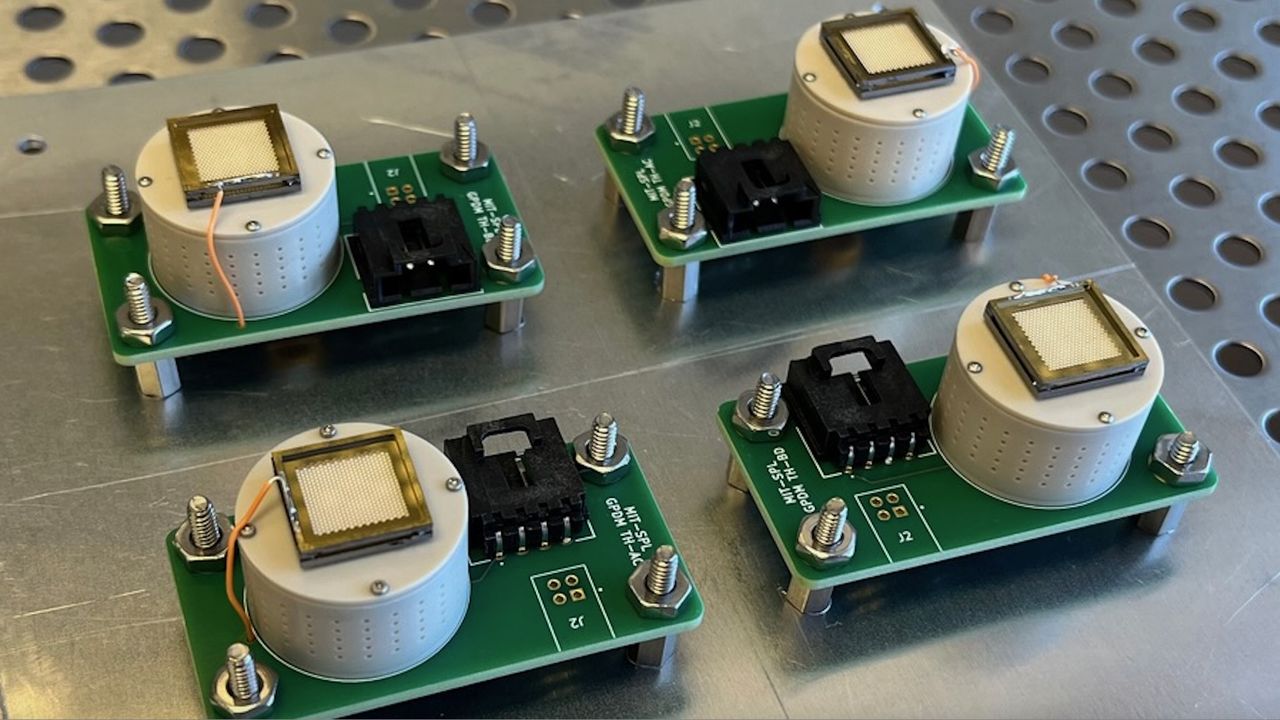
MIT researchers have shown that the green propellant ASCENT can power both chemical and electrospray thrusters, potentially shrinking the size and cost of small satellites. NASA will test this dual‑mode system on its Green Propulsion Dual Mode cubesat later this year, launching no earlier than November. If successful, the technology could enable lightweight satellites to perform complex maneuvers and support future missions to Mars and beyond, while also reducing the hazardous handling of traditional hydrazine. This breakthrough could open the door to more versatile, eco‑friendly propulsion for the next generation of space explorers.
Do galaxies have a 'kill switch' that makes them stop growing?
Original Publication Date: 2026-06-09 18:00

New research shows that galaxies abruptly stop forming stars once they reach about 10^12.5 solar masses. The pause is caused by a hot gas halo that becomes self‑supporting, preventing cold gas from cooling and feeding new stars. Using the Horizon Run 5 simulation, scientists tracked 20,000 massive galaxies and found a sharp drop in star‑formation efficiency above this critical mass. Competing explanations involving supernova or AGN outflows were ruled out, pointing instead to the inflow of gas as the decisive factor.
'This is actually taking a page out of the Communist Party playbook': New White House proposal could deny scientists funding based on their political opinions
Original Publication Date: 2026-06-09 15:00

White House officials have drafted a new rule that would hand the reins of federal science funding to political appointees, allowing them to override peer‑review decisions and deny grants to researchers whose social media or personal views clash with the administration’s agenda. Experts warn that the proposal could curtail open‑access publishing, bar scientists from professional societies, and set a precedent for future partisan control of research priorities.