 Spotify
 Apple Podcasts
 Podcast Addict
 Overcast
 Podcast RSS
FCC lets Amazon Leo miss deployment deadline with temporary spectrum penalty
Original Publication Date: 2026-06-08 18:39
Amazon’s launch schedule for its 3,232 broadband satellites has been extended past the July 30 deadline, thanks to a decision by the FCC. However, the agency imposed a temporary penalty that removes the company’s spectrum priority, potentially leveling the playing field for competitors like SpaceX. This move could give rivals greater flexibility in allocating orbital slots and managing interference. The FCC’s ruling reflects growing regulatory scrutiny over satellite constellations.
Russia is jamming GPS from space
Original Publication Date: 2026-06-08 15:00
A SpaceNews opinion piece last October sparked a chain of investigations that revealed Russia has been jamming GPS from space since 2019. Data from UK and U.
Quantum Space to go public in SPAC deal
Also covered by: Payload Space
Original Publication Date: 2026-06-08 14:19
Quantum Space, headed by former NASA administrator Jim Bridenstine, will go public through a merger with Inflection Point Acquisition Corp. VI, a Nasdaq‑traded SPAC. The deal, expected to close in Q4, values the company at roughly $1.2 billion post‑merger, with a pre‑money valuation of $600 million and about $553 million raised from a $300 million PIPE and $253 million in trust funds. Proceeds will fund a satellite‑manufacturing facility in Tulsa, accelerate production of its highly maneuverable Ranger spacecraft, and support a pathfinder launch slated for mid‑2027, while the company targets contracts with the Space Force, DARPA, AFRL and commercial customers.
WRC-27: the next arena for U.S.-China space competition
Original Publication Date: 2026-06-08 13:00
China has filed for 200,000 new satellites, signaling its intent to dominate low‑Earth‑orbit constellations and the broader space economy. The International Telecommunication Union’s 2027 World Radiocommunication Conference in Shanghai will set the rules for satellite spectrum, affecting national security, political influence, and the balance of power. Key agenda items include direct‑to‑device spectrum, new frequency allocations for lunar and orbital communications, and restrictions on “unauthorized” services that could curb U.S. Satellite operations. To preserve U.S. Leadership, government and industry must act now to shape WRC‑27 outcomes and secure a strategic advantage in space technology.
Axiom and Prada advance design of spacesuit
Original Publication Date: 2026-06-08 11:23
Axiom Space has revealed the Liquid Cooling and Ventilation Garment, the inner layer of its upcoming lunar spacesuit, the AxEMU, which will be worn by astronauts on the Artemis 4 mission in 2028.
SpaceX launches Falcon 9 rocket booster on record-breaking 35th flight
Original Publication Date: 2026-06-07 19:08
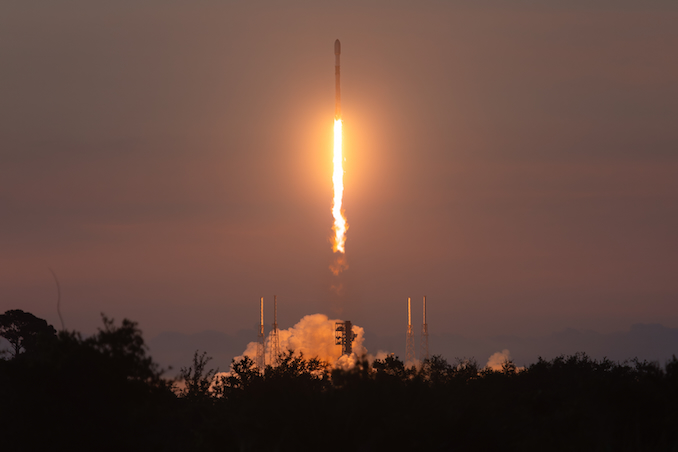
SpaceX’s Falcon 9 booster B1067 lifted off at 6:13 a.m. EDT from Cape Canaveral’s Launch Complex 40, carrying 29 new Starlink broadband satellites into low‑Earth orbit. This marks the booster’s record‑breaking 35th flight, pushing the company’s reusable rockets closer to their 40‑flight design limit. A 90‑percent favorable weather forecast cleared the launch window, and the rocket will later return to a drone ship in the Atlantic for recovery. The Starlink constellation now exceeds 10,500 spacecraft, expanding global internet coverage.
Viasat Launches Space for Good India Challenge 2026 to Cultivate Next-Generation Space Innovation
Original Publication Date: 2026-06-08 18:29
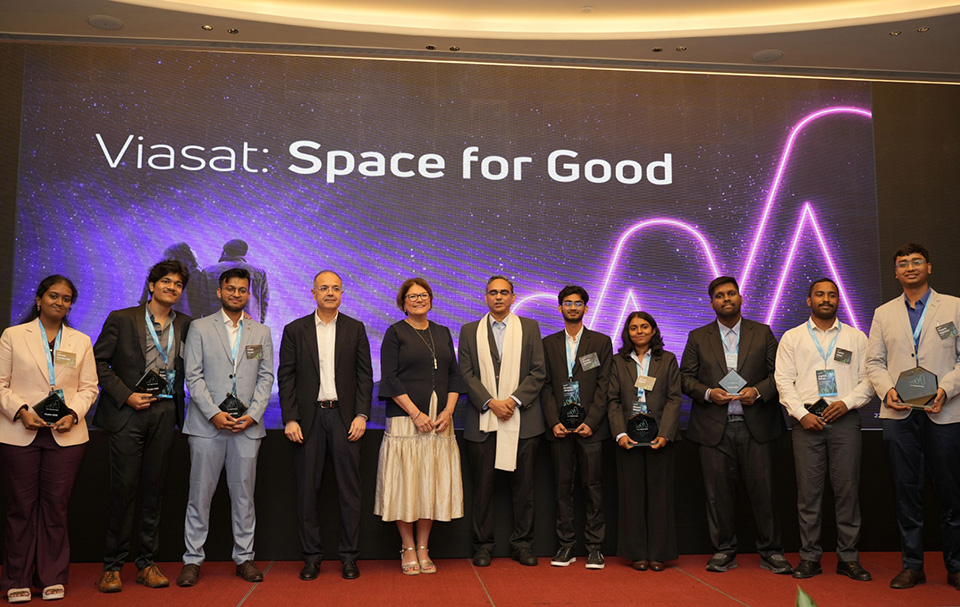
Viasat, the global satellite communications leader, has unveiled the Space for Good India Challenge 2026, kicking off Phase 1 concept submissions. The program invites Indian innovators—students, startups, and research teams—to develop satellite‑based solutions that tackle social, environmental, and economic challenges across the country. Participants will compete for cash prizes, mentorship, and the chance to launch their concepts on Viasat’s satellite network. This initiative marks a bold step toward harnessing space technology for community‑driven impact in India.
Eutelsat and Voimatel Partner to Expand LEO Satellite Connectivity Across Finland
Original Publication Date: 2026-06-08 18:16

Eutelsat Group has entered a strategic distribution partnership with Finnish infrastructure provider Voimatel to deploy low‑Earth‑orbit satellite connectivity across Finland. The collaboration will combine Eutelsat’s cutting‑edge satellite technology with Voimatel’s local network expertise to deliver high‑speed, reliable broadband to remote and underserved regions. By leveraging Voimatel’s distribution capabilities, the deal aims to accelerate digital connectivity and support future 5G and IoT deployments. This partnership marks a significant step toward bridging Finland’s digital divide with next‑generation satellite services.
NASA Advances Interoperable Space Networks with Successful PExT Demonstration
Original Publication Date: 2026-06-08 15:58
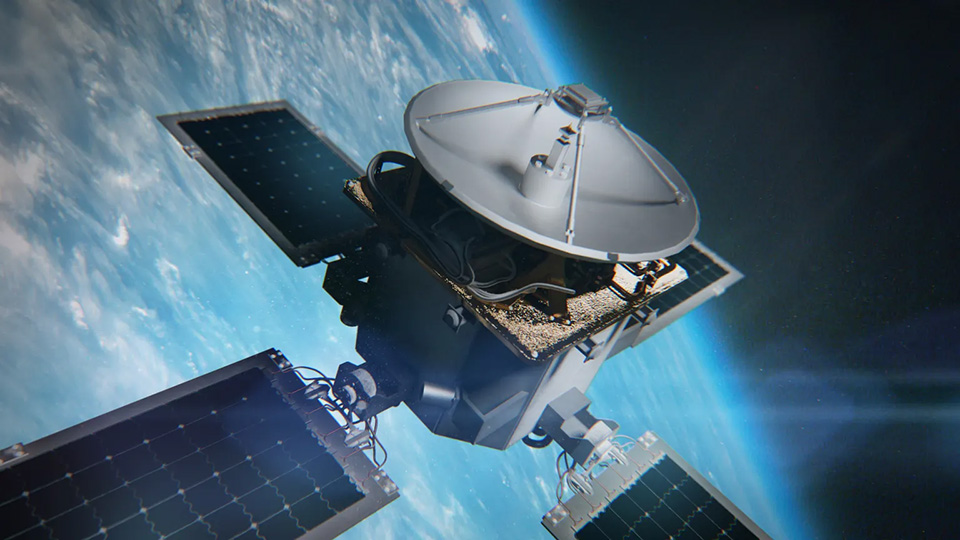
NASA has wrapped up the primary test of its Polylingual Experimental Terminal, a breakthrough that will overhaul how spacecraft manage data transfers in orbit. The new system supports seamless multi‑network roaming, allowing satellites to switch between communication networks without interruption. By enabling real‑time data exchange across multiple frequencies, the terminal promises faster, more reliable communication for future missions. This milestone marks a significant step toward more resilient and flexible space communications.
Energration and Atombeam Partner on DARPA Proposal to Revolutionize Tactical Data Movement at the Defense Edge
Original Publication Date: 2026-06-08 14:58

Washington, D.C. – Energration and Atombeam have jointly filed a proposal with the Defense Advanced Research Projects Agency to push forward the Neurpac‑16 project, a next‑generation military communications system. The submission seeks to modernize battlefield data links by integrating advanced AI and quantum‑sensing techniques for ultra‑secure, low‑latency communication. By upgrading Neurpac‑16, the teams aim to give U.S. Forces a decisive edge in contested environments where speed and reliability are critical. The proposal marks a significant step toward keeping U.S. Military communications at the cutting edge.
Supersonic!
Original Publication Date: 2026-06-08 15:28
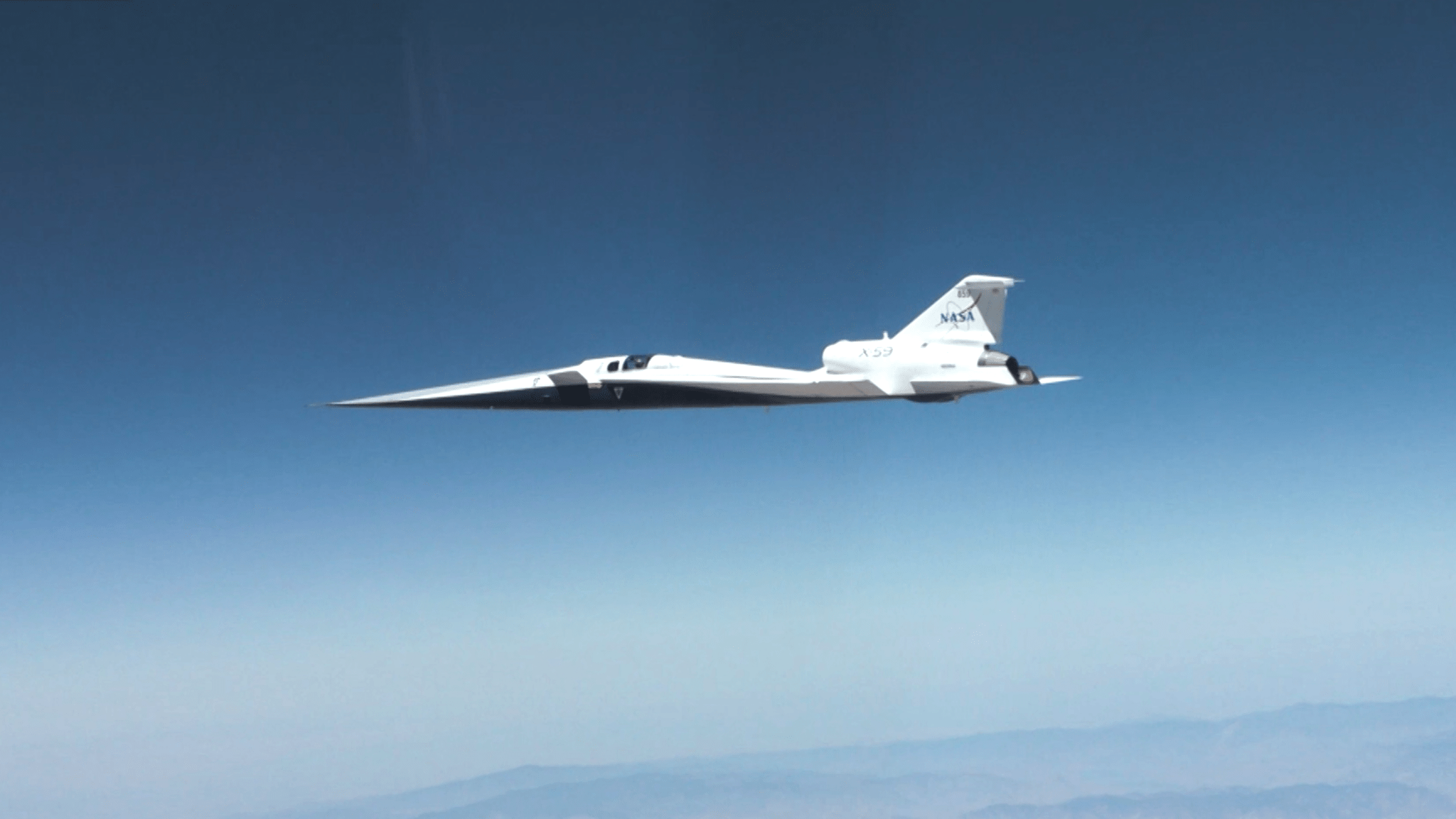
On June 5, NASA’s experimental X‑59 aircraft broke the sound barrier for the first time, reaching Mach 1.1 at Edwards Air Force Base. Pilot Jim “Clue” Less completed an 81‑minute flight, testing the aircraft’s handling before and after supersonic speeds. The X‑59 is the key element of NASA’s Quesst program, which seeks to prove quiet supersonic flight so commercial aircraft can fly over land without disturbing communities. This breakthrough brings faster travel for passengers and paves the way for a new era of supersonic air travel.
Digging Back in Time in the UAE
Original Publication Date: 2026-06-08 04:01
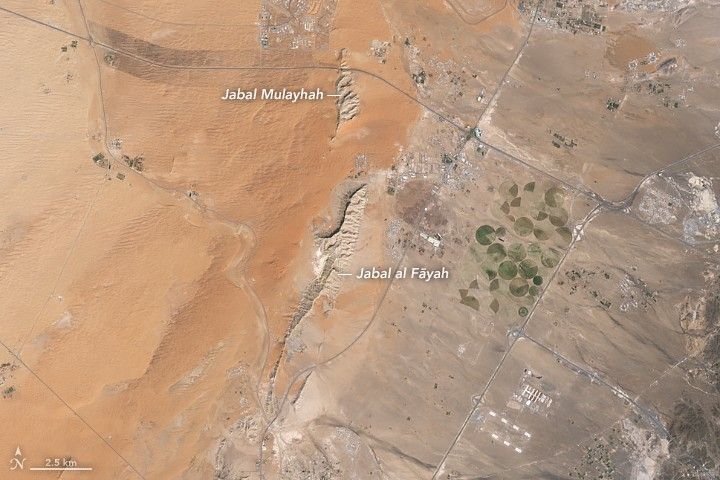
NASA’s Landsat 8 captured a striking image of the Jabal al Fāyah limestone ridges in the UAE’s Rub’ al Khali desert. These saffron‑colored formations, rising up to 412 meters, were once shallow ocean beds, now exposing fossils and coral fragments that span tens of millions of years.
Launch Preview: Chinese, Rocket Lab, and Starlink flights scheduled
Original Publication Date: 2026-06-08 22:23

This week, space enthusiasts will see a flurry of launches from China, California, Virginia, and Florida, including multiple Starlink missions and a hypersonic test flight.
NewOrbit Raises $18.5M to Build VLEO Spacecraft at Scale
Original Publication Date: 2026-06-08 12:56

UK startup NewOrbit has closed a $18.5 million Series A round led by Voyager Ventures to fund the development of a new class of very low Earth orbit (VLEO) satellites. The capital will build a production complex that can initially produce up to ten satellites a year, with plans to scale to more than a hundred annually. NewOrbit plans to launch its first VLEO‑capable NEO‑1 satellite in 2028, demonstrating five‑year operation below 300 km while shielding payloads from increased atomic‑oxygen damage. As LEO congestion climbs, the company leverages its government‑VLEO expertise to offer higher‑resolution Earth observation and lower‑latency communications from the lower orbit.
Juno Propulsion Raises $1.4M Pre-Seed for RDE Flight
Original Publication Date: 2026-06-08 12:55

Juno Propulsion has closed a $1.4 million pre‑seed round led by SOSV to finish its first flight‑ready rotating detonation engine, Project Iris, slated to launch on a Momentus satellite bus in early 2027. The engine will be the first commercial RDE to propel a satellite, using safer nitrous oxide and ethane instead of toxic hydrazine, and has already shown a 7 % higher combustion efficiency than theoretical constants. With the new funding, Juno will scale in‑house production to tens of engines per year and push Iris to technology readiness level 9 before mass production. The company’s goal is to demonstrate long‑duration orbital burns and rapid impulse maneuvers, positioning it ahead of competitors such as JAXA, Venus Aerospace, and Stellar Alpina.
Mass Is the Easy Part, Coordination Is The Hard Part
Original Publication Date: 2026-06-08 11:00

Ukraine’s use of mass‑produced drones has forced the U.S. To accelerate the development of autonomous, disposable defense systems, but the industry struggles to scale thousands of units across a fragmented supply chain. Traditional defense contractors, trained for multi‑million‑dollar programs, face schedule slips and budget overruns as they try to coordinate complex projects like the Columbia‑class submarine and NASA’s Artemis program. The root problem is a lack of digitized, shared procedural data, causing teams to waste time verifying work that already exists elsewhere. Epsilon3’s new software platform solves this by letting organizations exchange live, controlled records of assembly, testing, and quality data across boundaries, making large‑scale production possible.
Scientists propose spraying chemicals into Earth's magnetic field to protect us from powerful solar storms
Original Publication Date: 2026-06-08 21:00

Scientists at Boston University have designed a “StormWall” that would deploy a fleet of six spacecraft to release ionized barium, lithium, sodium or calcium into space, thickening Earth’s magnetic shield and cutting the intensity of a major geomagnetic storm by more than half. The concept, tested against the 2024 Mother’s Day storm, shows the artificial plasma would block the solar wind’s magnetic reconnection and force the dangerous energy to bounce past Earth. While the system would need a payload comparable to a dozen oil trucks and would be a one‑time use, proponents argue that the growing private investment in orbital infrastructure could make the cost viable. If built, the StormWall could safeguard satellites, GPS, global communications and power grids for the entire planet.
This former Paralympic athlete could become the 1st person with a physical disability to live in orbit
Original Publication Date: 2026-06-08 17:00
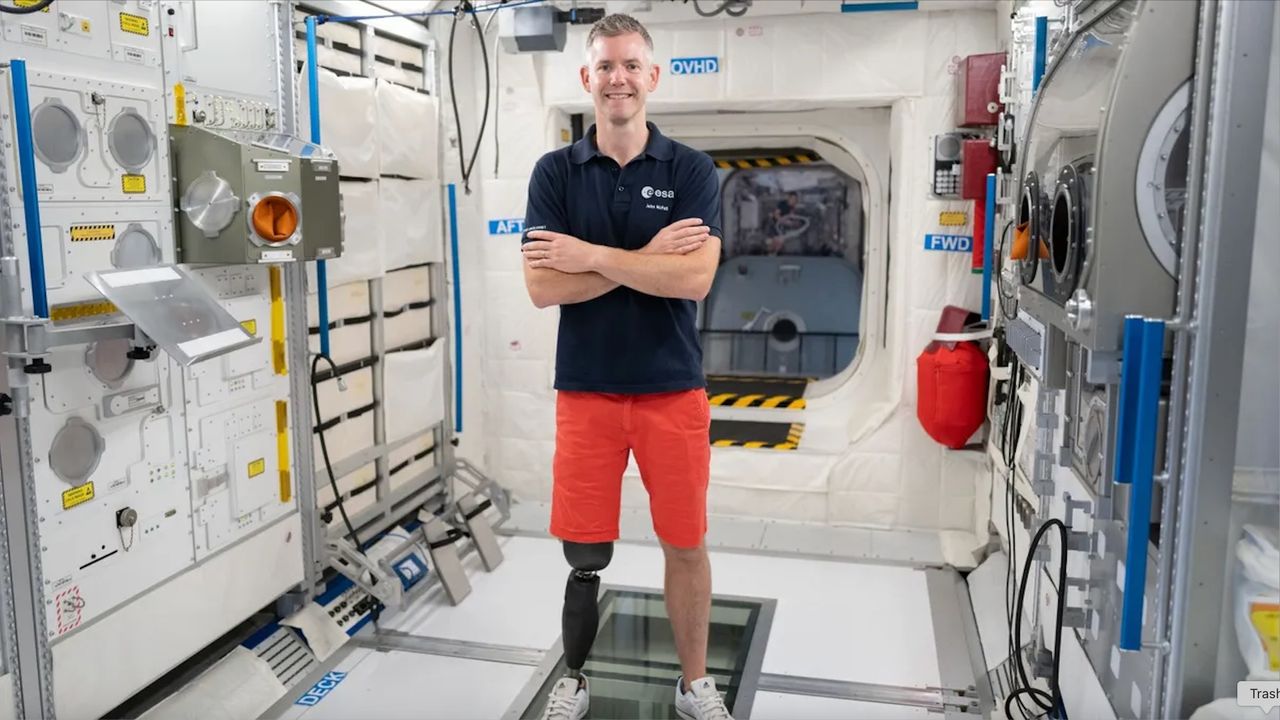
Former Paralympic sprinter and NHS surgeon John McFall, who lost a leg in a motorcycle crash, could become the first person with a physical disability to live in orbit if a UK‑Vast partnership comes to fruition. The UK government and California‑based Vast have signed a memorandum of understanding to secure sponsorships for McFall’s potential flight aboard Vast’s Haven‑1 low‑Earth‑orbit station, slated to launch on a SpaceX Falcon 9 next year. McFall would conduct research on physiology, prosthetics and movement in space, with findings that could improve prosthetic design and rehabilitation for millions of disabled people on Earth. The UK Space Minister has praised his determination and said the mission would send a powerful message about the limitless capabilities of people with disabilities.
Astronaut spots Mount Vesuvius from space | Space photo of the day for June 8, 2026
Original Publication Date: 2026-06-08 14:00

French ESA astronaut Sophie Adenot snapped a striking image of Mount Vesuvius from the International Space Station on June 5, 2026, during a brief pause in the Crew‑12 mission. The photo was taken while the crew was temporarily sheltering in the Dragon capsule to address a leak on the station. Adenot’s post highlighted the volcano’s iconic crater, winding path, and the sprawling city of Naples below. Her image, shared on social media, offers a breathtaking view of one of Earth’s most famous volcanoes from orbit.
FCC lifts looming deadline for Amazon Leo satellite broadband constellation
Original Publication Date: 2026-06-09 00:59
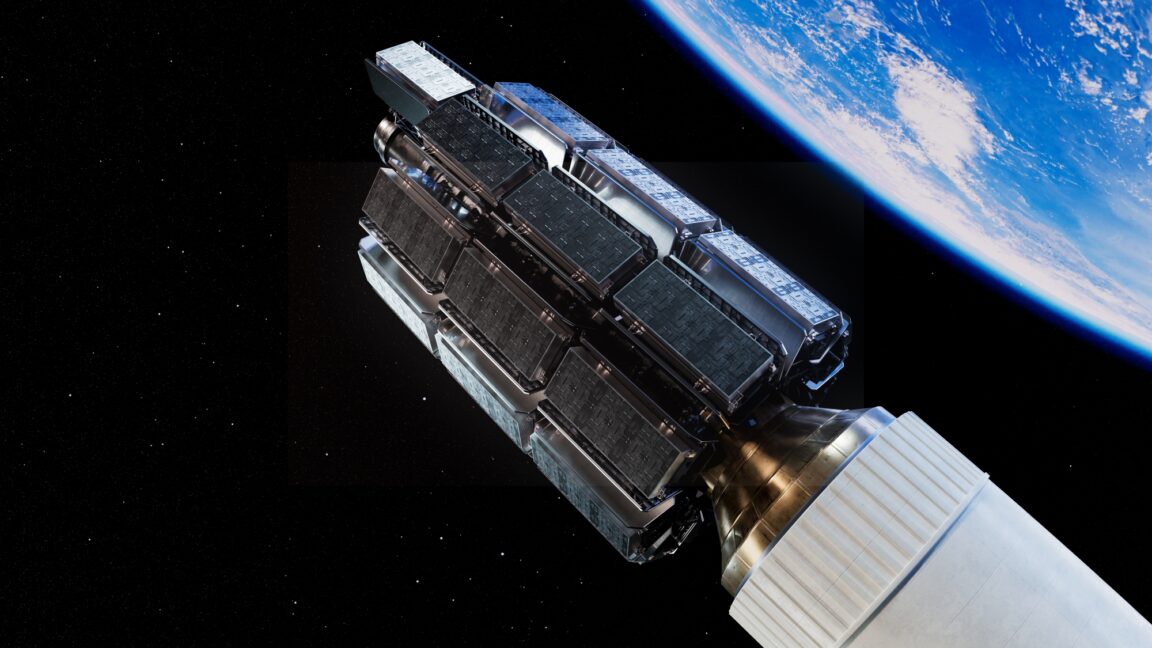
The FCC has removed the July 2026 deadline for Amazon to launch half of its 3,232‑satellite Amazon Leo constellation, giving the company more breathing room to deploy its spacecraft. Amazon had been required to have 1,616 satellites in orbit by July 30, 2026, to maintain authorization for the rest of the network, with a final deadline of July 30, 2029 for all first‑generation satellites. The regulator granted Amazon a waiver of the 50‑percent milestone while keeping the July 2029 deadline in place. This move buys Amazon time to get more of its satellites into orbit while still meeting the overall 2029 target.