 Spotify
 Apple Podcasts
 Podcast Addict
 Overcast
 Podcast RSS
Munich Startup Project-S Emerges from Stealth with Multi-Million-Euro Funding for Orbital Safety Infrastructure
Original Publication Date: 2026-09-02 23:12

Munich startup Project‑S burst onto the scene on September 2, 2026 after securing a multi‑million‑euro seed round. The funding will be used to build an end‑to‑end orbital intelligence platform that tracks space traffic and helps prevent collisions. Project‑S aims to deliver real‑time situational awareness for satellite operators and space agencies worldwide.
Silicon Valley Space Week Speaker Focus: Col. Eric Zarybnisky, U.S. Space Force
Original Publication Date: 2026-09-02 17:40

Space Systems Command has just ordered 18 Falcon 9 launches from Vandenberg, slated to take off over the next few years and all scheduled to complete by the end of 2027. The fleet expansion underscores the Space Force’s growing reliance on reusable rockets for national defense and commercial payloads. Col. Eric Zarybnisky, who oversees the Space Force’s launch portfolio, will share insights in a fireside interview on the closing day of the MilSat Symposium at Silicon Valley Space Week. His remarks are expected to highlight how these new missions will strengthen U.S. Space capabilities and support future missions.
Portnoy Law Firm Files Investor Class Action Against York Space Systems Over Defense Contract Allegations
Original Publication Date: 2026-09-02 15:48

On September 2, 2026, the Portnoy Law Firm announced it had filed a class‑action lawsuit on behalf of investors in York Space Systems (NYSE: YSS). The suit alleges that the company engaged in conduct that harmed shareholders, though the specific claims have not yet been disclosed. The filing seeks to secure compensation for investors who may have suffered losses. The case is now pending in federal court.
Mobile Satellite Services Association Releases Reference Architecture 2.0 for Regenerative NTN Payloads
Original Publication Date: 2026-09-02 14:18

On September 2, 2026 the Mobile Satellite Services Association released Reference Architecture Version 2.0, a comprehensive update that expands technical guidance for non‑terrestrial network operators. The new framework introduces design standards that clarify architecture layers, interface specifications, and performance metrics to streamline satellite‑to‑ground connectivity.
Peatland Fires Darken Skies in Indonesia
Original Publication Date: 2026-09-03 04:01

NASA’s Aqua satellite captured a dramatic image of thick gray plumes from peatland fires across Borneo on Sept. 1, 2026, with MODIS detecting hundreds of hotspots. These slow‑burning peat fires, which release far more pollutants than typical forest fires, have been intensified by a strong El Niño‑driven drought that left 90 % of Indonesia rain‑free in August.
NASA Revamps Challenge Linking Community College Studies to Aerospace Careers
Original Publication Date: 2026-09-02 19:01

NASA has relaunched its Community College Aerospace Scholars (NCAS) challenge, opening applications now through Monday, Sept. 28, to help community‑college students explore careers in aerospace, science, engineering, and technology. The updated program offers up to 1,000 $500 awards for students who connect coursework to NASA roles, and a spring virtual career fair where top participants can win an additional $250 prize. Success stories—like former bartender Kim Alexander and mom‑turned‑IT student Ashley Rodriguez—show how NCAS can launch students into NASA internships and even full‑time positions. NASA invites all eligible community‑college students to apply and discover how their studies can launch them into the future of space.
Rising Over Louisiana
Original Publication Date: 2026-09-02 15:38

Tonight, August 28 2026, a deep partial lunar eclipse will sweep across the Americas, with 96.3 % of the Moon shrouded in Earth’s umbra at 12:13 a.m. Eastern Time. The eclipse will be visible from southern Louisiana, where NASA’s Michoud Assembly Facility captured a striking image of the event. Viewers across much of the United States, western Europe, and western Africa will witness the Moon’s dramatic dimming, except for Alaska and northwestern Canada. This celestial show underscores the power of our planet’s shadow to transform the night sky.
York Space Systems Unveils New VLEO Sat Platform
Also covered by: SatNews
Original Publication Date: 2026-09-02 13:00

On September 2, 2026, York Space Systems announced the LX/V‑CLASS, a standardized smallsat platform built on its S‑ and LX‑Class lines for sustained
Astroscale Selects Isar to Launch Debris Removal Mission
Original Publication Date: 2026-09-02 12:50

Astroscale Japan has chosen Germany's Isar Aerospace to launch its ADRAS‑J2 mission, the first spacecraft designed to capture and remove a large piece of orbital debris. Slated for FY2027, the mission will use Isar's Spectrum rocket from Norway’s Andøya Spaceport to target an 11‑meter, 3‑ton H‑IIA upper stage left in low Earth orbit. Building on the 2024 ADRAS‑J demonstration, ADRAS‑J2 will combine autonomous rendezvous‑and‑pickup with a robotic arm to pull the debris free, aiming to prove debris removal can become a repeatable commercial service.
Astronomers discover mysterious 10-sided cloud structure at Saturn's south pole
Original Publication Date: 2026-09-02 21:00
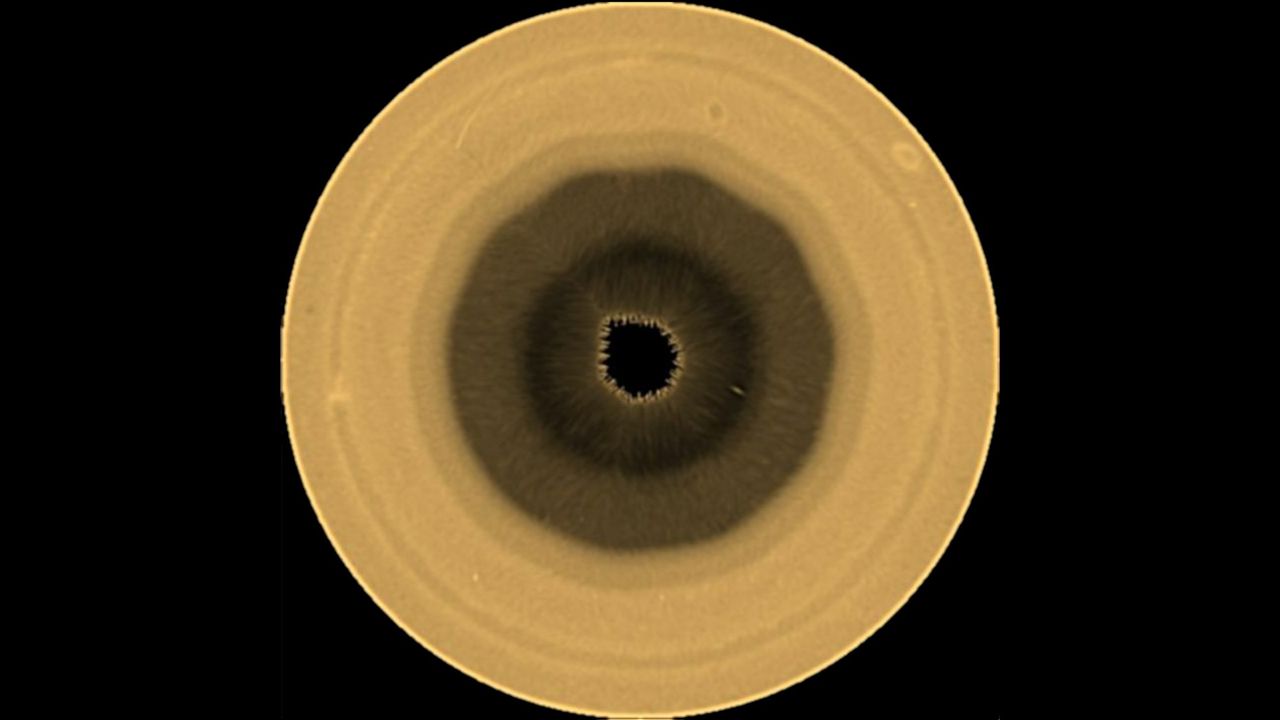
Scientists using NASA’s Hubble telescope have spotted a gigantic ten‑sided cloud pattern—dubbed a decagon—surrounding Saturn’s south pole, a feature that rivals the planet’s famous hexagon at the north pole. The decagon spans about 167,820 kilometers across, with each side roughly 16,782 kilometers long, and it takes roughly 800 days to complete one rotation around the planet.
China's private, reusable Pallas-1 rocket aces debut launch (video)
Original Publication Date: 2026-09-02 20:00
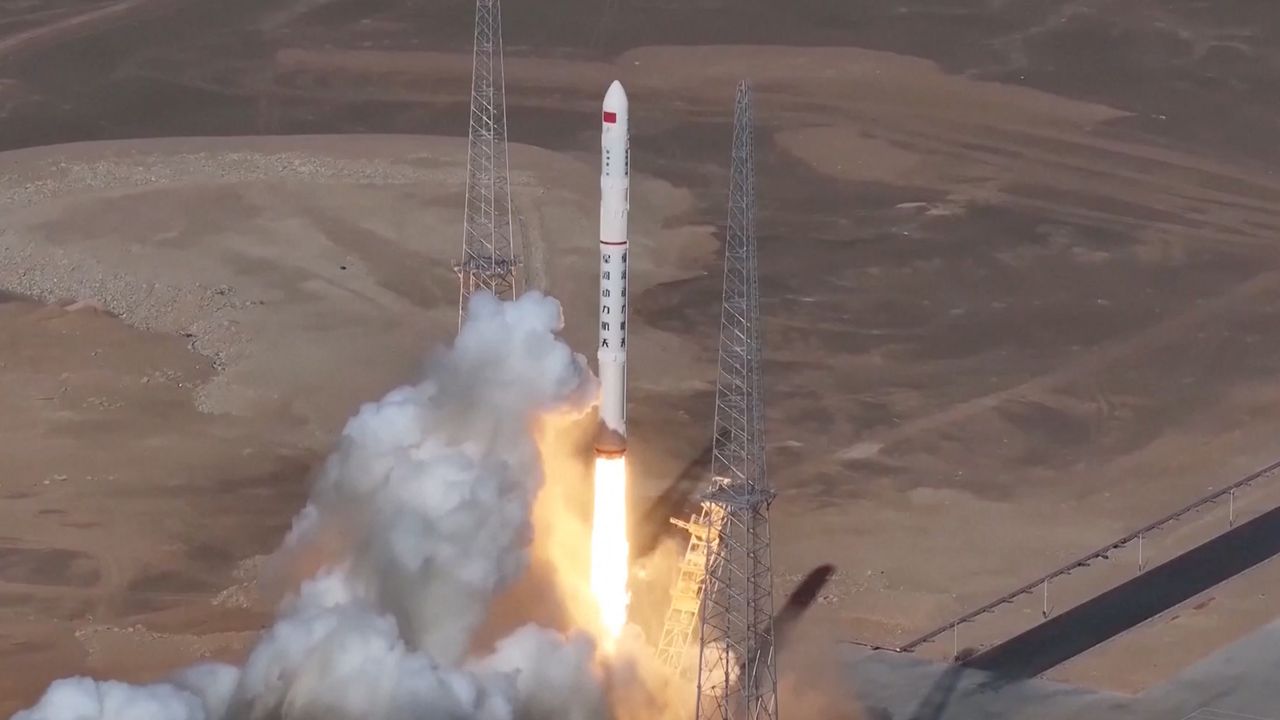
China’s private space firm Galactic Energy celebrated a successful maiden flight of its reusable Pallas‑1 rocket, lifting off from Jiuquan Satellite Launch Center on August 31 and placing the vehicle into its intended orbit.
Blue Origin wins $700 million contract to build NASA's next Mars orbiter
Original Publication Date: 2026-09-02 17:00
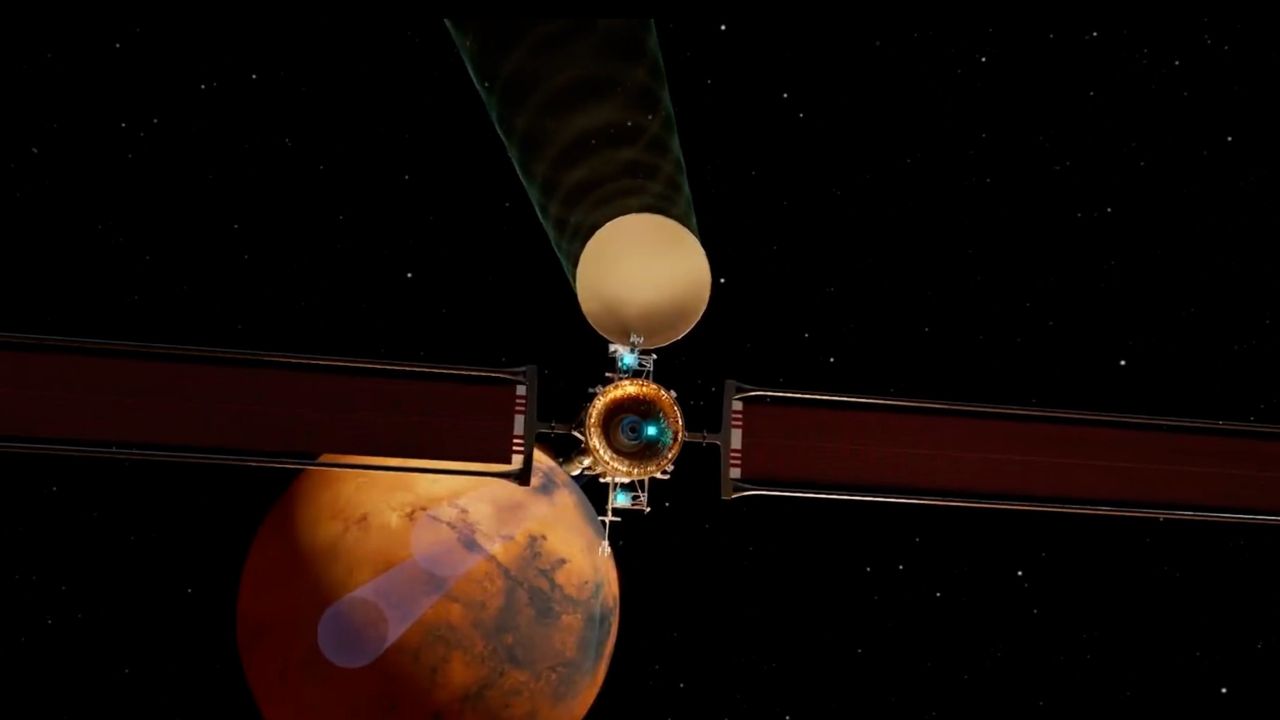
Blue Origin has secured a $700 million contract to build NASA’s next Mars orbiter, the Mars Telecommunications Network, slated for launch by the end of 2028. The new spacecraft will serve as a dedicated high‑bandwidth communications relay, enabling reliable data transfer and navigation for current and future Mars missions. Built on Blue Origin’s Blue Ring platform and likely to launch aboard a New Glenn rocket, the orbiter will replace aging relay assets and support crewed exploration plans for the 2030s and 2040s. This milestone underscores NASA’s strategy to expand its communications infrastructure beyond Earth and the Moon.
Supermassive black holes 'too big' for the early universe may not be so massive after all
Original Publication Date: 2026-09-02 15:00

James Webb Space Telescope observations of the early universe have repeatedly found supermassive black holes that seemed too large to have grown in less than a billion years. New research by Alessandro Trinca and colleagues now estimates these objects at only one to ten million solar masses, a far lower figure that better matches the small galaxies that host them.