 Spotify
 Apple Podcasts
 Podcast Addict
 Overcast
 Podcast RSS
Firefly Alpha returns to flight
Also covered by: Space.com
Original Publication Date: 2026-03-12 04:09
On March 11, 2026, Firefly Aerospace’s Alpha rocket lifted off from Vandenberg Space Force Base, marking its first flight in almost a year after two mishaps in 2025. The two‑stage vehicle reached about 245 km altitude, relit its second‑stage engine, and successfully delivered a demonstrator payload for Lockheed Martin, achieving nominal first‑ and second‑stage performance. The mission tested key upgrades—including extended stages, new avionics, and improved thermal protection—in preparation for the Block II version, giving the company fresh flight heritage. Firefly CEO Jason Kim described the launch as flawless, underscoring the team’s resilience and commitment to continuous improvement.
The Post-Capacity Era of Satellite Connectivity
Original Publication Date: 2026-03-12 01:10
Novaspace’s latest Capacity Pricing Trends report shows the satellite connectivity market has entered a Post‑Capacity Era, where bandwidth is no longer the key differentiator. In this new landscape, operators are focusing on cost, reliability, and integrated services rather than sheer capacity. Starlink’s vertical integration strategy—combining launch, manufacturing, and network infrastructure—illustrates how providers are driving down expenses. As the market shifts, firms must innovate beyond bandwidth to capture value and compete.
Enpulsion raises $26 million
Original Publication Date: 2026-03-12 00:21
Austrian satellite propulsion firm Enpulsion has closed a €22.5 million ($26 million) funding round led by German growth fund Nordwind Growth, marking its first major outside investment. The money will boost production, enable the company to bundle thrusters with other mobility components, and accelerate its expansion into the U.S. Market and strategic acquisitions. With more than 320 electric thrusters already operating in orbit and 500 years of combined flight heritage, Enpulsion aims to become a one‑stop shop for satellite mobility. CEO Alexander Reissner expects a wave of consolidation in the space propulsion sector as demand rises and quality scrutiny tightens, positioning Enpulsion to lead the next generation of satellite propulsion.
Report criticizes delays in Artemis lunar lander development
Original Publication Date: 2026-03-11 22:57
NASA’s Inspector General report says its fixed‑price contracts have kept lunar lander costs in check, but the Artemis schedule has slipped. SpaceX’s Starship, due for Artemis III, is now at least two years behind, with critical cryogenic propellant‑transfer tests pushed to 2026, while Blue Origin’s Blue Moon lander lags by eight months. Both companies are grappling with technical hurdles—cryogenic fluid management for both and, for Starship, a high‑risk elevator system that could trap astronauts if it malfunctions. NASA has requested accelerated plans, but the feasibility, financial impact, and schedule effects remain uncertain, leaving the Artemis timeline in flux.
Missile strike hits SES teleport in Israel
Original Publication Date: 2026-03-11 18:57
A missile struck a SES satellite teleport in Israel on March 9, damaging a small section of the antenna array but leaving the main Emek Ha’ela facility and all core services intact, with no injuries reported. The Luxembourg‑based company confirmed that power, internet, and other non‑impacted services remain operational and that its business continuity plan is in effect, with recovery underway. Hezbollah claims responsibility, calling the site part of Israel’s cyber defense, though the facility was privatized in 2008. The incident underscores the growing risks to dual‑use satellite infrastructure and the critical role of redundancy in safeguarding space‑borne communications.
Missile Strike Targets Strategic SES Ha’Ela Teleport in Central Israel
Original Publication Date: 2026-03-11 21:49

On March 9, 2026 Hezbollah launched a salvo of long‑range precision missiles aimed at the SES Ha’Ela satellite station in Beit Shemesh, Israel. Israeli air‑defense systems intercepted most of the projectiles, preventing damage to the critical communications hub. The strike highlights the escalating tensions between Hezbollah and Israel and the strategic importance of satellite infrastructure. The incident underscores the ongoing risk to vital national assets in the region.
Rheinmetall Withdraws From Mynaric Bidding Process; Rocket Lab Acquisition Clears Major Competitive Hurdle
Original Publication Date: 2026-03-11 21:39

On March 11, 2026, Rheinmetall AG announced it would not submit a formal bid for German laser‑communications specialist Mynaric AG. The decision follows a review of strategic priorities and financial considerations, with Rheinmetall choosing to focus on its core defense portfolio. Mynaric, known for high‑speed data transmission technology, remains an attractive target for other industry players. This move signals a cautious approach to expansion amid a competitive market.
BAE Systems Completes Preliminary Design Review for $1.2 Billion Space Force Epoch 2 Program
Original Publication Date: 2026-03-11 16:22

BAE Systems announced the successful completion of the Preliminary Design Review (PDR) for the U.S. Space Force (USSF) Space Systems Command (SSC) The PDR was completed on March 11, 2026. The USSF Space Systems Command will be based in Colorado.
MTN Launches Click-to-Deploy StarEdge Horizon Satellite Service on AWS Marketplace
Original Publication Date: 2026-03-11 16:13
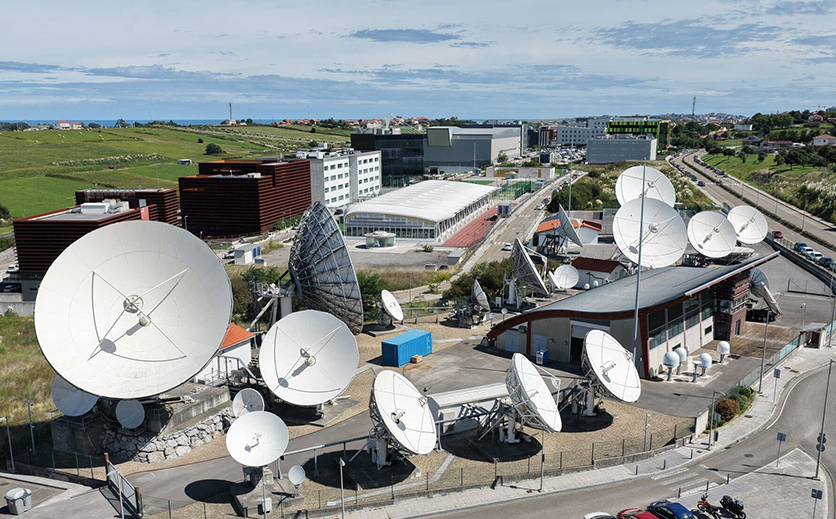
On March 11, 2026, MTN announced that its StarEdge Horizon satellite and wireless platform is now immediately available on Amazon Web Services, expanding global connectivity options for enterprises. The launch delivers low‑latency, high‑capacity data links to the cloud, enabling faster, more reliable communication for remote and mobile users. MTN’s partnership with AWS leverages the cloud giant’s robust infrastructure, promising seamless integration and scalable services for customers worldwide. This move positions MTN as a key player in the evolving edge computing landscape.
ATLAS Space Operations Establishes South Pacific Hub with New Ground Station in American Samoa
Original Publication Date: 2026-03-11 14:28
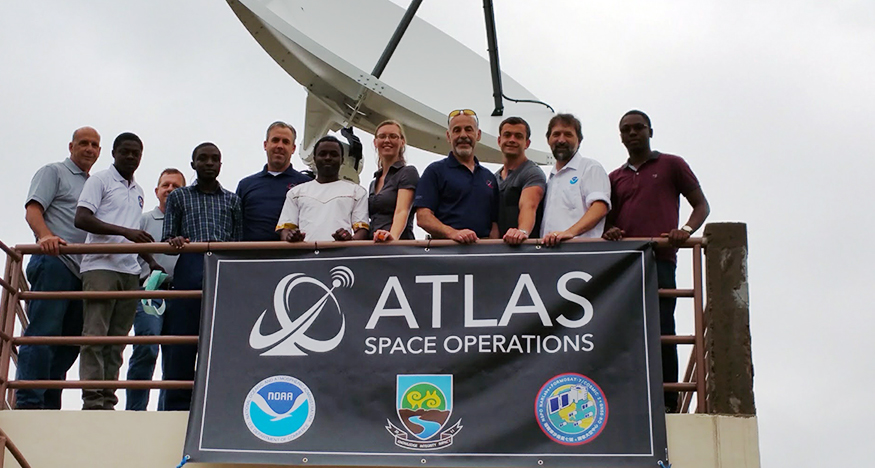
American Samoa’s Port Administration and Michigan‑based ATLAS Space Operations signed a deal on March 10, 2026 to install advanced satellite‑tracking antennas on the island. The new ground station will provide high‑precision tracking for commercial and governmental spacecraft, boosting the region’s space‑flight capabilities. By leveraging the island’s prime geographic location, the facility will enhance real‑time telemetry and support future missions to low‑Earth orbit and beyond. This partnership marks a significant step toward expanding American Samoa’s role in the global space industry.
Dust Outbreak Reaches Europe
Original Publication Date: 2026-03-12 04:01

From March 1 to 9, 2026, winter winds lofted Saharan dust across the Atlantic and into Europe, producing hazy skies and dirty rain in Spain, France, and the UK. Storm Regina brought a rare “blood rain” to parts of southern Europe as dust particles fell with precipitation. Scientists found that high‑dust days cut photovoltaic performance in Hungary to 46 % of normal, largely due to dust‑enhanced cirrus clouds reflecting sunlight. Researchers attribute the outbreak to drier‑than‑normal conditions in northwestern Africa and northward wind patterns that increasingly drive dust northward.
2026 William T. Pecora Award Nominations Now Being Accepted
Original Publication Date: 2026-03-11 20:18

The William T. Pecora Award, created in 1974, honors individuals or teams who use satellite or aerial remote‑sensing to deepen our understanding of Earth’s land, oceans, and air, educate the next generation, inform policy, and support disaster response. Each year the award celebrates outstanding contributions that advance science and decision‑making.
About University Innovation Project (UI)
Original Publication Date: 2026-03-11 17:00

NASA’s University Innovation project funds university‑led research to solve Aeronautics Research Mission Directorate challenges through independent, NASA‑alternate‑path awards. The program’s two core elements—University Leadership Initiative (ULI) and University Students Research Challenge (USRC)—encourage interdisciplinary teams to propose solutions and give students grants plus crowdfunding experience. Its strategic goals are to advance aviation outcomes, transition findings to stakeholders, and broaden student participation across all levels. Each year, the program also hosts a “Gateways to Blue Skies” competition that brings together students from freshman to graduate to tackle new technologies and environmentally conscious aviation challenges.
Telescopes Team Up for New View of Cat’s Eye Nebula
Original Publication Date: 2026-03-11 15:53
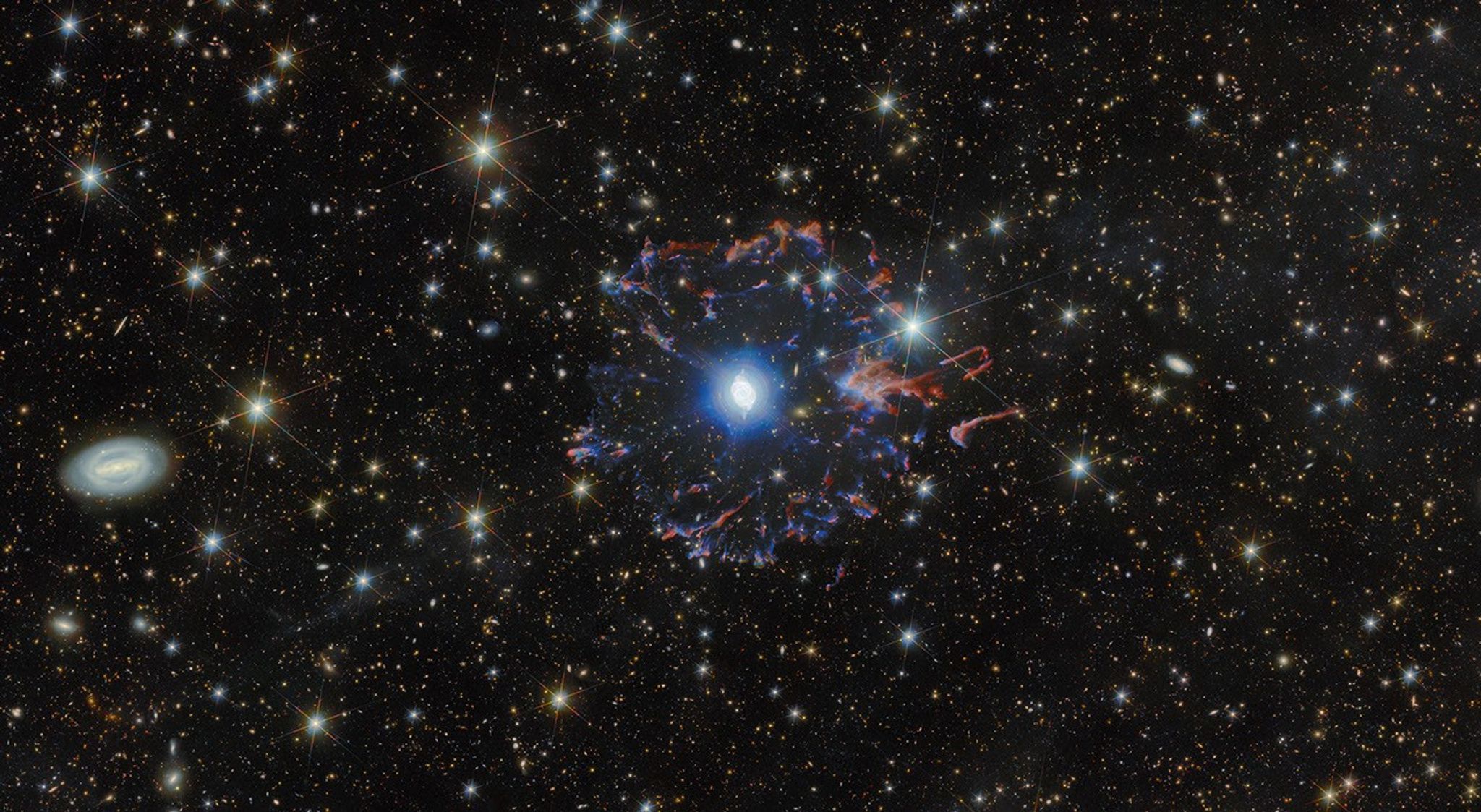
This March 3, 2026, a combined image from ESA’s Euclid and NASA’s Hubble Space Telescope revealed the stunning Cat’s Eye Nebula, a planetary nebula 4,400 light‑years away in Draco. The image showcases the nebula’s intricate, multilayered structure, offering new insights into the dying star’s final stages. Scientists say the data will help refine models of stellar evolution. The image, produced by ESA/Hubble, Euclid Consortium, and collaborators, underscores the power of international cooperation in space exploration.
New crew arrivals and science highlight February aboard the ISS
Original Publication Date: 2026-03-11 22:38

The International Space Station began February with only three crew members after Crew‑11 returned early for a medical check‑up, the first such early departure in the station’s 25‑year history. On Feb. 13, Crew‑12 launched from Florida, docking a day later and expanding the expedition to seven astronauts for an eight‑month stay focused on science, technology demos and possible spacewalks. While the new crew acclimated, Progress 93 performed a reboost and the CRS‑33 Cargo Dragon undocked on Feb. 26, set to return to Earth in August 2025 with research samples. Throughout the month, astronaut Chris Williams conducted bone‑health studies, TangoLab experiments, and AI‑assisted documentation, while cosmonauts Sergey Kud‑Sverchkov and Sergei Mikaev captured Earth‑impact images and tested AI tools to improve crew efficiency.
AIRMO Raises €5M For Methane Monitoring Sats
Original Publication Date: 2026-03-12 06:00
European startup AIRMO has closed a €5 million seed round, led by Ananda Impact Ventures, to launch its first methane‑monitoring satellite no earlier than next year and to expand drone and airplane tracking into the Middle East. The funding, which also drew investors such as Unconventional Ventures, Kopa Ventures, and EQT partners, will move the company beyond prototype validation into continuous, large‑scale monitoring. CEO Daria Stepanova said the new capital will help AIRMO deploy a short‑wave infrared imager and proprietary micro‑LIDAR, a sensor system claimed to be twice as accurate as anything on the market. With the satellite launch, AIRMO aims to monitor 12 million energy assets worldwide and curb greenhouse‑gas losses, starting with methane.
Planet Labs Extends Middle East Space Imagery Restrictions
Original Publication Date: 2026-03-11 12:40

Planet Labs has extended its commercial Earth‑observation data blackout over the Middle East to two weeks, now covering all of Iran, allied bases, Gulf States and existing conflict zones. The company said the decision was a proactive measure to prevent adversaries from using imagery to target allied personnel, made after consultations with experts but not at the behest of any government. While the restriction protects military assets, it hampers journalists and the public by limiting timely access to up‑to‑date satellite imagery, forcing reporters to seek alternative providers. This move highlights the growing role of private firms in regulating data to mitigate conflict risks and underscores the strategic importance of space‑based surveillance in modern warfare.
Will Artemis 2 launch toward the moon next month? Watch NASA's mission update today
Original Publication Date: 2026-03-12 10:00
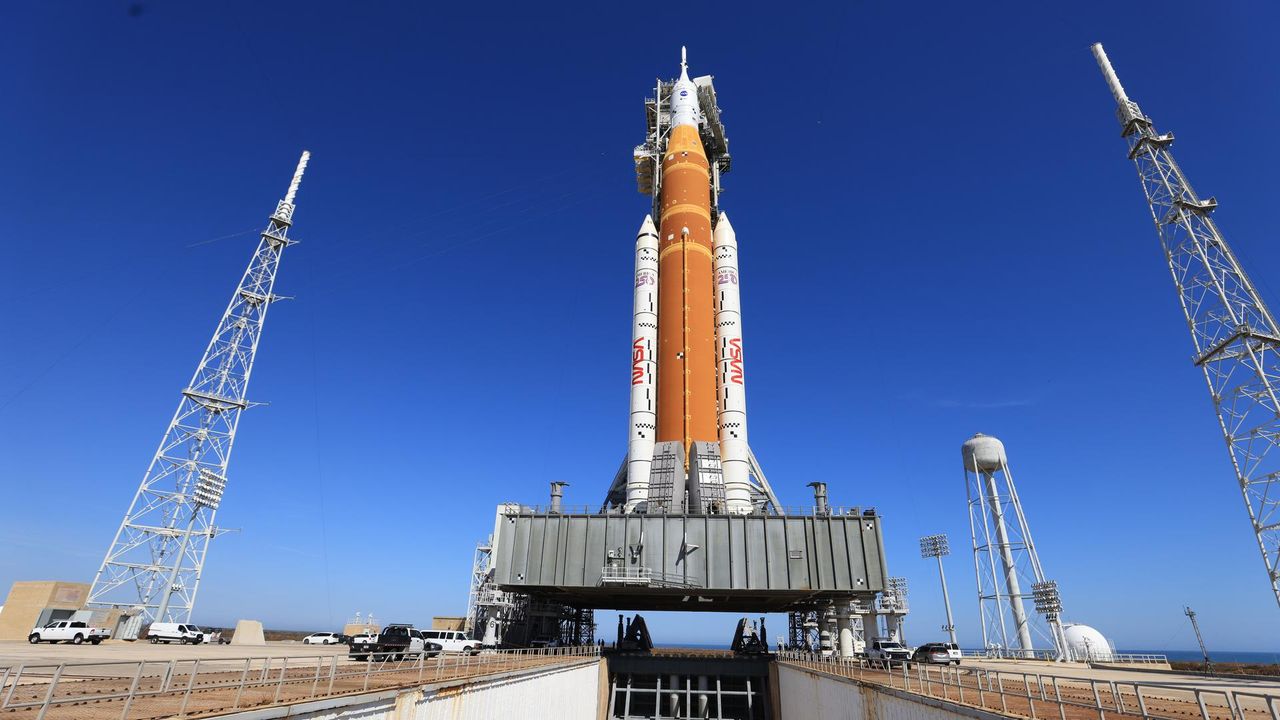
NASA will hold a briefing at 3 p.m. EDT today to update on the Artemis II mission, the first crewed trip beyond low‑Earth orbit since Apollo 17. The four‑person crew—Reid Wiseman, Victor Glover, Christina Koch, and Canadian astronaut Jeremy Hansen—will orbit the moon for 10 days before returning. A recent helium‑flow issue forced the Space Launch System stack to be moved back to the Vehicle Assembly Building for repairs, but progress looks promising. If all goes well, Artemis II could launch on the next available window, opening on April 1.
A mass stellar migration billions of years ago may have helped life get started on Earth
Original Publication Date: 2026-03-12 09:00
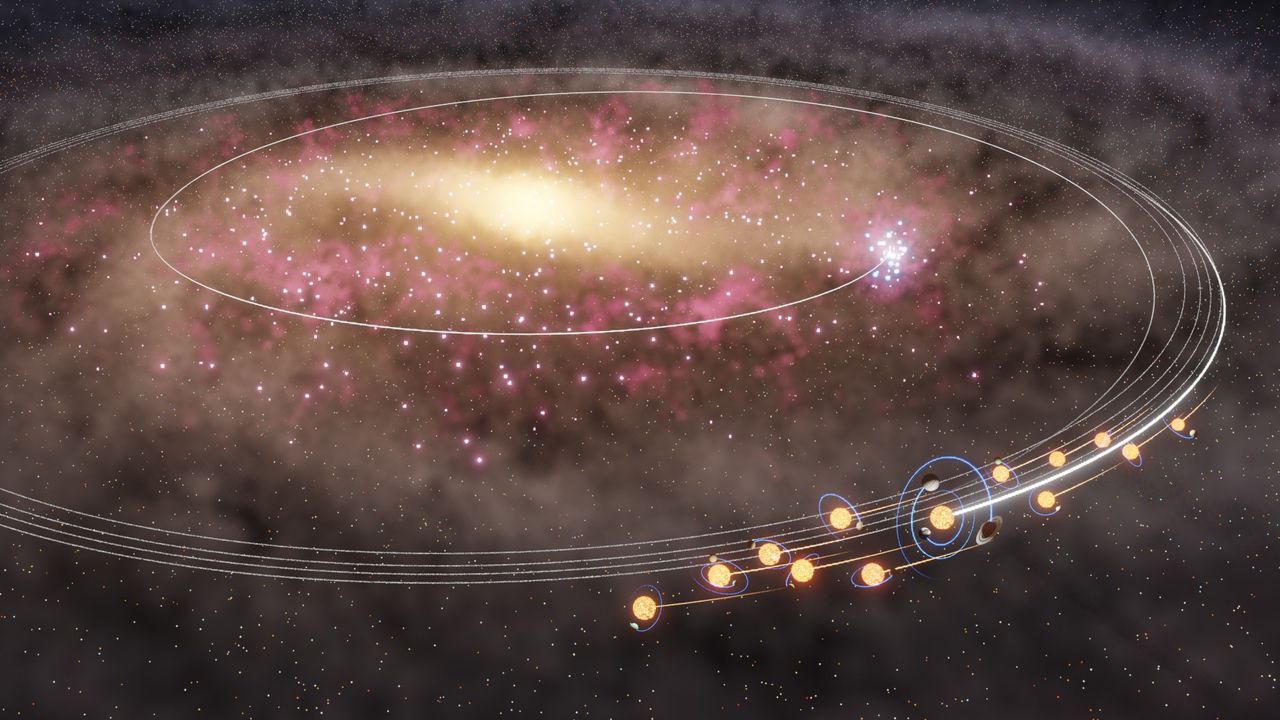
Scientists using data from the ESA’s Gaia satellite have found that our Sun and dozens of “solar‑twin” stars likely migrated outward from the Milky Way’s inner regions about four to six billion years ago. This mass movement, triggered by the galaxy’s rotating bar, would have carried the Sun into the quieter, outer disk where hostile supernovae are rarer. The migration suggests the Sun’s life‑friendly orbit was not a random fluke but a consequence of galactic dynamics. These findings shed new light on how the Sun’s history may have shaped the conditions that allowed life to evolve on Earth.
Black hole and neutron star mergers push the laws of physics with their odd orbits
Original Publication Date: 2026-03-11 21:00

Scientists have discovered that neutron star–black hole pairs can orbit each other in eccentric, oval paths instead of the previously assumed circular trajectories before merging. The GW200105 signal, detected by LIGO and Virgo 910 million light‑years away, produced a new black hole about 13 times the Sun’s mass and showed no precession, hinting at the influence of a third unseen companion. This finding challenges existing models and suggests that such mixed binaries can form through multiple, diverse evolutionary channels. The results open new questions about where and how these extreme systems are born.
Watch Northrop Grumman's 1st 'Cygnus XL' cargo spacecraft leave the space station on March 12
Original Publication Date: 2026-03-11 19:00
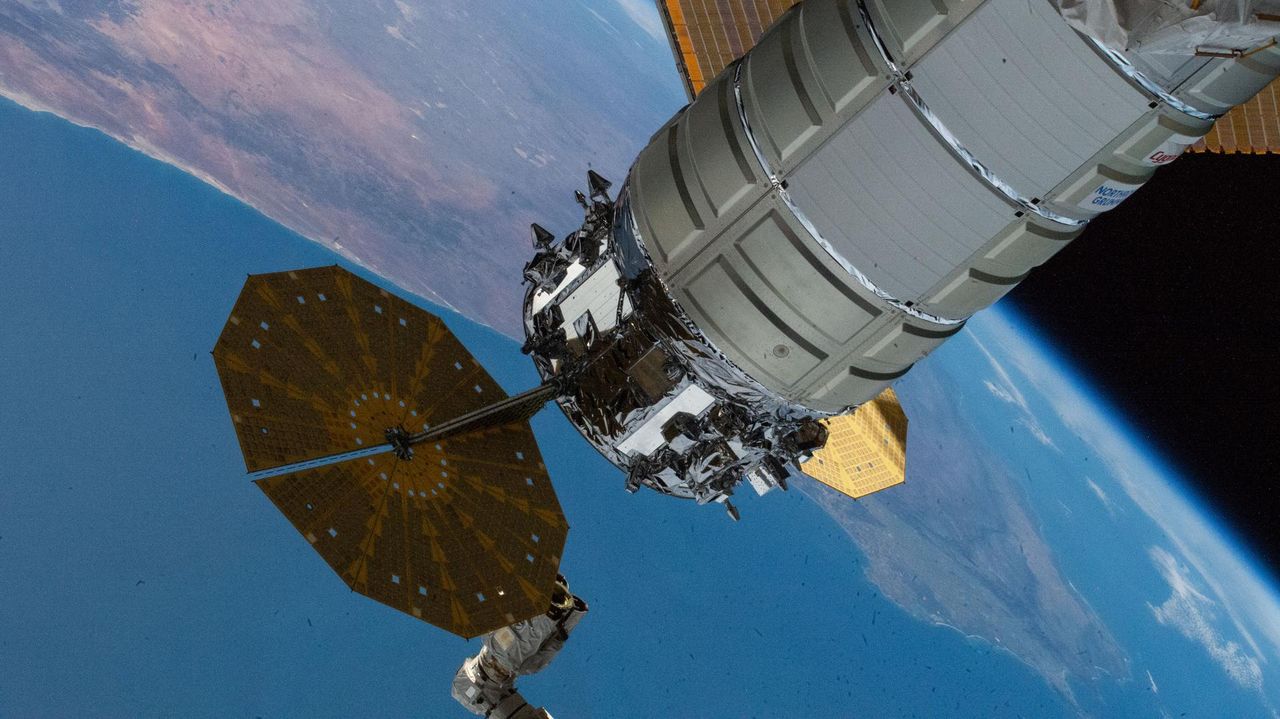
Northrop Grumman’s new Cygnus XL cargo spacecraft, named S.S. William “Willie” McCool, will depart the International Space Station at 7:05 a.m. EDT on March 12 after a nearly six‑month stay. Launched on a SpaceX Falcon 9 in September, the freighter carried roughly 11,000 pounds of science equipment and supplies, overcoming an engine glitch en route. The ISS’s Canadarm2 will grapple and release the vessel into a controlled re‑entry over the South Pacific, where it will burn up safely. This marks the first mission of the larger Cygnus XL, which can haul about 4,990 kilograms—nearly 3,000 pounds more than earlier models.
Anduril, the autonomous weapons maker, doubles the size of its space unit
Original Publication Date: 2026-03-11 16:50

Anduril Industries announced Wednesday that it will acquire ExoAnalytic Solutions, a space‑intelligence firm that monitors satellites from a global network of sensors. ExoAnalytic has supplied critical missile‑warning and defense software for two decades and operates the world’s largest commercial telescope network of over 400 systems. The acquisition expands Anduril’s capabilities in modeling and simulation for classified national‑security space programs. This move underscores the company’s commitment to enhancing U.S. Space situational awareness.