 Spotify
 Apple Podcasts
 Podcast Addict
 Overcast
 Podcast RSS
Japan’s ispace warns of delays in new lunar lander engine
Original Publication Date: 2026-02-19 10:03
Japanese lunar company ispace has announced delays in developing its new VoidRunner engine, which could push back its upcoming Mission 3 to the lunar farside and affect the 2028 launch of Mission 4. The company is keeping the option open to switch engines if performance targets remain unmet, a move that could further delay missions and reduce projected revenue.
Pentagon seeks commercially built GEO spy satellites
Original Publication Date: 2026-02-18 22:06
The Pentagon is turning to commercial space firms to build and run satellites that will monitor the geosynchronous orbit—about 22,000 miles up—before handing them over to the government within 36 months. The Defense Innovation Unit’s new solicitation, “Geosynchronous High‑Resolution Optical Space‑Based Tactical Reconnaissance,” calls for prototypes that can deliver high‑resolution space‑to‑space imagery within 24 months of award. Using a streamlined Other Transaction authority, the program aims to fast‑track deployment and reduce regulatory hurdles, with proposals due March 3 from U.S. And international vendors. This move seeks to close a critical gap in U.S. Space surveillance and ensure the nation can keep track of both friendly and adversarial spacecraft in GEO.
Why GPS III, and what comes after it, still falls short in modern war
Original Publication Date: 2026-02-18 14:00
The United States is set to launch its final GPS III satellite in March, completing the most significant upgrade to its positioning, navigation, and timing system in over a decade. GPS III delivers improved accuracy, stronger signals, and enhanced anti‑jam capabilities that benefit military users. Despite these gains, analysts argue the system still falls short of modern warfare requirements, sparking debate about the next generation of PNT technology. The upcoming launch underscores the nation’s commitment to maintaining a cutting‑edge navigation infrastructure.
Vantor partners with Google AI to automate intelligence reports for government agencies
Original Publication Date: 2026-02-18 13:00
Vantor, a commercial Earth‑observation satellite operator, has partnered with Google to run its Earth AI models inside classified, air‑gapped government networks, enabling rapid generation of text reports from satellite imagery. The new setup will let analysts produce intelligence briefs in 10–15 minutes instead of the typical 24–36 hours, while keeping data off the public cloud for maximum security. Vantor plans to blend AI output with human analysts, preserving jobs and creating a hybrid workflow that could eventually guide autonomous satellite tasking. This marks the first deployment of Google’s AI in sovereign government environments, potentially reshaping how governments analyze and respond to global events.
Geopolitical Analysis: U.S. Space Strategy in Africa Facing Chinese Competition
Original Publication Date: 2026-02-18 22:31

According to a 2026 Atlantic Council analysis, the United States must rethink its commercial partnership models with African nations to keep pace with China’s growing influence in the continent’s emerging space economy. While U.S. Engagement has largely been diplomatic, China is delivering tangible infrastructure—such as a newly transferred telemetry, tracking, and command station in Namibia—giving African leaders immediate orbital capabilities. The report warns that without equitable partnerships that build local ground stations and involve African engineers in launch and data applications, the U.S. Risks ceding ground‑segment dominance to China. To avoid a fragmented global space architecture, Washington needs to invest in shared facilities, joint ventures, and technology transfer that empower African space agencies.
Marlink Integrates Microsoft ExpressRoute for Managed Cloud Connectivity
Original Publication Date: 2026-02-18 17:05

Marlink has announced a partnership with Microsoft to deliver secure, direct access to Azure and Microsoft 365 via its ExpressRoute integration, allowing maritime and enterprise customers to bypass the public internet. The fully managed service uses Marlink’s multi‑orbit satellite network to provide dedicated circuits, predictable latency, and reduced packet loss, ideal for remote and offshore operations. This move expands Marlink’s Possibility Portfolio, adding SD‑WAN and cybersecurity management to support mission‑critical workloads. Operators in maritime, energy, and humanitarian sectors can now immediately benefit from simplified compliance and robust SLAs at the network edge.
MTN Authorized to Provide SpaceX Government Satellite Connectivity
Original Publication Date: 2026-02-18 17:00

MTN Satellite Communications has struck a deal with SpaceX to deliver a government‑grade satellite connectivity ecosystem, integrating SpaceX’s dedicated Low Earth Orbit constellation into its managed network.
SpaceX Unveils ‘Stargaze’ System to Revolutionize Space Traffic Management
Original Publication Date: 2026-02-18 16:05

SpaceX has launched “Stargaze,” a new space‑situational‑awareness system that turns its 30,000 Starlink satellites into a high‑frequency orbital monitor, detecting roughly 30 million transits each day. By aggregating data from the fleet’s star trackers, Stargaze can generate precise orbit predictions and issue collision‑warning messages within minutes, a dramatic improvement over traditional ground‑based radar. The platform also identifies uncoordinated maneuvers by other satellites, as demonstrated when it helped a Starlink craft avoid a potential hit with only five hours’ notice. SpaceX is offering these low‑latency screening results free to any operator that shares its trajectory data, aiming to curb the growing risk of orbital debris and promote safer, collaborative space traffic management.
Kratos Awarded Contract to Accelerate Hypersonic Material Development
Original Publication Date: 2026-02-18 15:58

Kratos Defense & Security Solutions has secured a new Department of War contract to test and evaluate thermal protection systems for hypersonic vehicles, aiming to standardize test conditions and boost national testing throughput. The award follows Kratos’ recent $68.3 million Project Helios jet‑test facility and its role as prime contractor for the $1.45 billion MACH‑TB 2.0 flight‑test bed. Under the JHTO program, Kratos’ Southern Research Engineering division will develop baseline aerothermal setpoints, simulate extreme heating environments, and validate new materials at its specialized facilities. These efforts are expected to eliminate current bottlenecks in the U.S. Defense industrial base, accelerating the transition of innovative hypersonic materials from laboratory to field.
Northern Glow Spans Iceland and Canada
Original Publication Date: 2026-02-19 05:00

A faint aurora swept across the skies over Iceland and Canada on the night of February 16, 2026, captured by the VIIRS sensor on the Suomi NPP satellite. The display followed a minor G1 geomagnetic storm that later intensified to a moderate G2, a level that can push the lights as far south as New York and Idaho. The NOAA Space Weather Prediction Center warned of possible weak power‑grid fluctuations and minor satellite impacts during the event. NASA’s GNEISS sounding‑rocket mission, launched a week earlier from Alaska, collected data on auroral electricity to help scientists model the space‑weather system driving these northern lights.
Digital Surface and Terrain Models from Vantor’s Precision3D Product Line Added to Satellite Data Explorer
Original Publication Date: 2026-02-18 21:05

NASA’s Commercial Satellite Data Acquisition program has expanded its Satellite Data Explorer by adding three new digital elevation products from Vantor’s Precision3D line: a 1‑meter resolution Digital Surface Model, a 1‑meter Digital Terrain Model, and an Elevation Bundle that combines both at 1, 2, and 4‑meter resolutions.
Vantor Archive Imagery Added to Satellite Data Explorer
Original Publication Date: 2026-02-18 20:54
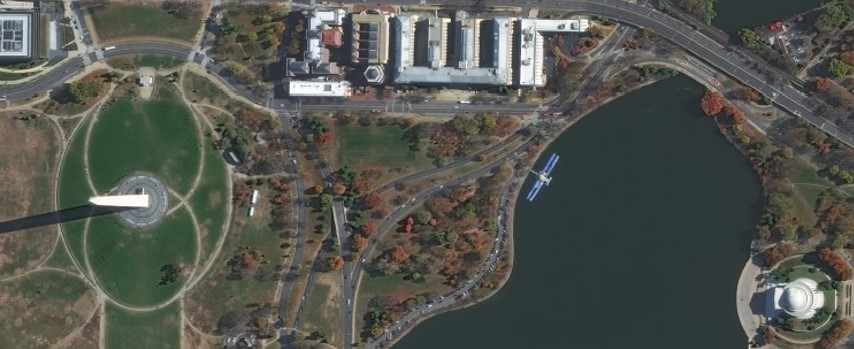
NASA’s Commercial Satellite Data Acquisition Program has just expanded its Satellite Data Explorer by adding high‑resolution imagery from Vantor’s Legion satellites, drawing on a 125‑petabyte archive that dates back to 1999. The new data come in three ready‑to‑use formats—Level 1B for custom processing, Level 2A for immediate analytics, and Map‑Ready 3‑D for cartographic accuracy—offering up to 30‑centimeter resolution across 18 multispectral bands. These images support a wide range of applications, from precision agriculture and natural resource monitoring to disaster response and environmental surveillance. By integrating Vantor’s data, the CSDA Program strengthens NASA’s Earth observation toolkit, making high‑quality commercial imagery more accessible to researchers worldwide.
CSDA Releases New Data Acquisition Request System
Original Publication Date: 2026-02-18 20:42
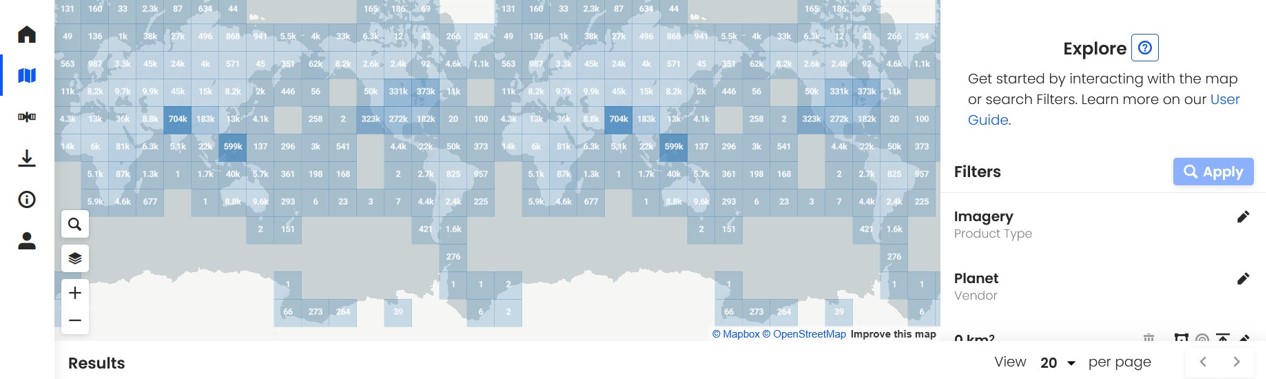
NASA’s Commercial Satellite Data Acquisition Program has launched a new Data Acquisition Request System that lets authorized users submit proposals for future satellite imagery and track them through a single dashboard. Integrated into the Satellite Data Explorer, the system replaces clunky PDF forms and email chains, streamlining the review and approval process while keeping users informed of each proposal’s status. Once approved, vendors collect the requested data, which is then delivered for download—all in one place. By cataloguing user requests, the program can identify unmet needs, such as hotspot detection for fire monitoring, and expand its commercial data offerings accordingly.
CSDA Program Announces Eight New Data Agreements
Original Publication Date: 2026-02-18 20:23

NASA’s Commercial Satellite Data Acquisition (CSDA) Program has secured eight new agreements with seven commercial partners—including Airbus, Capella Space, ICEYE, MDA Space, Planet Labs, Umbra, and Vantor—to deliver near‑global multispectral and synthetic aperture radar (SAR) imagery. These contracts provide high‑resolution, day‑night, all‑weather data with spatial resolutions ranging from 30 cm to 10 m, supporting applications from environmental monitoring to urban planning and infrastructure assessment. The new datasets will be made available to authorized users through CSDA’s End‑User License Agreements and access portals such as the Satellite Data Explorer. This expansion strengthens NASA’s Earth observation capabilities and offers researchers richer, more timely data for scientific and societal benefit.
NASA’s Perseverance Now Autonomously Pinpoints Its Location on Mars
Original Publication Date: 2026-02-18 17:00
NASA’s Perseverance rover has gained a “Mars Global Localization” system that lets it pinpoint its own position on the Martian surface within 10 inches, eliminating the need for daily location updates from Earth. The new algorithm stitches together panoramic images from the rover’s cameras with orbital terrain maps, running on a high‑speed processor originally used by the Ingenuity helicopter. With this capability, Perseverance can autonomously plan and extend drives across the planet, boosting scientific reach and reducing team workload. The upgrade demonstrates how commercial chips and advanced imaging can give rovers a GPS‑like sense of place on other worlds.
Artemis II: Second WDR taking place ahead of March target
Original Publication Date: 2026-02-18 13:18

NASA is preparing for a second Wet Dress Rehearsal of Artemis II after a hydrogen leak at the Tail Service Mast Umbilical forced the first test to scrub. The crew loaded cryogenic propellants and ran the countdown, but a leak spike at T‑5:15 aborted the launch, prompting teams to stay on Pad 39B to troubleshoot without rolling back. Cold weather and an inadvertently vented valve added further hold‑ups, yet the data collected is deemed invaluable for refining the launch system. With fixes underway, NASA has moved the launch window from February to March, aiming to keep the Artemis II crew on track for the upcoming mission.
Blue Origin’s TeraWave Angle, Economics, and the Starlink / Amazon Leo Comparison
Original Publication Date: 2026-02-19 00:45
Blue Origin’s latest TeraWave satellite design features a unique launch angle that promises lower launch costs and higher payload efficiency. The company argues that the TeraWave architecture will reduce deployment expenses by up to 30% compared with traditional LEO constellations. In a comparative analysis, experts note that Starlink’s dense network and Amazon’s planned Leo constellation offer broader coverage, but TeraWave’s cost advantage could make it more competitive for commercial users. Ultimately, Blue Origin’s approach may reshape the economics of small‑satellite deployments in the coming years.
Agile Space Industries Closes $17M Series A
Also covered by: SpaceNews
Original Publication Date: 2026-02-18 14:00
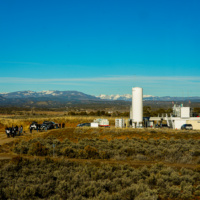
Agile Space Industries, a leader in in‑space chemical propulsion, has closed an oversubscribed $17 million Series A round led by Caruso Ventures and Howdy Partners, bringing its total fundraising to roughly $40 million. The capital will expand manufacturing and testing capacity—including a new Tulsa test center built with the Artemis Group—to meet a backlog that could double the company’s revenue this year. Agile, which has been cash‑positive for 18 months, already holds contracts ranging from the Exploration Company’s Nyx spacecraft to DoD space‑combat challenges and is positioning itself to broaden its offerings beyond thrusters into precision propulsion tanks and other advanced systems. The funding will accelerate the development and deployment of its propulsion systems, strengthening its role in the growing commercial space industry.
NASA hopes to avoid more hydrogen leaks during 2nd Artemis 2 rocket fueling test today: Watch live
Original Publication Date: 2026-02-19 11:00
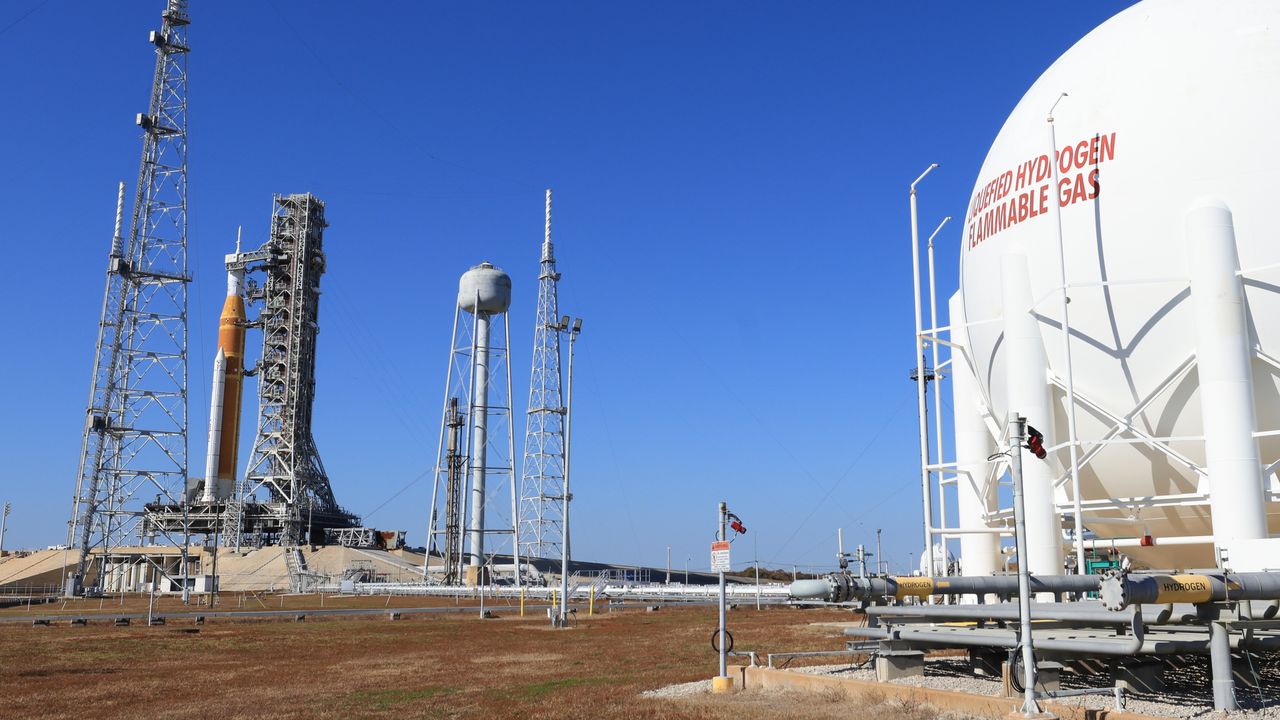
NASA’s Artemis 2 Space Launch System is undergoing its second wet‑dress rehearsal today at Kennedy Space Center, as engineers fill the rocket with 730,000 gallons of liquid hydrogen and oxygen while avoiding the leaks that halted the first test. The 50‑hour simulation will run through an 8:30 p.m. Launch countdown, with a final hold at 3:30 p.m., and if all goes well the crewed mission could launch as early as March 6. Astronauts Reid Wiseman, Victor Glover, Christina Koch and Canadian Jeremy Hansen will be aboard the Orion capsule on a 10‑day lunar fly‑by.
James Webb Space Telescope spots a stunning 'cosmic jellyfish' solve the mysteries of galactic evolution (photo)
Original Publication Date: 2026-02-18 22:00
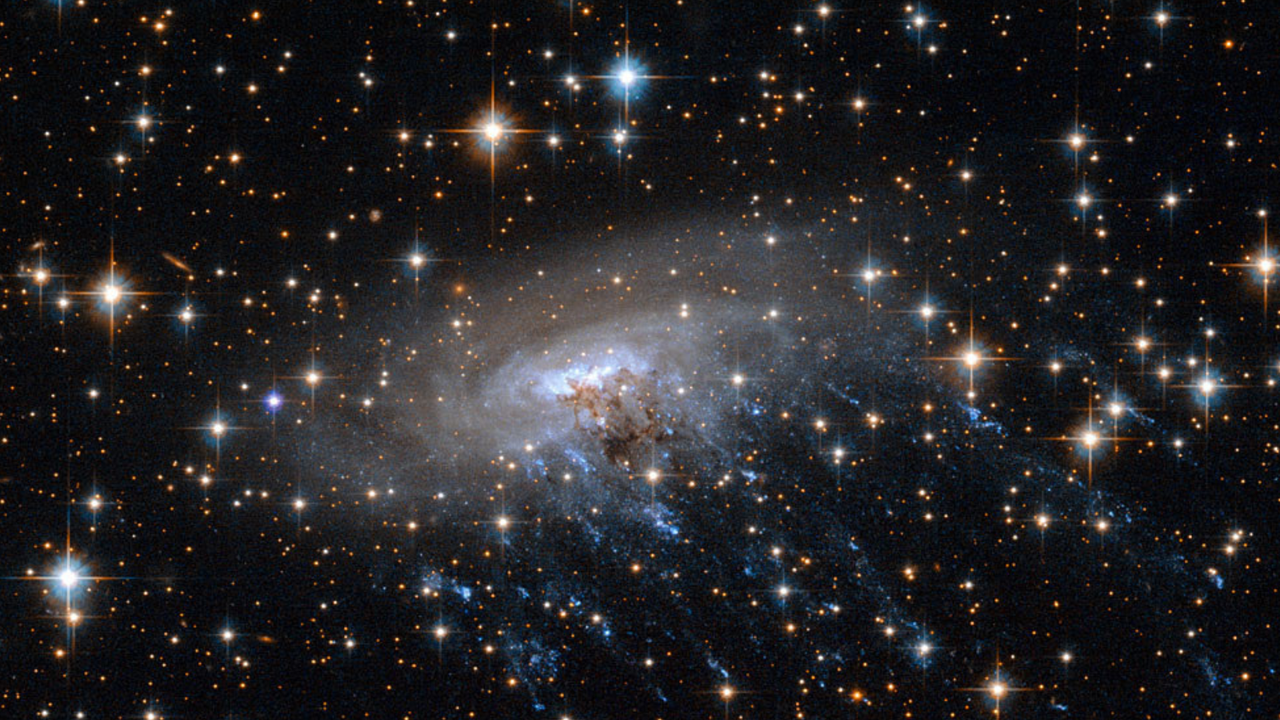
Astronomers have used the James Webb Space Telescope to capture the first detailed image of a “cosmic jellyfish” galaxy, ESO 137‑001, as it existed 8.5 billion years ago. The galaxy’s disk appears ordinary, but it is trailing bright, star‑forming knots of gas—evidence that ram‑pressure stripping from the surrounding cluster is blowing gas out into space. The discovery shows that even in the early universe, galaxy clusters were already harsh enough to strip gas and reshape galaxies, offering fresh clues to how many of today’s dead galaxies formed. The research, published in The Astrophysical Journal, will guide future JWST studies of jellyfish galaxies.
SpaceX will resume landing rockets in The Bahamas after raining debris on the country last year
Original Publication Date: 2026-02-18 19:00

SpaceX has received the green light from the Bahamas Civil Aviation Authority to resume Falcon 9 first‑stage landings in the Exuma Sound, after a thorough regulatory and environmental review. The approval follows a 2025 test‑flight mishap when a Starship upper‑stage breakup sent debris over the island nation, prompting a pause in the partnership. With clearance granted, SpaceX plans to touch down a booster on a drone ship shortly, enabling new orbital trajectories for launches from Florida. The resumption marks a significant step forward for the company’s rapid‑reusability program and its collaboration with the Bahamas.
New fear unlocked: runaway black holes
Original Publication Date: 2026-02-18 18:00

Astronomers have confirmed that when two black holes collide, the gravitational waves they emit can fling the newly formed black hole out at speeds of thousands of kilometres per second, creating a “runaway” object. These high‑velocity ejections arise because the rotating black holes carry up to 29 % of their mass in rotational energy, which can be released during the merger. Observations from LIGO and Virgo have detected the characteristic “ringdown” of these events, revealing that many black‑hole pairs have randomly oriented spins and significant spin energy, supporting the runaway‑black‑hole theory. The discovery of such runaway black holes, including a supermassive example observed by the James Webb Space Telescope, opens a new window on the dynamics of galaxies and the early universe.
SpaceX Falcon 9 rocket plume blossoms over Florida | Space photo of the day for Feb. 18, 2026
Original Publication Date: 2026-02-18 15:00
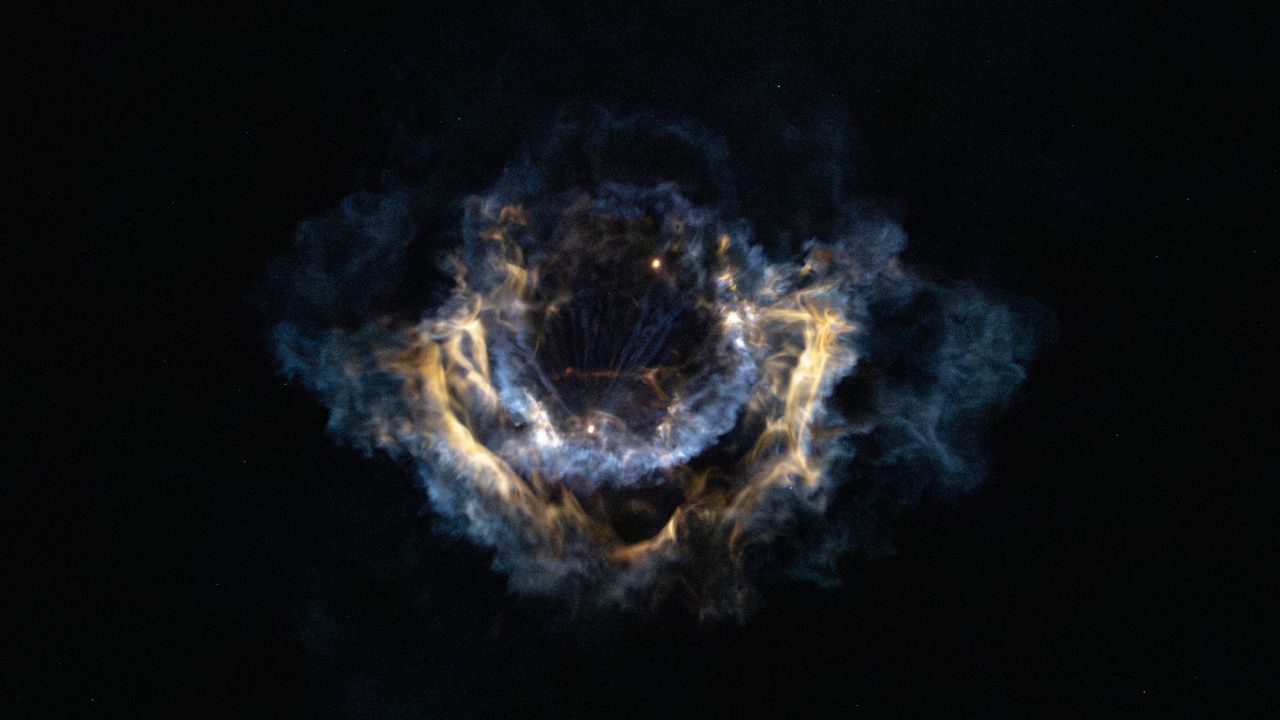
On Feb. 13, 2026, a SpaceX Falcon 9 rocket lifted NASA’s Crew‑12 astronauts from Cape Canaveral toward the International Space Station. The crew—Jessica Meir, Jack Hathaway, ESA’s Sochie Adenot and Russian cosmonaut Andrey Fedyaev—docked with the ISS the next day, bolstering a skeleton crew after a medical evacuation. NASA released a striking photograph of the Falcon 9’s exhaust plume, a “nebula‑like” jellyfish pattern that captured the rocket’s powerful Merlin engines in action.