 Spotify
 Apple Podcasts
 Podcast Addict
 Overcast
 Podcast RSS
ISS module cracking still unresolved despite stopping air leaks
Original Publication Date: 2026-04-29 22:09
At an April 29 meeting of the International Space Station Advisory Council, officials said that sealant has stopped the long‑standing leaks in the Russian section’s PrK vestibule, but the cracks that caused them remain unexplained. The joint NASA‑Roscosmos commission identified two possible causes—high‑cycle fatigue from pump vibrations or environmental‑assisted cracking—and is continuing tests to pin down the root cause before deciding how to use the port. While the cracks no longer leak, both agencies are limiting pressurization and keeping the hatch closed until a definitive solution is found.
May 13: Software Integration and Strategic Missile Defense
Original Publication Date: 2026-04-29 22:06
Missile defense is moving toward highly distributed, software‑defined architectures that fuse space sensors, ground systems, interceptors and decision engines into a single network. As these systems interconnect, the reliability of the underlying software becomes critical for machine‑speed operations. On May 13, SpaceNews and Wind River will host a webinar to explore the mission‑assurance challenges of these initiatives, focusing on resilience, interoperability and trust in high‑consequence environments. Join the discussion to learn what military organizations must consider to keep this software backbone secure and dependable.
Space Force selects firms to build counter-surveillance payloads for satellites
Original Publication Date: 2026-04-29 21:21
The Space Rapid Capabilities Office has awarded $3 million contracts to three small businesses—Assurance Technology Corp., Raptor Dynamix, and Innovative Signal Analysis—to develop sensors that detect ground‑based radar tracking of U.S. Satellites in geosynchronous orbit. These payloads will give the Space Force real‑time alerts, letting operators know when their satellites are being monitored or targeted by adversaries. The contracts, part of a low‑cost SBIR program managed by SpaceWERX, aim to give orbiting assets tactical awareness and improve their ability to respond. This move underscores the Space Force’s push to make its satellites more self‑aware and resilient in contested space.
SpaceX launches 24 Starlink satellites on Falcon 9 rocket from Vandenberg SFB
Original Publication Date: 2026-04-29 23:28
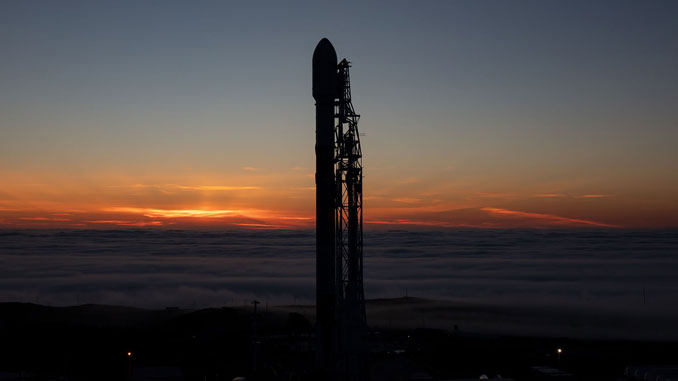
SpaceX capped a busy launch day with a Falcon 9 launch from Vandenberg, sending 24 new Starlink satellites into orbit as part of its 42nd mission this year. The booster, B1093, completed its 13th flight and landed on the drone ship “Of Course I Still Love You” less than nine minutes after liftoff, marking the vessel’s 194th landing and SpaceX’s 606th booster touchdown overall. The launch followed a successful Falcon Heavy flight from Florida earlier that day. SpaceX continues to expand its low‑Earth‑orbit constellation with each mission.
SpaceX launches 6-ton ViaSat-3 F3 satellite on Falcon Heavy rocket
Original Publication Date: 2026-04-29 17:27
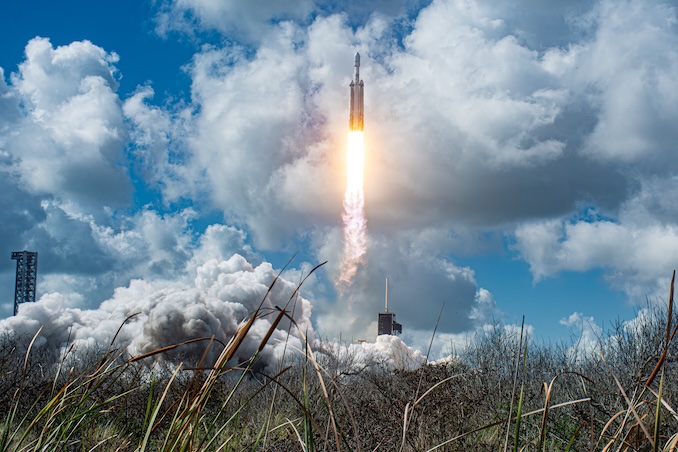
SpaceX’s Falcon Heavy lifted off from Kennedy Space Center on April 29, 2026, carrying the ViaSat‑3 F3 communications satellite. The 70‑meter rocket, powered by 27 Merlin engines, launched at 10:13 a.m. EDT, and its two side boosters successfully landed at new pads at Cape Canaveral after performing boost‑back burns. The third and final ViaSat‑3 satellite was deployed into a geosynchronous transfer orbit after a multi‑stage flight that spanned nearly five hours, adding more than one terabit per second of capacity to the network. This launch marks the culmination of a decade‑long program and expands Viasat’s global coverage, especially across the Asia‑Pacific region.
Launch preview: SpaceX seeks second attempt at Falcon Heavy launch following weather scrub on Monday
Original Publication Date: 2026-04-28 21:58
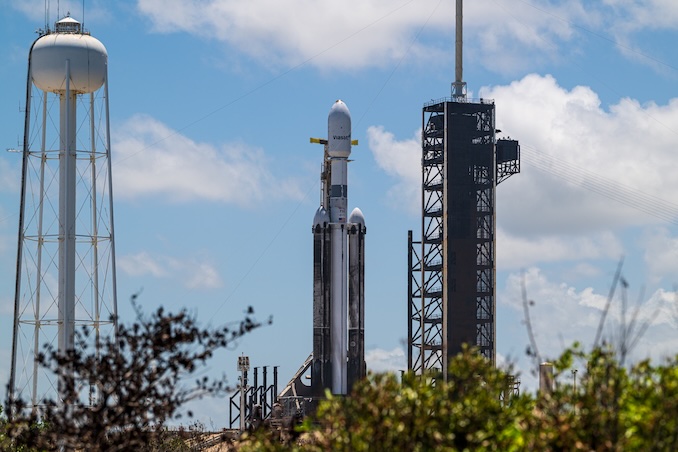
SpaceX is set to lift off its Falcon Heavy from Kennedy Space Center on Wednesday to send ViaSat‑3 Flight 3 into
Canada Tightens Re-entry Regulations as SpaceX Starlink Constellations Descend
Original Publication Date: 2026-04-29 23:31
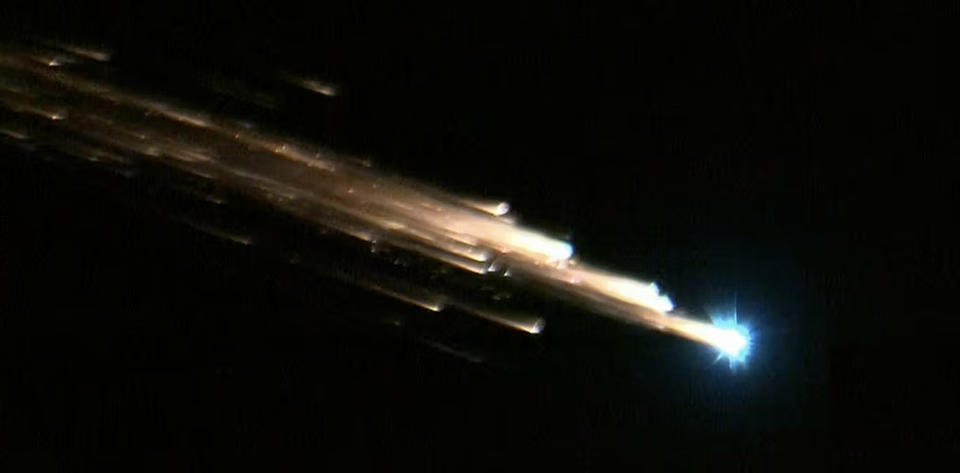
Canadian officials unveiled a comprehensive set of rules to monitor satellite re‑entries and curb orbital debris, a move that comes as SpaceX rolls out a major reconfiguration of its Starlink constellation. The new regulations, announced by Transport Canada on April 27, aim to tighten safety protocols for decommissioned satellites and reduce the growing risk of space junk. SpaceX’s latest Starlink upgrade will involve swapping out older satellites for newer, more efficient models, potentially easing the burden on space debris mitigation efforts. The government’s initiative underscores a growing international push to make space operations safer and more sustainable.
The waiver was the policy. Thursday is the paperwork.
Original Publication Date: 2026-04-29 17:11

On April 30, the FCC approved a shift from the 1990s EPFD limits to a new performance‑based coordination framework for low‑Earth‑orbit satellite operators. SpaceX received a waiver in early January and Amazon’s Kuiper followed in February, so both will have been operating under the new rules for a few months before formal codification. The vote is not the launch of the program but a formal recognition of the advantage the two giants already enjoy. This move sets the stage for a more flexible regulatory environment for future LEO constellations.
Bright Ascension Finalizes Leadership Transition with John Baughn as CEO
Original Publication Date: 2026-04-29 16:12

Bright Ascension announced on April 28 that John Baughn will become its new Chief Executive Officer.
Global Invacom Secures Exclusive Worldwide Distribution for Prodelin Antenna Range
Original Publication Date: 2026-04-29 15:44
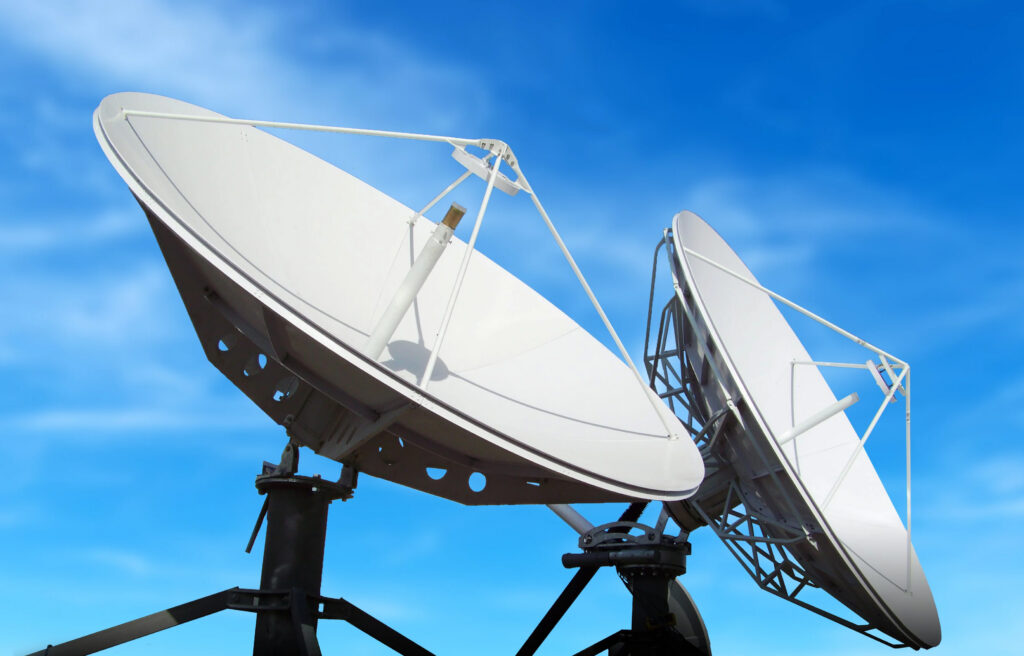
Global Invacom Group Limited announced on April 21 that its UK subsidiary has secured a worldwide exclusive distribution deal with Premix‑Hadlock, a GMR Company. The agreement positions GIGL as the sole distributor of Premix‑Hadlock’s products across all markets. This partnership is expected to expand GIGL’s portfolio and strengthen its presence in the global manufacturing sector.
I Am Artemis: Ryan Schulte
Original Publication Date: 2026-04-29 21:45
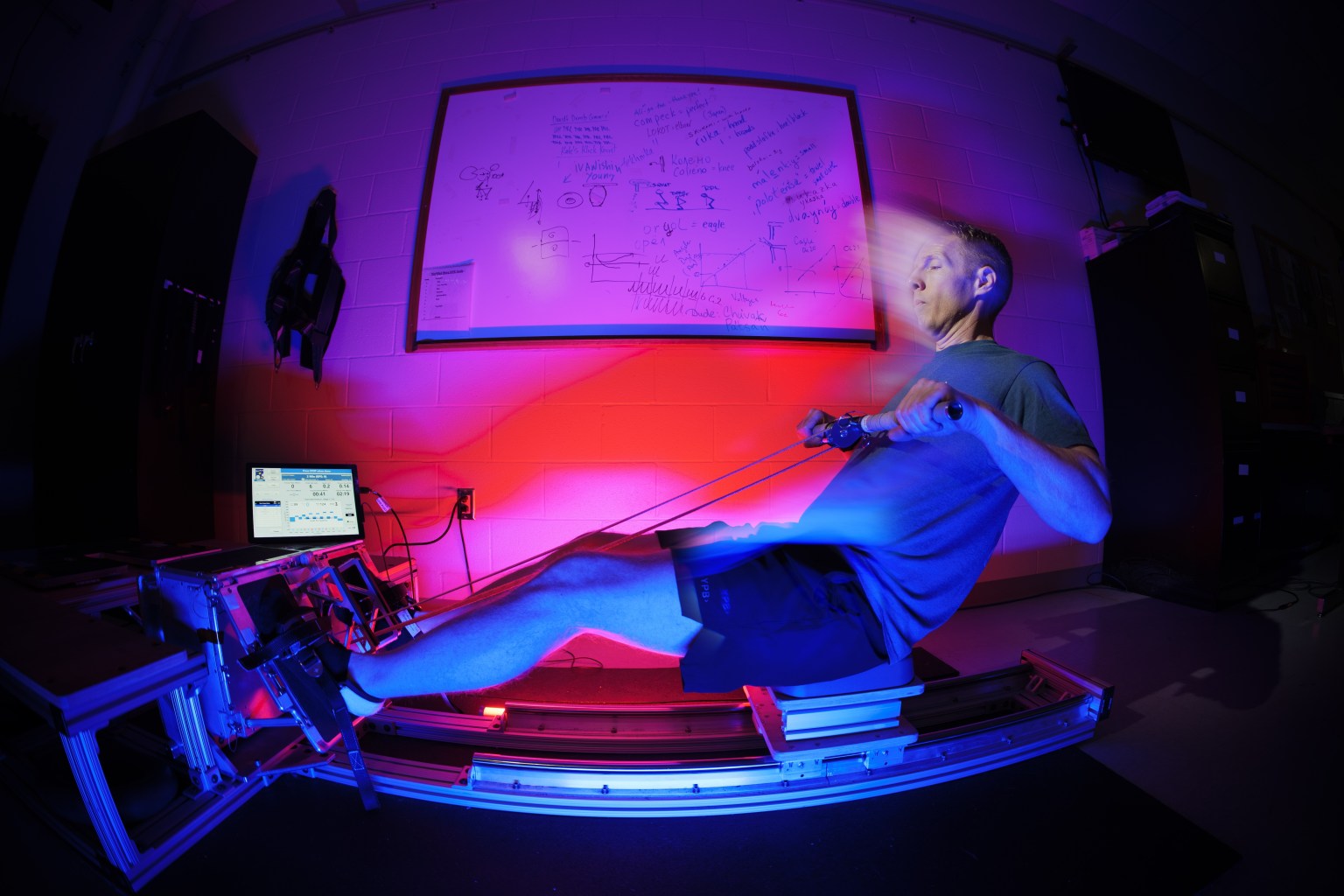
NASA’s Orion flywheel, designed and overseen by project manager Ryan Schulte, was a compact, battery‑free exercise device that kept the Artemis II crew’s muscles and bones from atrophying during their 694,481‑mile lunar trip. The flywheel, about the size of a shoebox, offers up to 500 pounds of resistance and can perform a full range of aerobic and weight‑lifting moves, all while fitting inside the cramped capsule and minimizing noise for crew communication. Schulte’s team tackled unique challenges—limited space, crew mobility, and noise reduction—to deliver a device that helped astronauts exercise roughly 30 minutes each day, boosting both physical fitness and mental clarity. With Artemis II’s success, Schulte is now developing a fleet of reusable flywheel units for future long‑duration lunar missions, ensuring astronauts remain healthy and mission‑ready on the Moon and beyond.
US-Indian Spacecraft Captures Mexico City Subsidence
Original Publication Date: 2026-04-29 21:12

NASA and India’s NISAR satellite has mapped Mexico City’s ongoing subsidence, showing dark blue areas sinking more than two centimeters per month due to groundwater pumping. The image confirms the new mission is performing as expected, with yellow and red tones representing noise that should fade as more data are collected. Notable landmarks, including the Angel of Independence and the historic Nabor Carrillo lake, appear in the map, illustrating how the city’s foundations are gradually sinking. NISAR’s dual radar wavelengths—L‑band for dense vegetation and S‑band for small vegetation—offer unprecedented global coverage that will aid disaster response and help scientists track surface changes worldwide.
Curiosity Blog, Sols 4873-4878: Welcome to the Atacama Drill Target
Original Publication Date: 2026-04-29 20:38

NASA’s Curiosity rover has begun a new drill campaign at the Atacama site on Mars, targeting the first Mount Sharp layered‑sulfate bedrock encountered since leaving the boxwork terrain. Over the first three sols, the team performed a pre‑load test, triage contact science, and collected repeated APXS observations, while Mastcam and MAHLI captured stereo mosaics of key rocks such as Kimsa Chata and Queen of the Andes. The next phase will deliver a sample to the ChemMin instrument for mineralogical analysis, allowing scientists to compare the new unit to a drill site 160 meters below.
US-Indian Space Mission Maps Extreme Subsidence in Mexico City
Original Publication Date: 2026-04-29 20:00
NASA‑ISRO’s NISAR satellite has begun mapping Mexico City’s rapid subsidence, using its powerful L‑band radar to see ground motion even through clouds and vegetation. Preliminary data from October 2025 to January 2026 show parts of the metropolis sinking over two centimeters per month, with the Angel of Independence visibly losing height. NISAR’s dual‑wavelength radar, the largest ever sent to space, can detect subtle shifts in land, glaciers and croplands twice every 12 days, opening the door to similar studies in other vulnerable regions. This early success marks the start of a new era in monitoring Earth’s changing surface from orbit.
'The Martian' becomes real life: Meet 'Spudnik,' the space potato
Original Publication Date: 2026-04-30 10:00
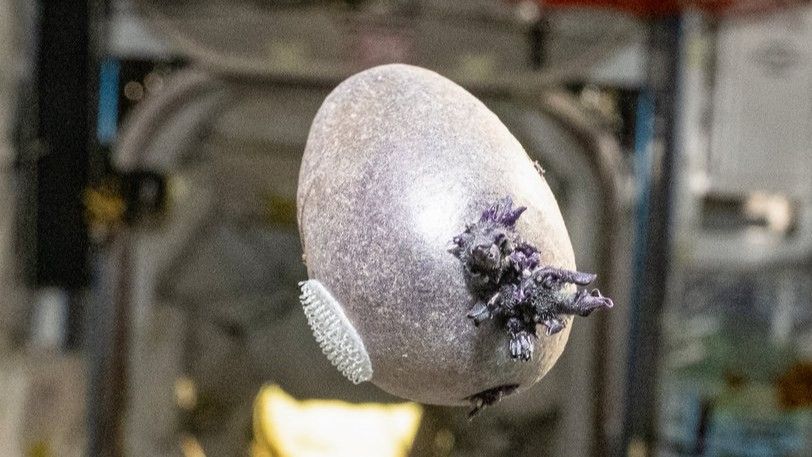
NASA astronaut Don Pettit grew a purple, fuzzy potato dubbed “Spudnik” aboard the International Space Station, using an improvised terrarium and Velcro to anchor the tuber in microgravity. The experiment showed the potato’s roots sprouting upward—an oddity caused by weightlessness—yet the plant thrived, producing visible sprouts. Pettit’s off‑time research echoes Andy Weir’s “The Martian,” highlighting potatoes’ potential as a nutritious, sustainable food source for long‑duration space missions and future Martian habitats. This playful yet informative experiment underscores the growing interest in space agriculture as a cornerstone of human exploration beyond Earth.
Trump invited the Artemis 2 moon astronauts to the Oval Office. Here's what happened
Original Publication Date: 2026-04-29 20:23
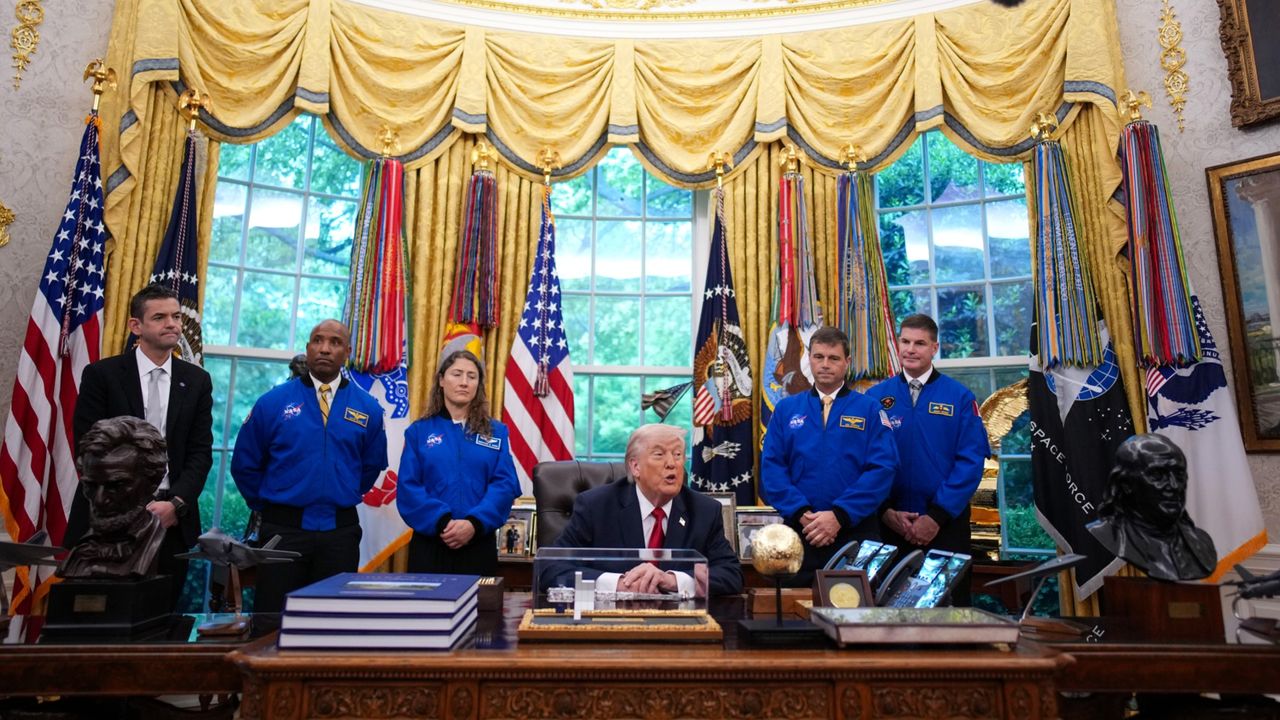
President Trump welcomed the four astronauts of NASA’s record‑breaking Artemis 2 mission and NASA Administrator Jared Isaacman to the Oval Office for a livestreamed greeting.
James Webb Space Telescope's strange little red dots may really be 'black hole stars', X-ray data suggests
Original Publication Date: 2026-04-29 18:00

Scientists have confirmed that the mysterious little red dots spotted by the James Webb Space Telescope are likely “black hole stars,” gas clouds energized by a growing supermassive black hole inside them. An X‑ray signal from NASA’s Chandra Observatory, matching one of the red dots, shows the same energetic output as quasars, linking the dots to active black holes. These compact, distant clouds—only a few hundred light‑years across and 12 billion years old—may be the missing piece in understanding how supermassive black holes and their host galaxies form.
Europe's powerful Ariane 6 rocket launches 32 Amazon internet satellites
Original Publication Date: 2026-04-29 17:00
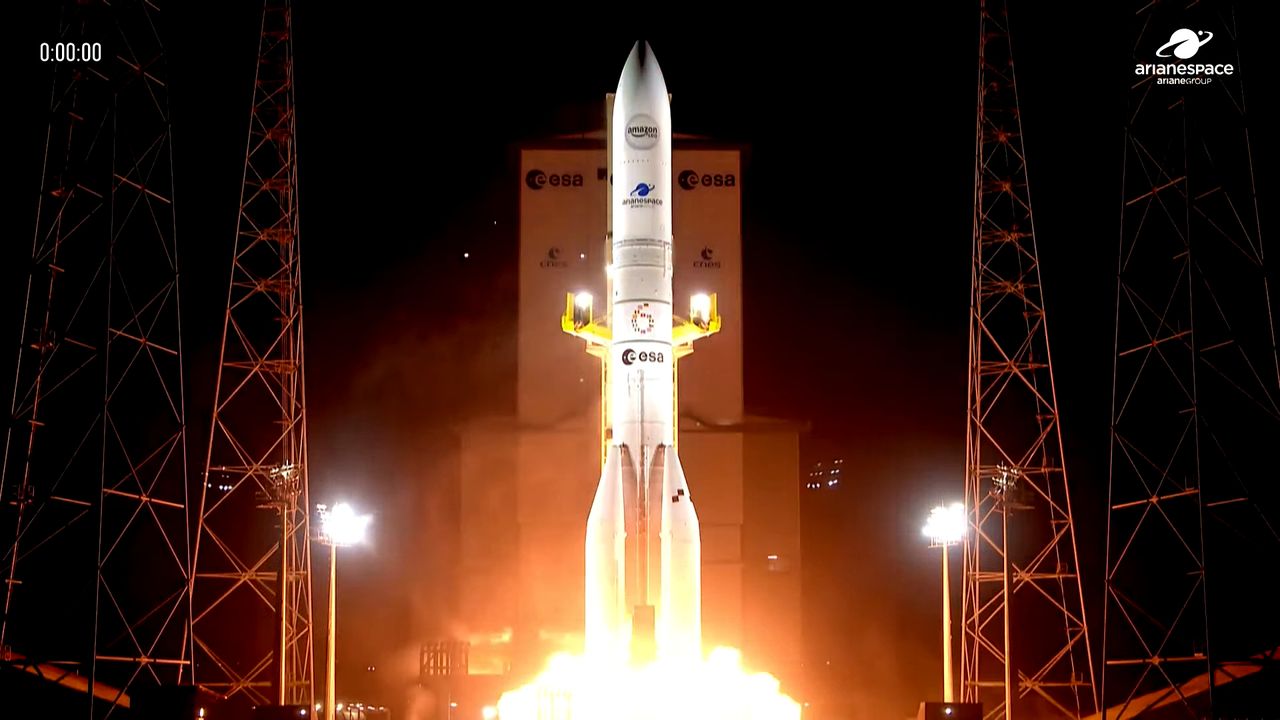
Europe’s Ariane 6 heavy lifter roared to life at 4:57 a.m. EDT on Thursday, carrying 32 of Amazon’s Leo satellites into low‑Earth orbit from Kourou, French Guiana.
The cosmos wears a galactic sombrero | Space photo of the day for April 29, 2026
Original Publication Date: 2026-04-29 14:00
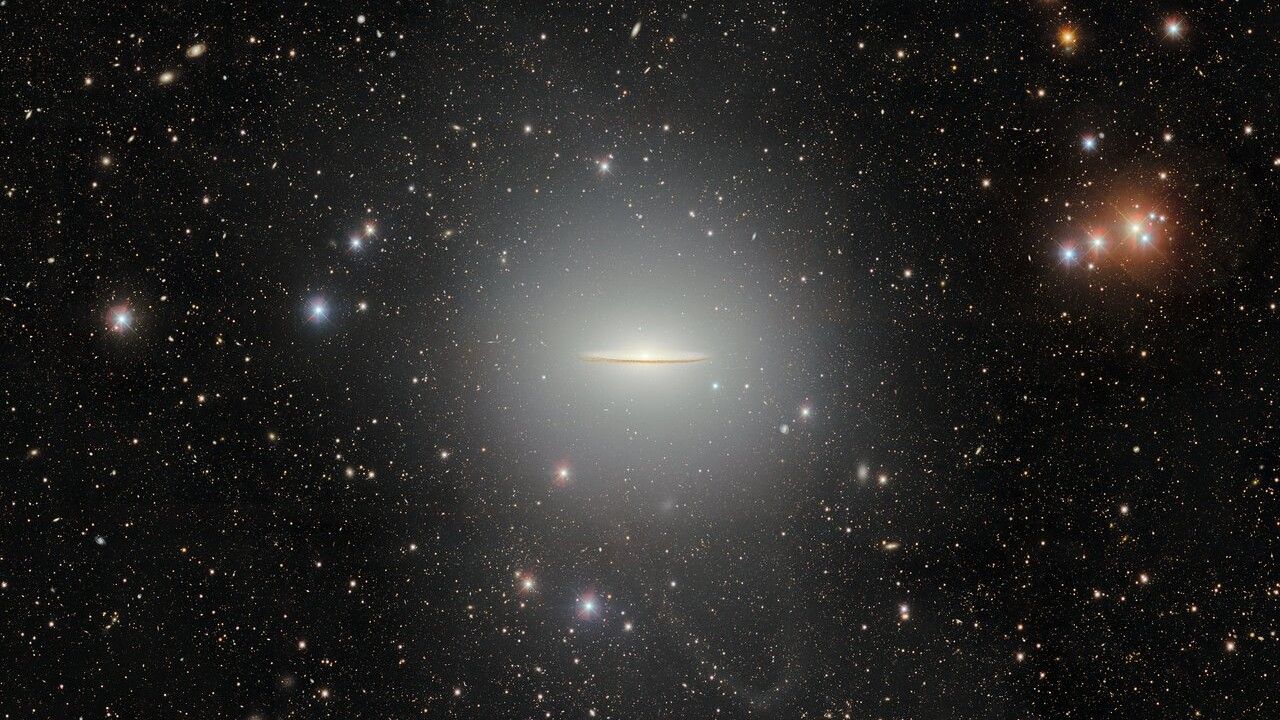
The Sombrero galaxy, or Messier 104, dazzles astronomers with its unmistakable hat‑shaped silhouette, captured in stunning detail by the Dark Energy Camera on the Blanco 4‑meter telescope in Chile.