 Spotify
 Apple Podcasts
 Podcast Addict
 Overcast
 Podcast RSS
NASA releases final RFP for Mars communications orbiter
Original Publication Date: 2026-05-16 22:33
NASA has issued the final request for proposals for its Mars Telecommunications Network, targeting a contract award by October 1. The $700 million program, funded by last year’s budget act, will deliver a communications orbiter by the end of 2028 and requires bidders to have completed 2024‑25 Mars sample‑return studies that included a telecom orbiter concept.
York Space defends growth strategy as SDA programs are reshaped
Original Publication Date: 2026-05-16 21:55
York Space Systems is riding a wave of Pentagon contracts to build a proliferated satellite network, but a reorganization of the Space Development Agency into a broader Space Data Network threatens to reshape that business model. CEO Dirk Wallinger says the need for resilient military communications remains, yet the new structure could open the door to more competitors, including SpaceX, and shift procurement from a tranche‑based system to a more integrated, portfolio‑based approach. Funding for the new network is still in flux, as lawmakers debate using reconciliation to finance the $1.5 billion request, raising doubts about how much money will actually reach contractors. Meanwhile, concerns over software glitches in York‑built Tranche 1 satellites have already prompted the agency to slow future launches, adding another layer of uncertainty for the company.
Space Force awards Northrop Grumman $398 million satellite contract
Original Publication Date: 2026-05-16 14:40
The U.S. Space Force has awarded Northrop Grumman a $398 million contract to build a prototype communications satellite designed to demonstrate anti‑jamming technology for military use in contested environments.
The end of GEO?
Original Publication Date: 2026-05-16 21:43

SES announced on May 12 that it will cancel the launch of two Intelsat satellites, IS‑41 and IS‑44, citing shifting market demands and a strategic realignment of its satellite portfolio. The decision, revealed during the operator’s quarterly results, is expected to save the company significant development and launch costs while allowing it to focus on higher‑yield projects. Industry analysts predict the move could tighten competition in the medium‑earth orbit sector, prompting other operators to reassess their own launch schedules. The cancellation underscores the growing pressure on satellite operators to balance investment with rapidly evolving consumer and enterprise needs.
SmallSat Europe Speaker Focus: Moritz Novak, GATE Space
Original Publication Date: 2026-05-16 21:43

Moritz Novak co‑founded GATE Space, an Austrian company developing green propulsion for maneuverable small satellites. The firm is building Austria’s first military satellite, a milestone for the nation’s space defense capabilities. At SmallSat Europe, Novak will present a Tech Brief on redefining satellite mobility for defense, showcasing the potential of sustainable propulsion systems. This initiative positions Austria at the forefront of green satellite technology.
Apple Prepares for Pivot at WWDC 2026 Milestone
Original Publication Date: 2026-05-16 21:05

Apple’s Worldwide Developers Conference kicks off on June 8, 2026, with the tech world bracing for the most significant iPhone software overhaul in years. Industry analysts predict a sweeping update to iOS, including deeper AI integration, a revamped notification system, and enhanced privacy controls. Developers are already racing to build apps that will take advantage of these changes, while consumers anticipate a smoother, more intuitive experience. The conference will set the tone for the next generation of Apple devices.
NASA's Psyche spacecraft is flying to a metal asteroid. So, why did it just visit Mars?
Original Publication Date: 2026-05-16 12:00
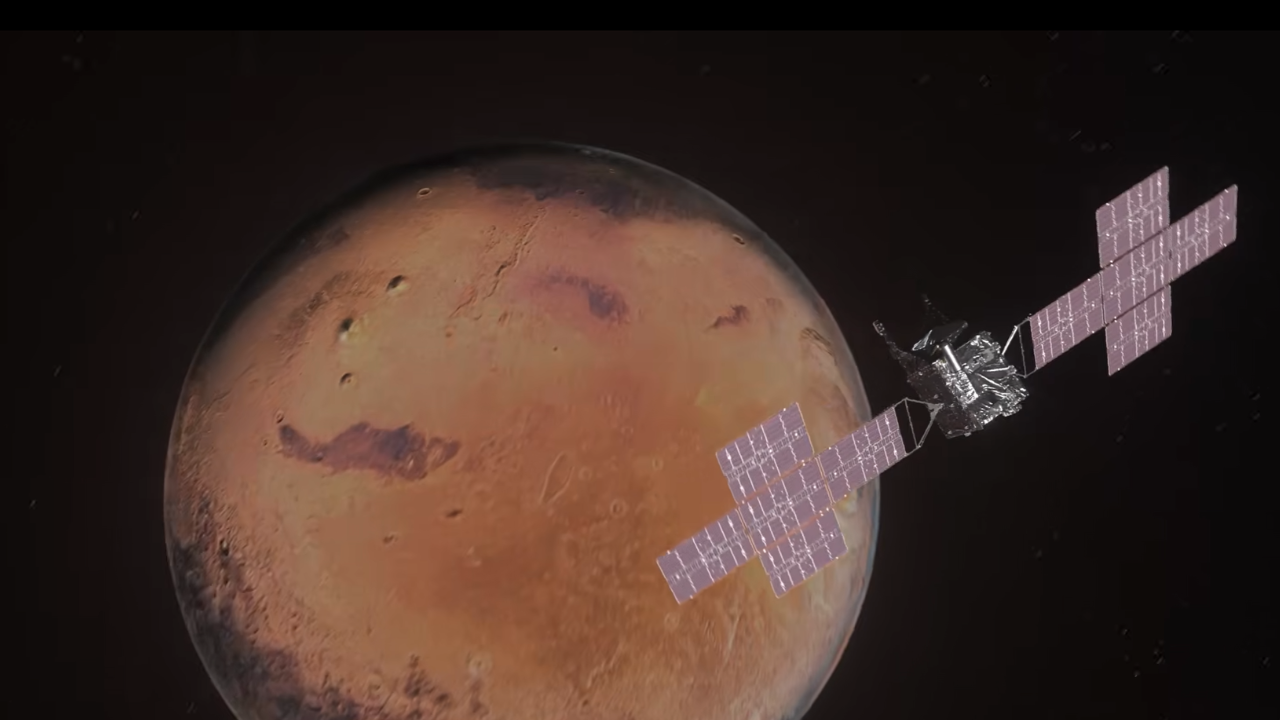
NASA’s Psyche probe used a close flyby of Mars on May 15 to gain a 2‑km/s speed boost, slingshotting toward its target, the metal
Astronomers find interstellar comet 3I/ATLAS hiding in images taken before its official discovery
Original Publication Date: 2026-05-16 10:00

Scientists have discovered that the Vera C. Rubin Observatory captured images of the interstellar comet 3I/ATLAS a full ten days before it was officially identified by the ATLAS network. The comet was already showing a bright coma in the Rubin data, and the telescope’s early detection suggests it could spot one interstellar visitor each year.