 Spotify
 Apple Podcasts
 Podcast Addict
 Overcast
 Podcast RSS
Space Force awards SpaceX $4.16 billion to build satellite network for airborne target tracking
Original Publication Date: 2026-05-29 16:52
The U.S. Space Force has awarded SpaceX a $4.16 billion contract to build a constellation of satellites that will track airborne targets from orbit, marking a major shift of battlefield surveillance from aircraft to space. The Air Moving Target Indicator (AMTI) network will detect, track and maintain custody of fighters, bombers, cruise missiles and potentially hypersonic weapons, with a first deployment expected by 2028. The award comes days after SpaceX was selected for a separate $2.29 billion contract to build the Space Data Network, positioning the company at the heart of the Pentagon’s emerging space‑based sensing and communications architecture. While the Space Force will not rely on a single provider, this initial contract establishes the foundation for a proliferated low‑Earth‑orbit constellation that will complement traditional airborne platforms like the E‑3 AWACS.
Bellatrix and TelePIX plan 2028 air-breathing VLEO imaging demonstration
Original Publication Date: 2026-05-29 13:36
South Korean optical payload developer TelePIX and Indian propulsion specialist Bellatrix Aerospace have joined forces for a very low Earth orbit (VLEO) geospatial demonstration mission slated for 2028. The partnership will showcase advanced imaging capabilities in the VLEO regime, where satellites experience reduced atmospheric drag and extended operational lifetimes. The collaboration underscores the growing international cooperation in space technology, combining TelePIX’s optical expertise with Bellatrix’s propulsion solutions. The mission aims to demonstrate high‑resolution Earth observation from the lower reaches of orbit, paving the way for future commercial and scientific applications.
Spatial data has become a weapon of war in the US-Iran war
Original Publication Date: 2026-05-29 12:00
In today’s geospatial era of warfare, satellite‑derived information is as strategically vital as physical territory. The boundary between civilian and military use of spatial data is dissolving, turning it into a new weapon. This shift is evident in the US‑Iran conflict, where spatial data has played a decisive role. The article highlights how this transformation is reshaping modern conflict.
ULA launches 29 Amazon Leo satellites on Atlas 5 rocket from Cape Canaveral
Also covered by: Space.com
Original Publication Date: 2026-05-29 21:52
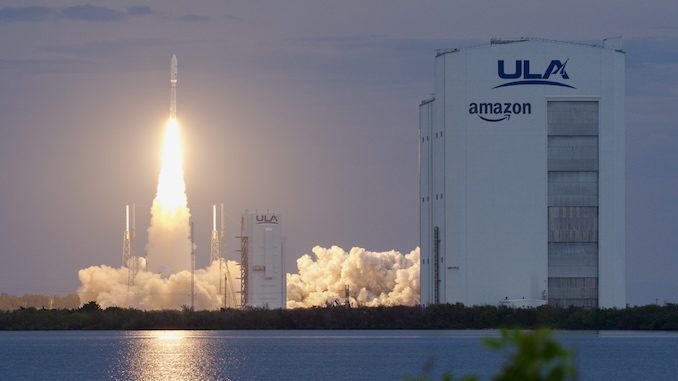
On Friday evening, May 29, ULA’s Atlas 5 551 rocket lifted off from Cape Canaveral’s Space Launch Complex 41, carrying 29 of Amazon’s Leo broadband satellites into orbit and tying the Atlas 5’s heaviest‑payload record with roughly 18 tons of hardware.
Sovereignty got an answer on Day 3. Two answers, actually, and a commercial veto.
Original Publication Date: 2026-05-29 12:38

Day 1 of SmallSat Europe 2026 revisited the sovereignty debate that had stalled European procurement, highlighting four competing definitions vying for a single budget line. By Day 3, three concrete solutions emerged: Spain’s capability‑ownership stack, Poland’s strategy to diversify its satellite portfolio, and a commercial veto proposed by the on‑orbit servicing panel. These proposals aim to streamline decision‑making and secure funding for Europe’s next generation of small satellites. The event underscored the urgency of aligning policy, industry, and finance to keep European space ambitions on track.
NASA Awards Contract for Johnson Space Center Infrastructure
Original Publication Date: 2026-05-29 21:24

NASA has awarded a $300 million Multiple Award Construction Contract to seven companies to upgrade its Johnson Space Center in Houston, with all funds required to be spent by September 30, 2026. The contract, an indefinite‑delivery/indefinite‑quantity award, will fast‑track improvements to mission‑support facilities, utilities, and equipment essential for astronaut training and mission readiness. Task orders will be competitively bid among the awardees to ensure fair opportunity and the best value for the government. These upgrades aim to sustain the center’s critical role in space exploration.
NASA Hosts SpaceX Crew-11 Astronauts for Public Event at Headquarters
Original Publication Date: 2026-05-29 20:49
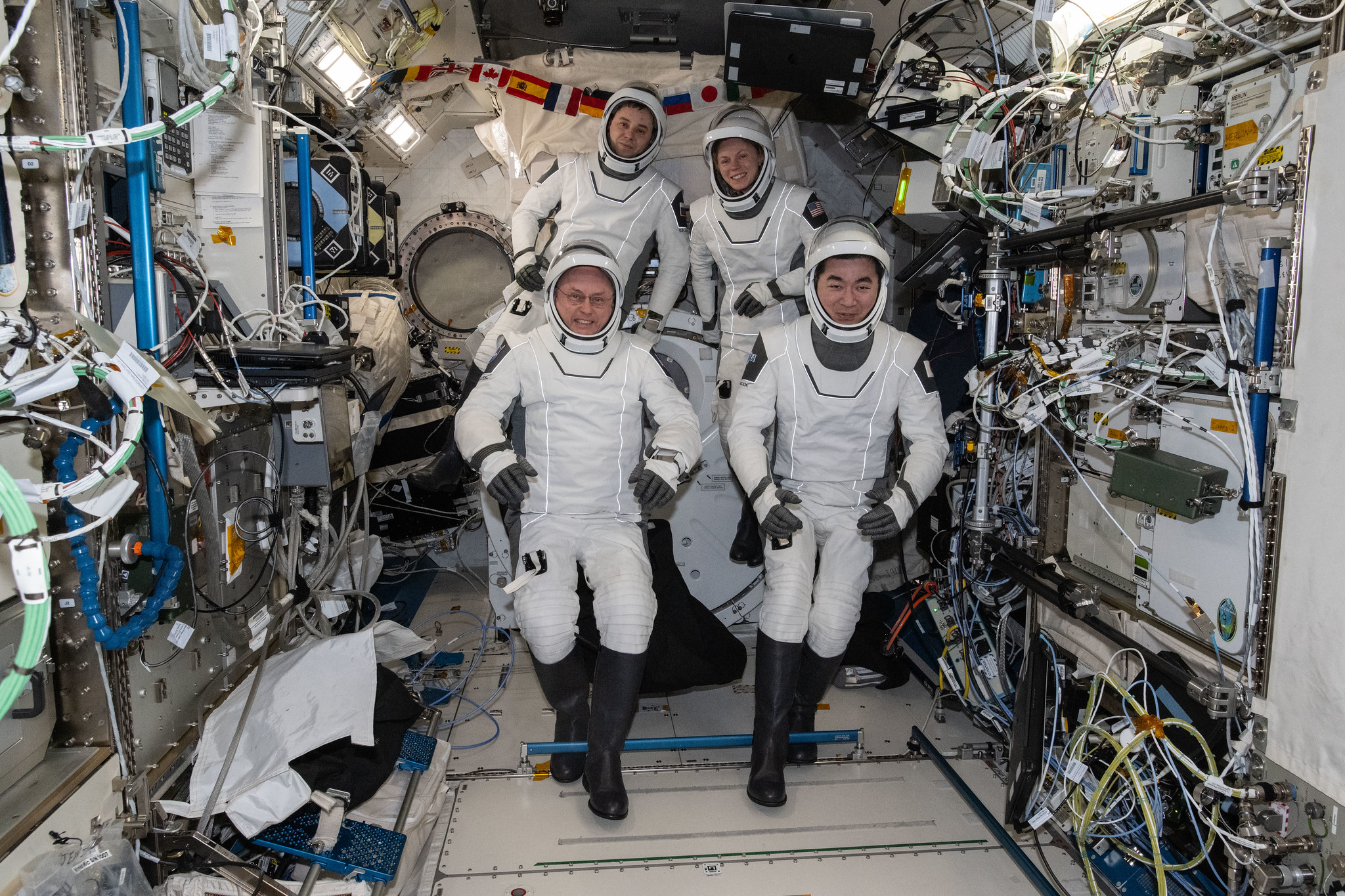
NASA’s SpaceX Crew‑11 astronauts—Mike Fincke, Zena Cardman, Kimiya Yui, and cosmonaut Oleg Platonov—will appear at NASA Headquarters on June 1 to discuss their 167‑day ISS mission, during which they flew nearly 71 million miles and completed over 2,670 orbits. The event, held in the Webb Auditorium, will highlight research that benefits life on Earth and prepares for future Moon and Mars exploration. Fincke, a veteran with 549 cumulative space days, and Yui, Cardman, and Platonov, all new to spaceflight, will share insights from Expedition 73/74. Media must RSVP by 8 a.m. June 1 to attend.
Hubble Spies Faint Irregular Galaxy
Original Publication Date: 2026-05-29 16:14
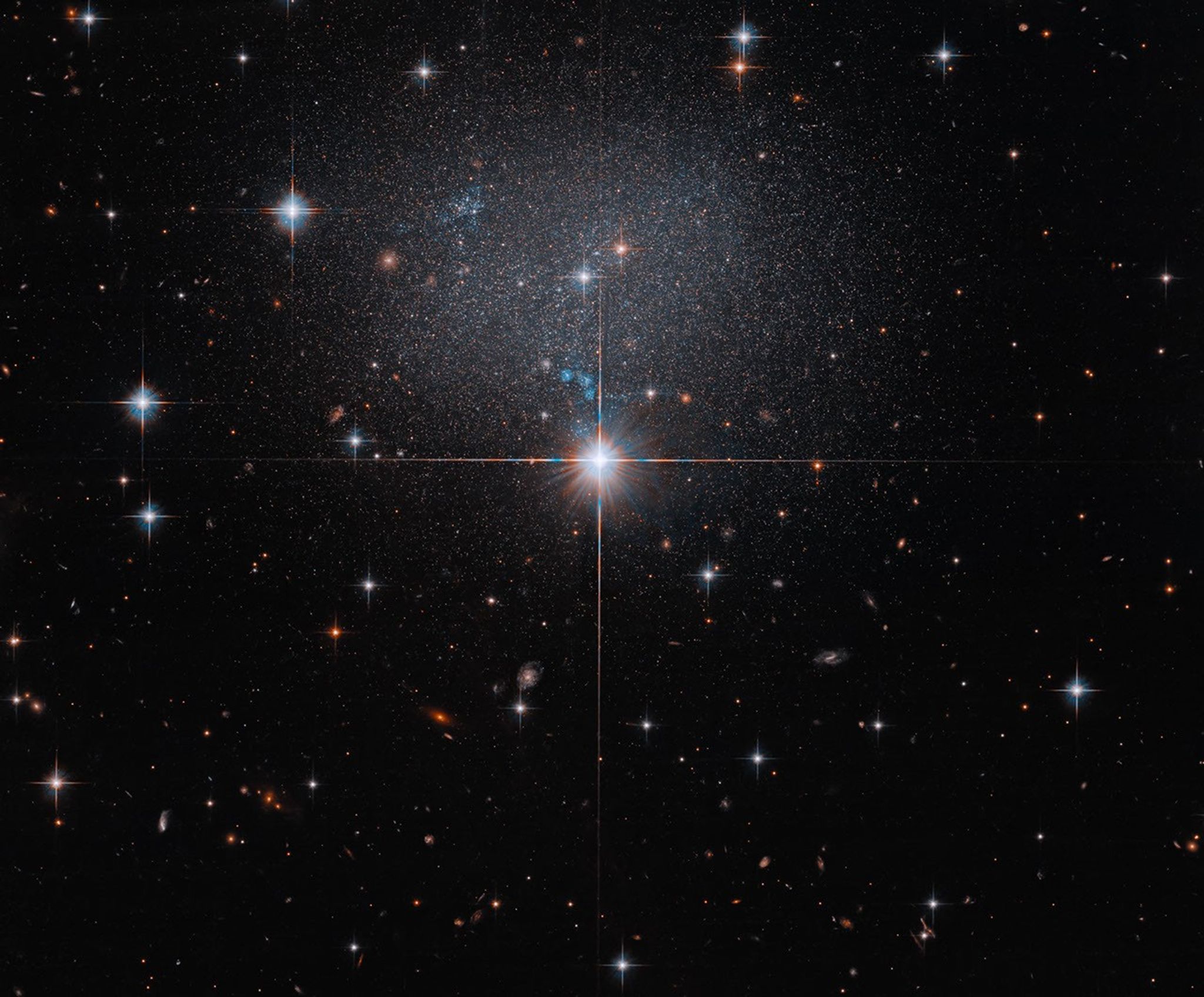
NASA’s Hubble Space Telescope released a new image on May 27, 2026 that captures the faint dwarf irregular galaxy ESO 490‑017 in the constellation Canis Major. The galaxy, about 12,000 light‑years across and 23 million light‑years from Earth, appears as a dim starry swarm behind brighter foreground stars with diffraction spikes. The image also shows numerous background galaxies, many with spiral structures, and was part of a program studying the cosmic flow of galaxies and clusters. This observation helps scientists map how uneven matter distribution drives large‑scale motions across the universe.
Hubble Captures M88 on Journey to Center of Virgo Cluster
Original Publication Date: 2026-05-29 11:29

Hubble Space Telescope captured a stunning image of the active spiral galaxy Messier 88, 63 million light‑years away in the Virgo Cluster. The galaxy’s heart hosts a supermassive black hole about 100 million times the Sun’s mass, feeding on gas and dust while powering dramatic outflows that shape its star‑forming arms. As M88 orbits the cluster, it will soon swing close to the giant elliptical Messier 87, where intense ram‑pressure stripping will strip away its cold gas and alter its star‑forming future.
China's Shenzhou 21 astronauts return to Earth after being briefly 'stranded', wrapping up record-breaking mission (video)
Original Publication Date: 2026-05-29 18:29
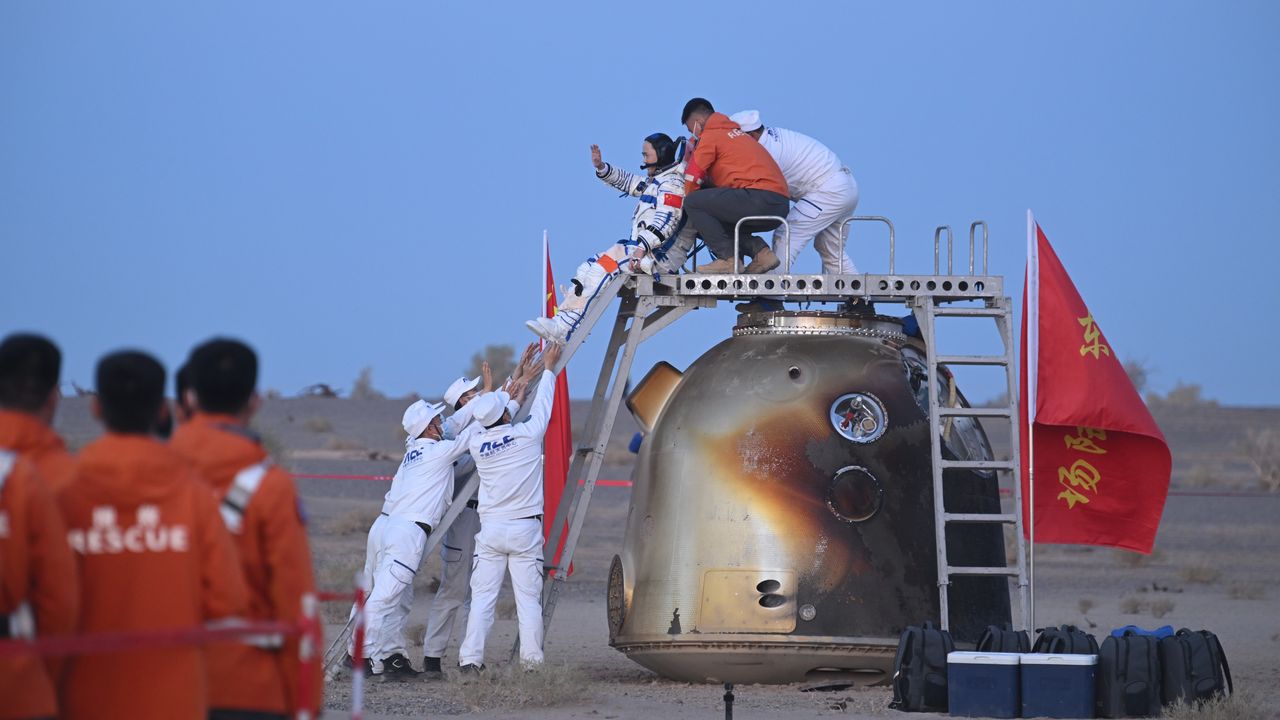
China’s Shenzhou 21 crew returned safely on May 29 after a record‑breaking 210‑day stay at the Tiangong space station, the longest for a Chinese crewed mission. They landed in Inner Mongolia aboard the Shenzhou 22 vehicle, following a brief “stranded” period when a cracked window on the Shenzhou 20 capsule forced the crew to stay aboard Tiangong. During their extended mission the trio performed three spacewalks and conducted numerous experiments in microgravity, before handing off duties to the Shenzhou 23 crew. The incident underscored China’s rapid response capabilities, with the damaged Shenzhou 20 capsule later returning safely to Earth in January.
Incredible videos show Blue Origin rocket explosion could be seen from hundreds of miles away
Original Publication Date: 2026-05-29 14:33
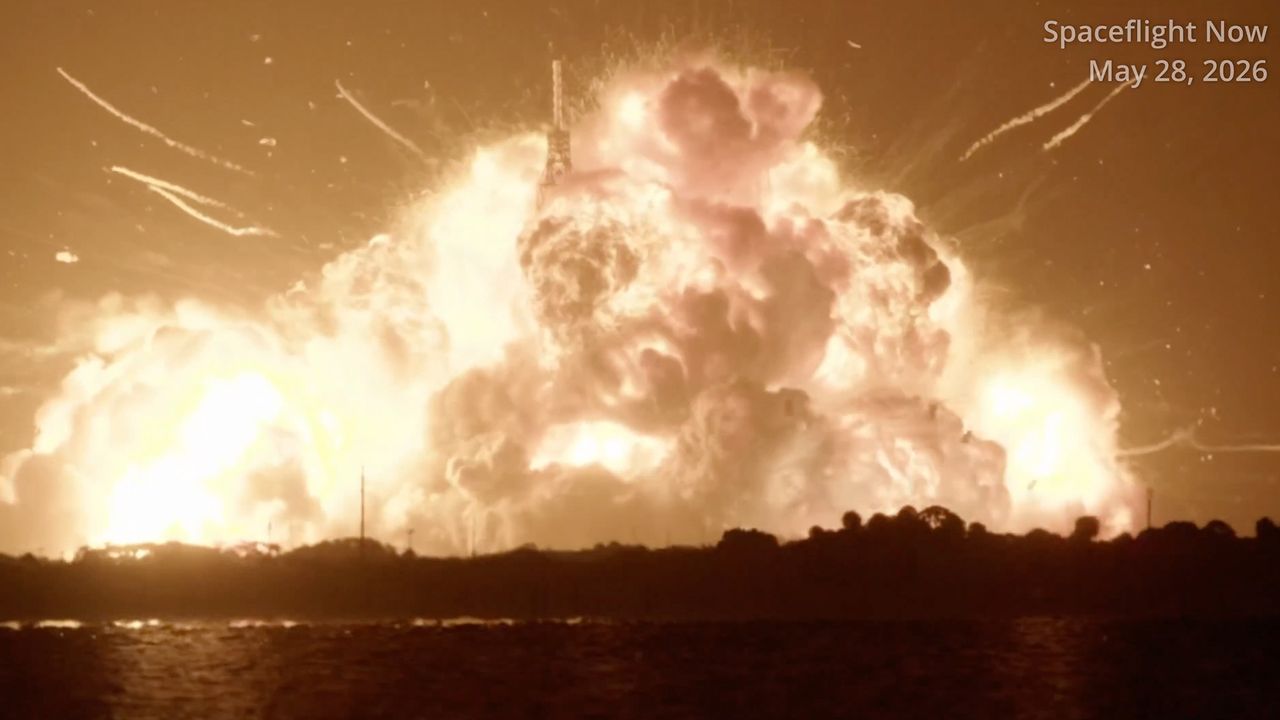
Blue Origin’s New Glenn rocket exploded during a hot‑fire test on May 28 at Cape Canaveral, damaging Launch Complex‑36. The fireball was so bright it could be seen from over 100 miles away, with videos shared from Cocoa Beach to Tampa and even from an airplane in Orlando. Founder Jeff Bezos confirmed no injuries and that the company is investigating the cause while pledging to rebuild and resume flights. Officials are urging the public to report any debris that washes ashore and to avoid touching it for safety.
SpaceX launches 29 Starlink satellites from Florida just hours after Blue Origin rocket explosion (video)
Original Publication Date: 2026-05-29 14:22
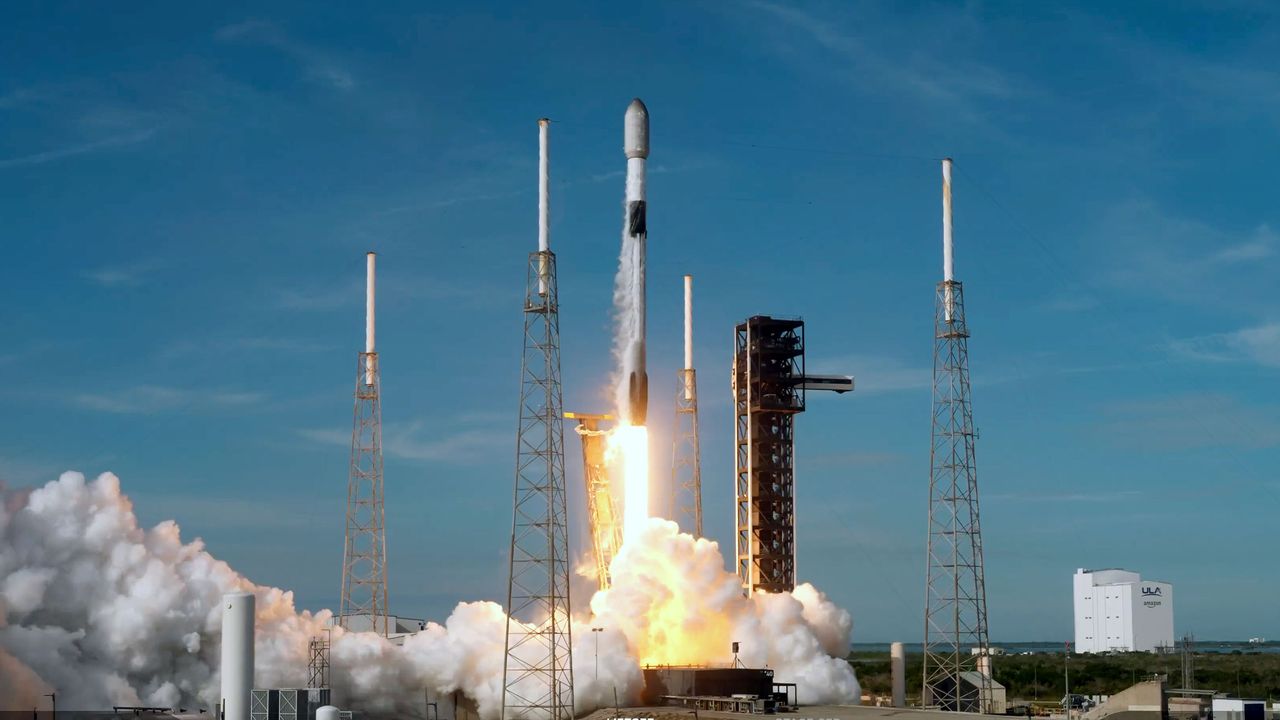
SpaceX launched 29 new Starlink satellites from Cape Canaveral on Friday, boosting the constellation to over 10,400 active satellites. The Falcon 9 booster, reused for the 16th time, landed on the droneship A Shortfall of Gravitas after the successful deployment. The launch came just 12 hours after Blue Origin’s New Glenn rocket exploded during a static‑fire test, a stark reminder of the risks of spaceflight. SpaceX’s 61st Falcon 9 mission of 2026 underscores the company’s rapid expansion of global broadband coverage.