 Spotify
 Apple Podcasts
 Podcast Addict
 Overcast
 Podcast RSS
NASA to increase value of CLPS contract to support surge of lunar lander missions
Original Publication Date: 2026-05-01 22:43
NASA is boosting its Commercial Lunar Payload Services contract from $2.6 billion to $4.2 billion to
The opportunity beyond orbital data centers
Original Publication Date: 2026-05-01 19:10
Investor focus is turning to orbital data centers, even as SpaceX’s massive space‑based networks remain years away. Founders Fund partner Delian Asparouhov cautions against directly competing with SpaceX, but sees chances for companies that support AI computing infrastructure on Earth. He notes that falling launch costs and political pressure on terrestrial data centers make the business case stronger, while potential lunar mining operations could spur demand for nearby orbital compute. The market’s success will hinge on launch capacity, power and thermal solutions, and whether the projected demand materializes.
Starcloud seeks more orbital data center funding shortly after unicorn status
Original Publication Date: 2026-05-01 12:57
Starcloud, the two‑year‑old orbital data center startup, is targeting a raise of at least $200 million, a move that would double its valuation to about $2.2 billion. The company recently achieved unicorn status, as first reported by SpaceNews. A source close to the situation has confirmed the fundraising plans. This development highlights the escalating interest in satellite‑based data infrastructure.
Trump nominates Schiess as next Space Force chief
Original Publication Date: 2026-05-01 12:55
President Trump has nominated Lt. Gen. Douglas Schiess for a four‑star promotion to become the next chief of space operations, a position that places him on the Joint Chiefs of Staff. The nomination was submitted to the Senate on April 30 and will be reviewed by the Senate Armed Services Committee, potentially succeeding Gen. Chance Saltzman. Schiess, a veteran of missile and space missions, vows to sharpen the Space Force’s lethality and accelerate delivery of space capabilities amid growing threats from China and Russia. His confirmation would signal continuity in the service’s push toward contested space missions and deeper joint‑force integration.
Amazon Leo passes 300 satellites with Atlas and Ariane launches
Original Publication Date: 2026-05-01 12:01
Amazon has now deployed 302 of its Leo satellites, still far short of the 3,232 needed for its Project Kuiper network, after two recent launches from Kourou and Cape Canaveral. The company is racing to meet a July 30 FCC deadline for half the constellation, but launch capacity shortages—exacerbated by ULA’s grounded Vulcan and Blue Origin’s New Glenn failures—have slowed progress. Amazon is doubling its annual launch rate to more than 20 flights and has secured 10 additional Falcon 9 launches, while future missions on Atlas 5 and upgraded Ariane 6 rockets aim to increase payloads.
SpaceX marks May Day, National Space Day with Starlink mission on a Falcon 9 rocket from Cape Canaveral
Original Publication Date: 2026-05-01 11:57
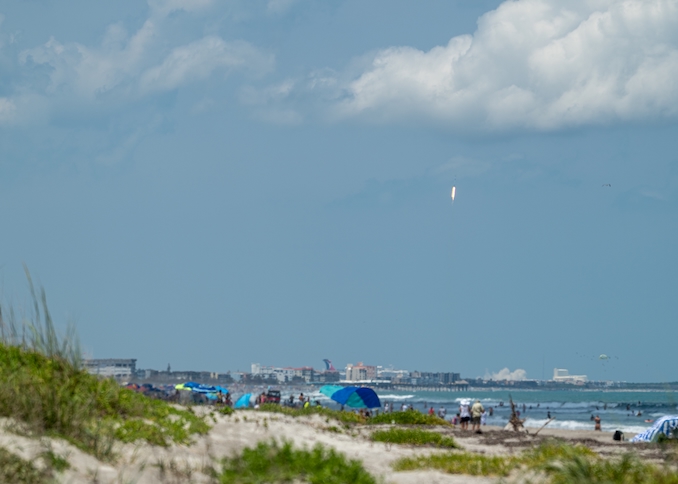
SpaceX launched its Falcon 9 rocket from Cape Canaveral on May 1, 2026, carrying 29 Starlink V2 Mini satellites into low‑Earth orbit.
SmallSat Europe Speaker Focus: Jorge Ciccorossi, ITU Radiocommunications Bureau
Original Publication Date: 2026-05-01 14:25

Jorge Ciccorossi, head of the ITU’s Space Strategy and Sustainability Division, has represented the Bureau at every World Radiocommunication Conference since 2003. He brings decades of experience to the table, guiding international policy on satellite communications. At SmallSat Europe, he will deliver a solo Market Brief outlining European priorities for WRC‑27.
NASA Kennedy Center Director Announces Plans to Retire
Original Publication Date: 2026-05-01 17:01

NASA announced that Janet Petro, the long‑time director of the Kennedy Space Center, will retire after a career that began at the agency in 2007 and included a stint as acting administrator in 2025. Petro, a West Point graduate and former Army officer, helped transform Kennedy into the nation’s premier multi‑user spaceport and led initiatives that streamlined operations with the FAA and Air Force. Her leadership earned her awards such as the President’s Distinguished Executive Award and the Silver Snoopy for flight safety. Kelvin Manning, former deputy director, will step in as acting director.
NASA Artemis II Crew Rings Nasdaq Closing Bell
Original Publication Date: 2026-05-01 16:08

NASA’s Artemis II crew—Christina Koch, Victor Glover, Reid Wiseman and Canadian astronaut Jeremy Hansen—took the Nasdaq closing bell to celebrate their nearly ten‑day lunar orbit and return to Earth earlier this month. The ceremony, held on April 30 2026, was organized by NASA/Bill Ingalls Nasdaq Chair and CEO Adena T. Friedman. The event underscored the growing partnership between space exploration and the financial markets. This marks a historic moment for both NASA and the Nasdaq.
Key Support Equipment Arrives at Kennedy for Roman Space Telescope
Original Publication Date: 2026-05-01 15:44
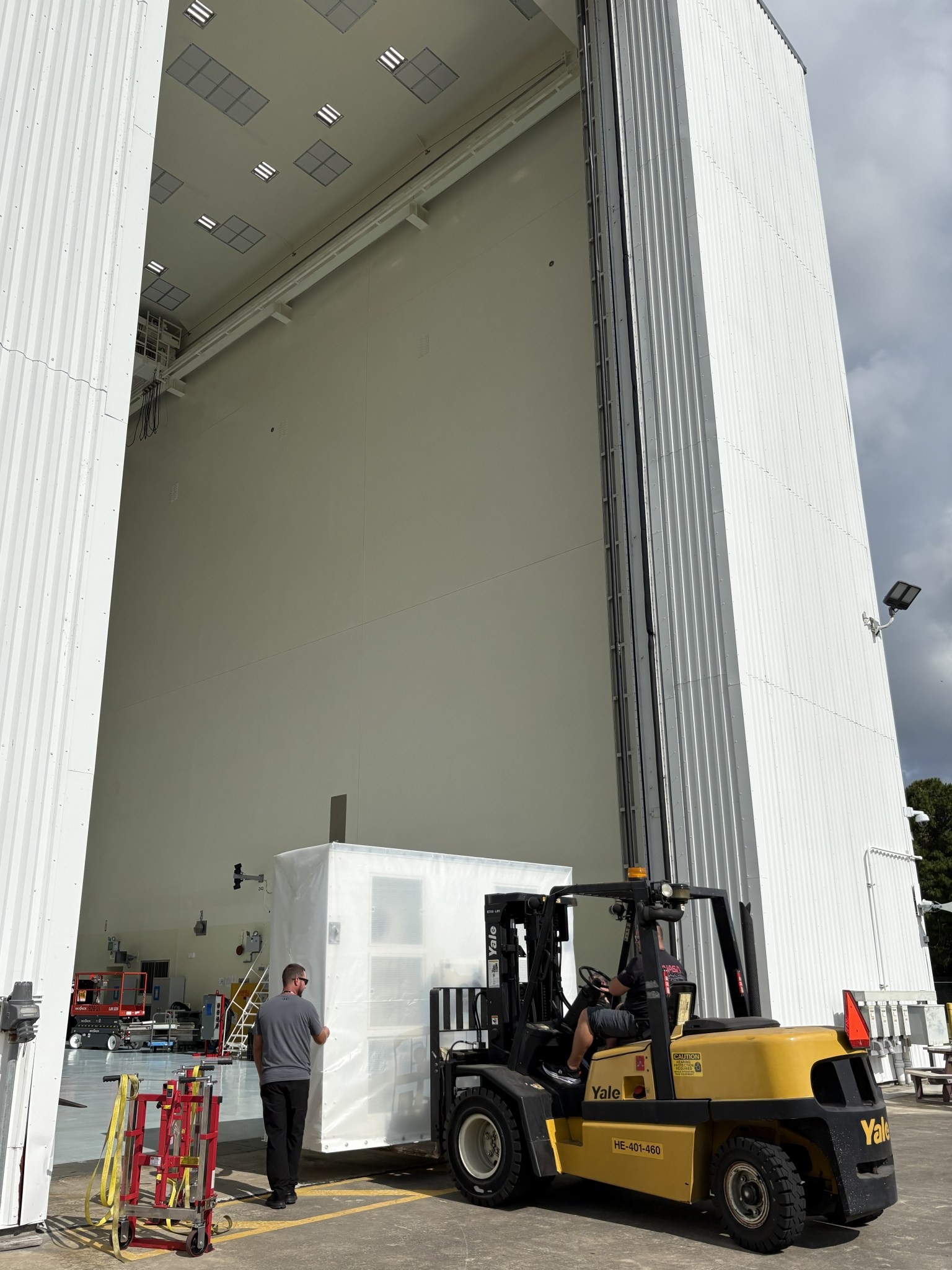
NASA technicians at the Kennedy Space Center’s Payload Hazardous Servicing Facility removed eight 1,800‑pound HEPA wall modules on April 27 to upgrade the clean‑room environment for the Nancy Grace Roman Space Telescope. These modules will help keep the observatory pristine as it undergoes critical prep, including fueling, before its launch. Roman will survey the universe in infrared, using a wide‑field camera and a coronagraph to probe dark energy, map dark matter, and hunt exoplanets.
Space Out This Summer with Variety of NASA STEM Activities
Original Publication Date: 2026-05-01 14:03

NASA is opening its doors this summer with a range of STEM activities that let students and curious citizens dive into real space science, from the online Stardance Challenge where ages 13‑18 can build projects using data from Artemis and the James Webb Space Telescope, to virtual career events that showcase the diverse jobs that keep missions flying. Hack Club partners with NASA to provide datasets, expert reviews, and prizes for creative coding, electronics, and simulation projects. Meanwhile, citizen science projects like Space Cloud Watch and Cloudspotting on Mars invite anyone with a phone or computer to help track noctilucent clouds and Martian weather, turning everyday observations into valuable research. Whether you’re building, watching, or learning about careers, NASA’s STEM Resources hub offers a launch pad for curiosity and innovation this summer.
SpaceX aims for mid-May Starship Flight 12 launch with revised trajectory
Original Publication Date: 2026-05-01 20:52

SpaceX is targeting a May 12 launch for its upgraded Starship Version 3, with daily afternoon windows through May 18 from Starbase’s Pad 2. The new flight path will skirt the Caribbean, passing south of Jamaica and Cuba to avoid major airline corridors, and the mission remains a suborbital test aimed at validating heat‑shield performance and booster reliability. Engineers have completed a 12‑hour cryo‑proof test on Booster 19 and are working to resolve engine and deluge‑system issues before the first full‑duration static fire. While the team is pushing hard to meet the tight schedule, the launch could still slip as they finish final preparations.
Space Nuclear Execs Cheer the FY27 Budget Proposal
Original Publication Date: 2026-05-01 12:25
Criticism of the FY27 NASA budget has sparked a fierce debate, with congressional leaders pledging to block the proposed cuts while the space‑nuclear sector cheers the proposal as a launchpad for its ambitions. NASA’s chief, John Isaacman, frames the budget as a re‑organization around space exploration, earmarking $438.8 million for Mars fission‑reactor research, $135.3 million for radioisotope power systems, $100.9 million for the Harmonia Stirling‑generator project, and $55.4 million to advance commercial lunar radioisotope systems. The agency’s backing, coupled with the 2026 Reauthorization Act’s nuclear‑focused amendments, signals a future where billions could be directed to nuclear power and propulsion. Industry leaders—from BWXT to Zeno Power—see the FY27 proposal as a green light to invest in and commercialize the first‑of‑its‑kind space‑nuclear technology.
House Subcommittee Approves $24.4B NASA Budget
Original Publication Date: 2026-05-01 12:15

House lawmakers have formally rejected the administration’s FY27 NASA budget, approving a $24.4 billion package that raises funding for every mission directorate. The bill, passed by the Commerce, Justice and Science Subcommittee, lifts space science to $6 billion, exploration to $8.9 billion, operations to $4.4 billion, and adds money for technology, aeronautics and NOAA. Democrats opposed the proposal, citing cuts to science programs and support for low‑income Americans, while Republicans highlighted the agency’s recent Artemis II success. The full House Appropriations Committee will mark up the bill on May 13.
Artemis 2 astronauts get the star treatment after historic moon trip
Original Publication Date: 2026-05-01 22:00

NASA’s Artemis 2 crew has returned from a historic 10‑day lunar flyby, landing safely in the Pacific on April 10 and heading back to Houston for post‑mission checks. Since then they’ve taken a whirlwind media tour along the East Coast, appearing on “The Today Show,” “CBS Mornings,” and “The Tonight Show Starring Jimmy Fallon.” In a high‑profile welcome, the astronauts met President Donald Trump in the Oval Office and rang the bell at the New York Stock Exchange, celebrating their success with the nation. Their appearances underscore the teamwork and inspiration behind this milestone return to the moon.
Drone radar could help spacecraft pinpoint where to drill for water on Mars, scientists say
Original Publication Date: 2026-05-01 20:00
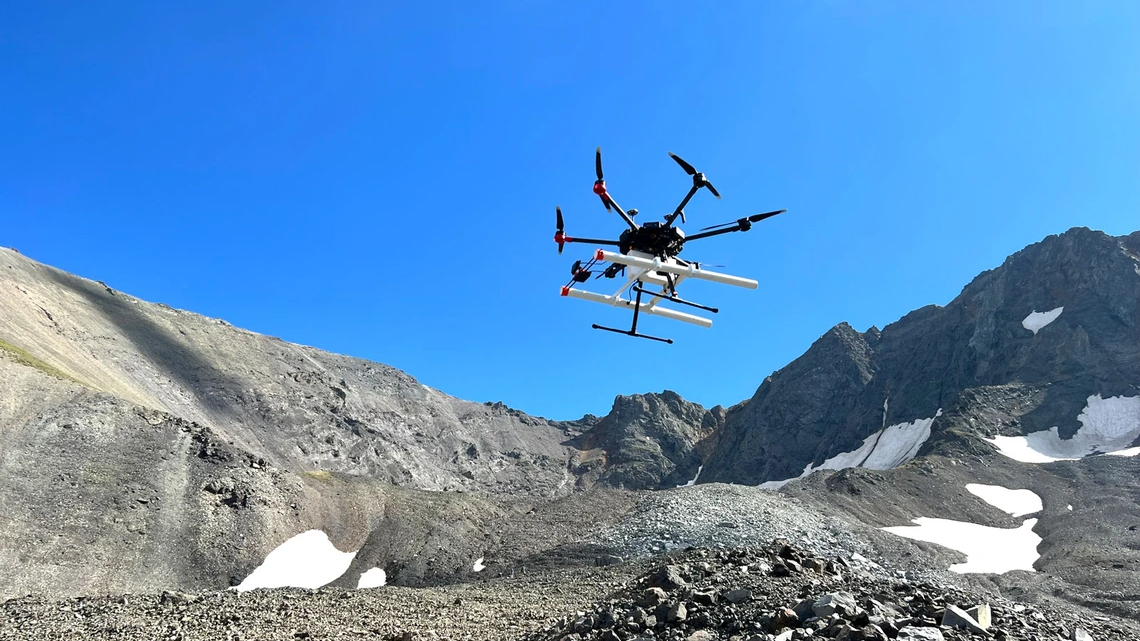
Scientists at the University of Arizona have shown that low‑flying drones equipped with ground‑penetrating radar can map the depth of buried ice and the thickness of overlying debris on Earth’s glaciers, offering a new tool for Mars exploration. By flying just above the surface, these drones can reveal whether ice lies a meter or ten meters beneath the dust—information that orbiters cannot resolve. The data could guide future Mars missions to drill at the most accessible sites, improving the chances of finding water for science, life detection and potential astronaut use. This approach promises to make Martian exploration more precise and efficient.
Thinner than a hair and stretchy like rubber: New material could shield against radiation in next-gen space tech
Original Publication Date: 2026-05-01 16:00
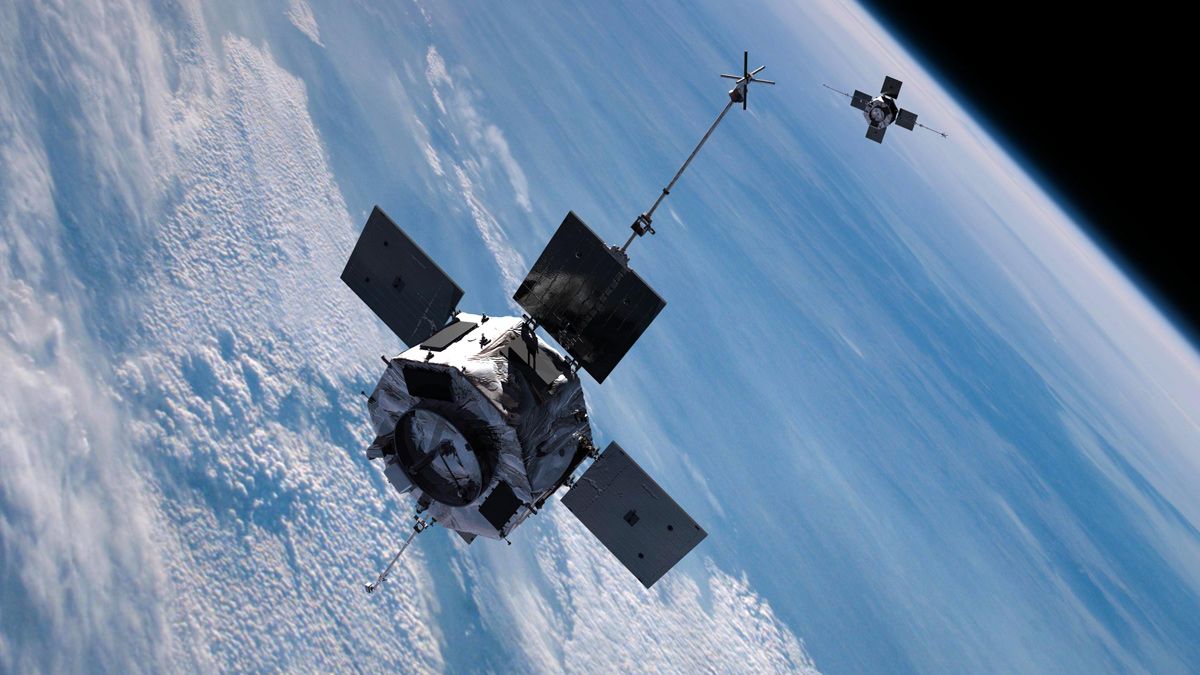
Scientists have engineered a new, ultra‑thin material—thinner than a human hair and as flexible as rubber—that can block 99.999 % of electromagnetic waves and 72 % of neutron radiation, protecting both space‑borne equipment and astronauts. Made from a blend of conductive carbon nanotubes and neutron‑absorbing boron nitride nanotubes, the composite can be stretched twice its length and even 3D‑printed into honeycomb shapes that boost shielding by 15 %. This lightweight, stretchable shield offers a game‑changing solution for satellites, space stations, and future protective gear without adding costly mass to spacecraft. The breakthrough, published in Advanced Materials in March, could dramatically improve safety and efficiency for next‑generation space missions.
Is it cake? No, it's a parachute! | Space photo of the day for May 1, 2026
Original Publication Date: 2026-05-01 14:30
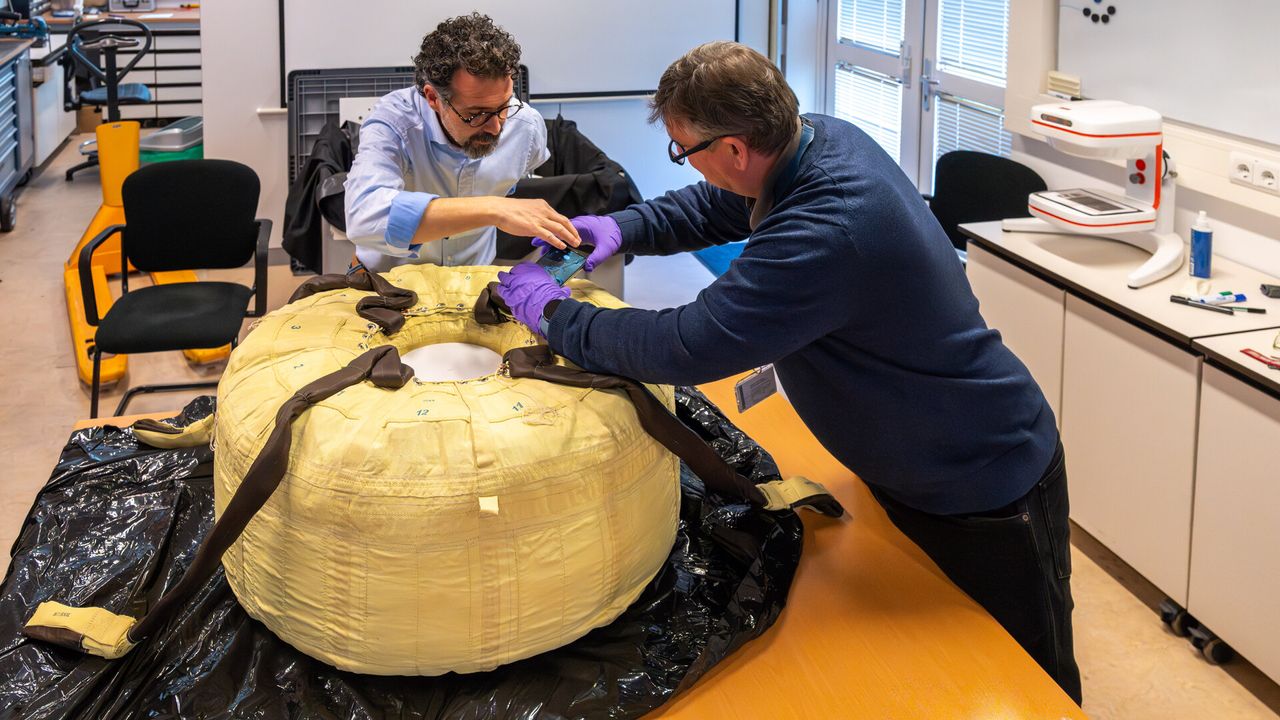
The European Space Agency has baked a 115‑foot nylon‑Kevlar parachute for its upcoming Rosalind Franklin rover to ensure it carries no Earth microbes to Mars. The 163‑pound craft was preheated for 50 hours, then baked at 257°F for 36 hours in a clean‑room oven before cooling and re‑wrapping. This planetary‑protection step is crucial as the rover will spend years searching for signs of life on the Red Planet. The bake‑off process turns the parachute into a clean, life‑free capsule ready for launch.
NASA's Curiosity and Perseverance rovers capture sweeping Mars panoramas (video)
Original Publication Date: 2026-05-01 12:00
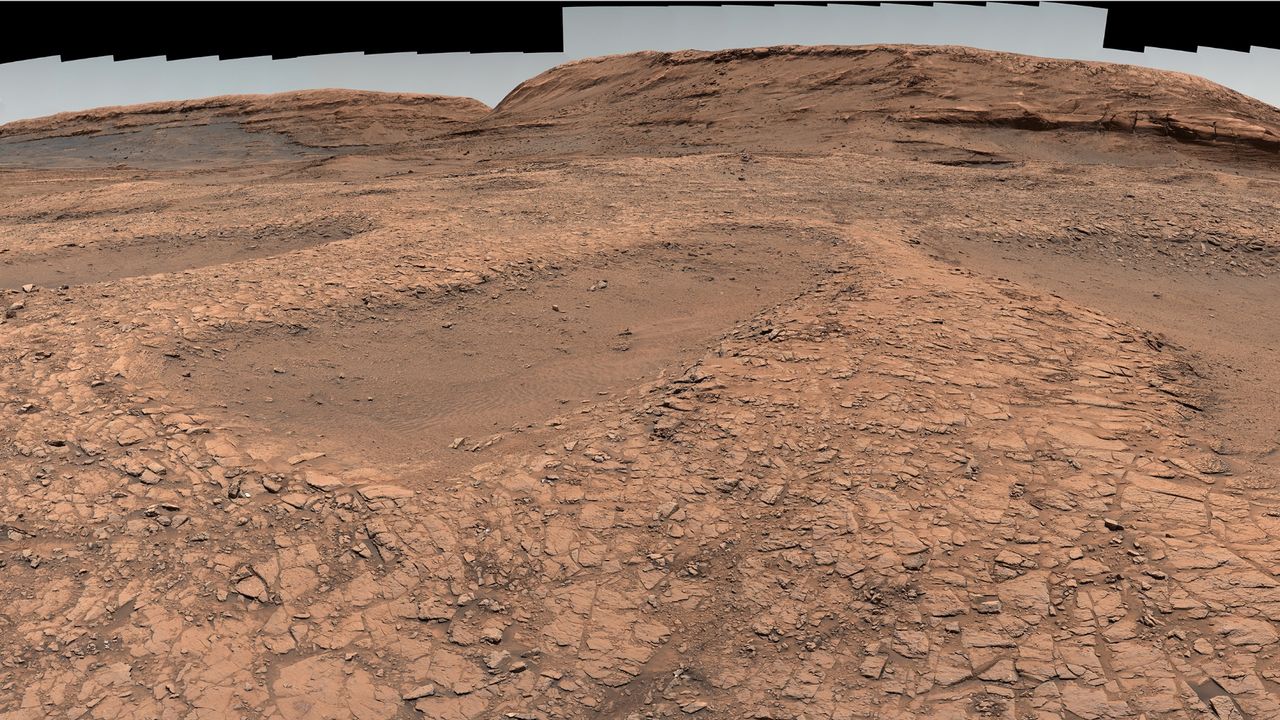
NASA has unveiled sweeping 360‑degree panoramas from its two Mars rovers, Curiosity and Perseverance, showcasing starkly different terrains that lie over 2,300 miles apart. Perseverance’s image of Lac de Charmes near Jezero Crater captures ancient lake beds and river deltas, while Curiosity’s view of Gale Crater’s boxwork formations reveals groundwater‑driven mineral patterns. Together, the mosaics illustrate two distinct chapters of Martian history—one preserving surface water evidence, the other exposing mineral fingerprints of past groundwater flow. These complementary panoramas bring scientists one step closer to piecing together how Mars evolved from a wetter, potentially habitable world to the cold, dry planet we see today.
Rocket Report: Falcon Heavy is back; Russia's Soyuz-5 finally debuts
Original Publication Date: 2026-05-01 12:39
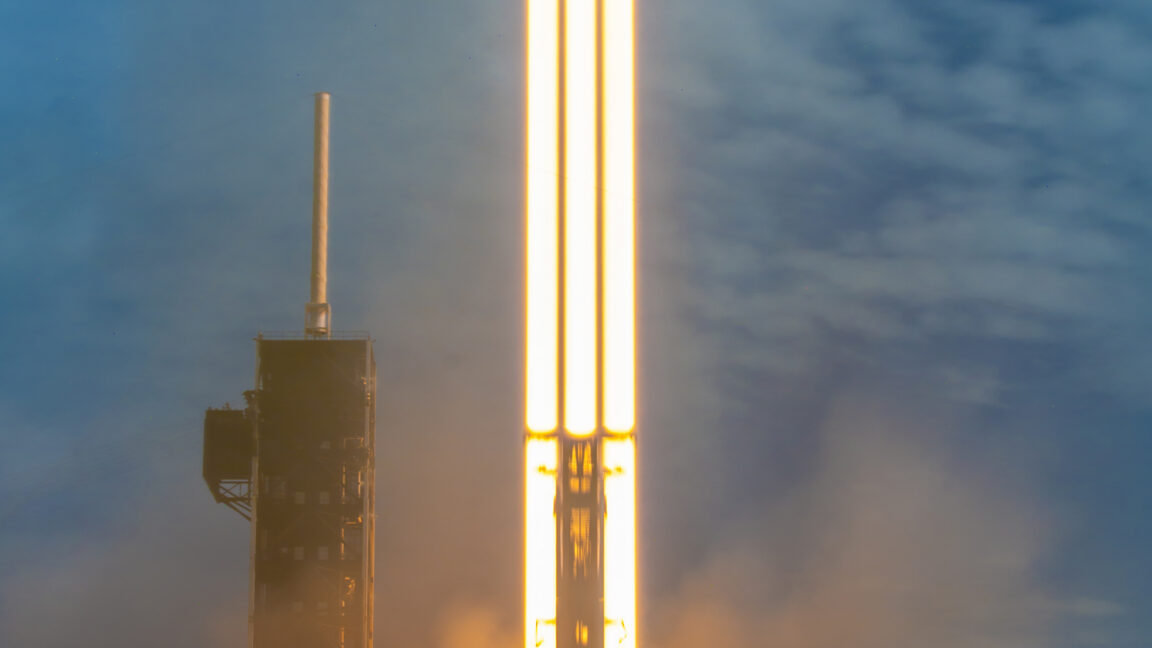
The latest Rocket Report notes that SpaceX’s Starship has been quiet as it prepares for a possible May test flight, while Blue Origin’s Blue Moon cargo lander is set to attempt its first lunar landing, both of which could influence NASA’s 2028 Moon‑return plans. The report also covers the U.