 Spotify
 Apple Podcasts
 Podcast Addict
 Overcast
 Podcast RSS
A new book captures the forces shaping space: China, the moon and industry
Original Publication Date: 2026-02-13 23:09
Mike Gruss sits down with author David Ariosto on Space Minds to discuss his new book “Open Space” and the year’s key space storylines, including China, the moon, and the booming commercial industry. Ariosto explains how these themes will dominate headlines as space ventures accelerate. The podcast, produced by SpaceNews and sponsored by About Space Minds, delivers weekly interviews with scientists, founders, and experts every Thursday. Episodes are available on SpaceNews.com, YouTube, Spotify, and Apple, and listeners can subscribe for early access.
Senate committee advances FCC satellite licensing bill after changes
Original Publication Date: 2026-02-13 20:56
The Senate Commerce Committee approved an amended Satellite and Telecommunications Streamlining Act that tightens automatic approval rules for satellite license applications. The revision, driven by concerns that a “deemed granted” clause could let one million satellites be approved if the FCC stayed idle, now requires the agency to set eligibility criteria within two years and limits automatic approval to smaller constellations and non‑federal spectrum.
Startup bets on new approach to space-based missile defense
Original Publication Date: 2026-02-13 15:00
California startup Wardstone, backed by a $5 million seed round and Y Combinator, is building orbital missile interceptors that use a particle‑cloud technique to neutralize hypersonic threats. The company plans to test its first prototype on a suborbital sounding rocket this spring, with a launch scheduled for late April from El Segundo, California.
Crew-12 launches to ISS
Original Publication Date: 2026-02-13 12:53
A Falcon 9 launched from Cape Canaveral’s SLC‑40 on Feb. 13, sending the Crew‑12 Dragon spacecraft Freedom, commanded by NASA’s Jessica Meir, to the International Space Station, where it will dock on Feb. 14 and stay for eight months—longer than the typical six‑month missions. The launch marked the second crewed flight from SLC‑40, as NASA shifts all Falcon 9 crew and cargo missions to that pad to free Launch Complex 39A for Falcon Heavy and future Starship launches. SpaceX also made history by landing the first‑stage booster at a new pad, LZ‑40, right next to the launch site, streamlining processing for future missions. Meanwhile, the ISS will host a flurry of arrivals and departures, including the departure of CRS‑33, the upcoming Japanese HTV‑X1, Cygnus NG‑23, and a possible early‑April Starliner launch.
Vast wins ISS private astronaut mission
Original Publication Date: 2026-02-13 12:39
NASA has awarded Vast its first private astronaut mission to the International Space Station, slated for mid‑2027, making it the sixth such mission but the first not awarded to Axiom Space. The two‑week expedition will use a SpaceX Crew Dragon, and Vast sees the flight as a stepping‑stone toward building its own commercial station, Haven‑1, scheduled for launch early 2027. Axiom Space, which has secured the other PAM, is preparing its fifth mission for launch no earlier than January 2027, and both companies are selecting crews that must receive final approval from NASA and other ISS partners. This marks a significant milestone in commercial participation on the ISS and the broader transition to private space stations.
Viasat Report Signals Industrial “Rush” Toward Direct-to-Device (D2D) Connectivity
Original Publication Date: 2026-02-13 21:24

Viasat’s new report shows a rapid shift in industrial IoT, with 91 % of decision‑makers planning to adopt Direct‑to‑Device satellite technology within the next 18 months. The study, covering 600 leaders across agriculture, energy, mining, utilities and logistics, highlights NB‑NTN in 3GPP Release 17, allowing standard chipsets to switch seamlessly between cellular and satellite and eliminating costly proprietary terminals.
Crew-12 Launches
Also covered by: NASA, NASASpaceFlight
Original Publication Date: 2026-02-13 15:39
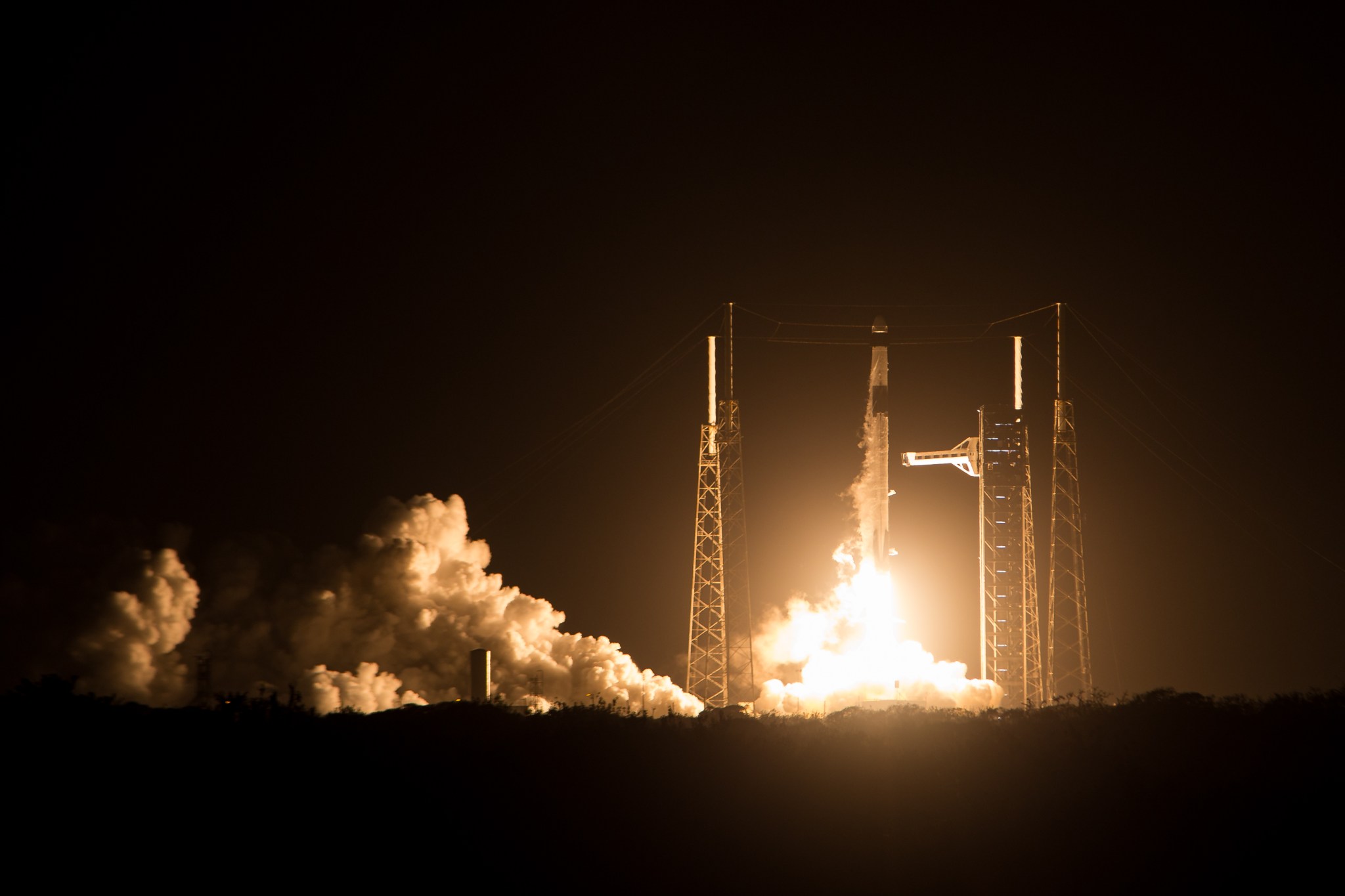
On Friday, Feb. 13, 2026, a SpaceX Falcon 9 launched from Cape Canaveral Space Force Station’s Space Launch Complex 40 at 5:15 a.m. EST, carrying NASA astronauts Jessica Meir and Jack Hathaway, ESA astronaut Sophie Adenot, and Roscosmos cosmonaut Andrey Fedyaev aboard a Dragon spacecraft for the twelfth Commercial Crew mission, Crew‑12. The vehicle will autonomously dock with the International Space Station’s Harmony module at 3:15 p.m. Saturday, joining Expedition 74’s crew of seven. The multinational crew will conduct a range of experiments—including studies of pneumonia‑causing bacteria and on‑demand fluid generation—to support life on Earth and advance deep‑space exploration, aiding humanity’s journey to the Moon, Mars, and beyond.
Axiom Space Raises $350M to Fuel Station, Suit Development
Original Publication Date: 2026-02-13 13:32
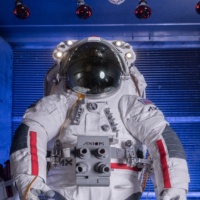
Axiom Space has secured a $350 million capital raise to accelerate its commercial space station and new NASA AxEMU spacesuits. The round, led by Type One Ventures and Qatar Investment Authority with 1789 Capital and others, will fund the development of two station modules and the suit’s design, keeping both on schedule for critical NASA milestones. The first module is slated to launch in 2028, dock with the ISS, and later join a second module to form a four‑crew station before the ISS is retired. The AxEMU suits are expected to reach NASA in 2027, with additional funds earmarked for mission‑operations support in low‑Earth orbit and on the lunar surface.
SpaceX Crew-12 astronauts have a Valentine's Day date with the space station today. Watch the docking live
Original Publication Date: 2026-02-14 11:00
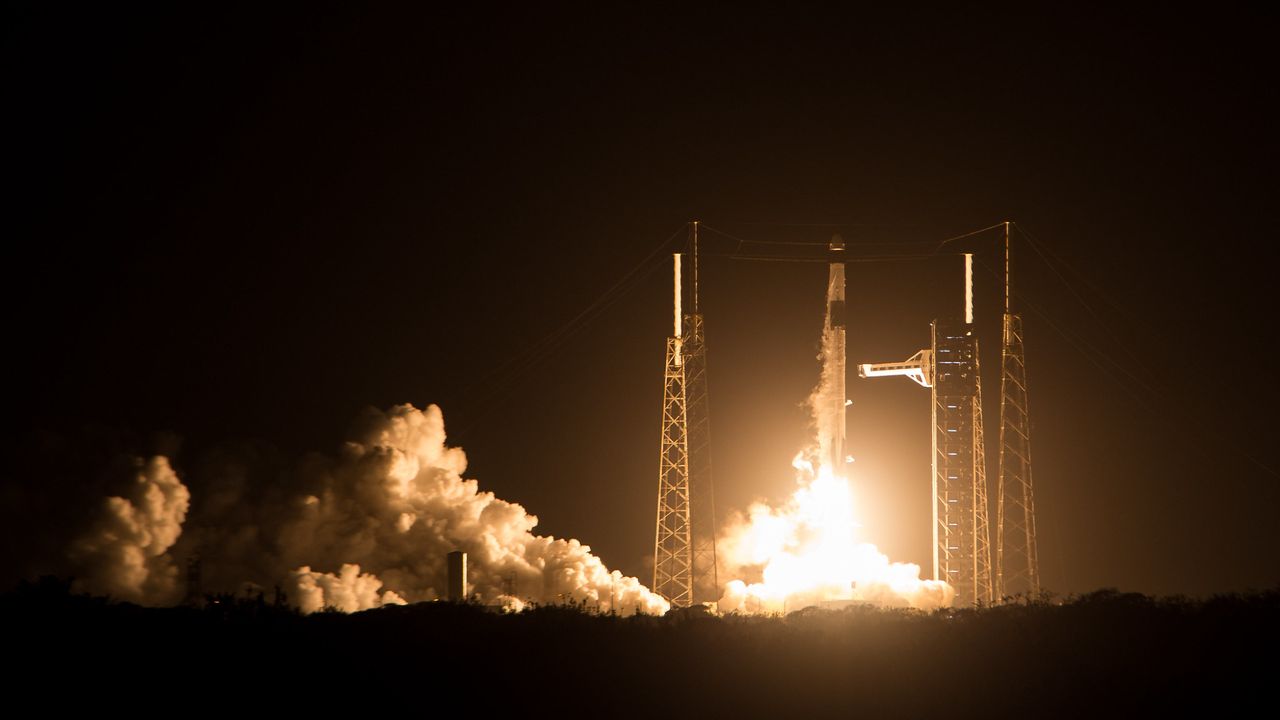
Today, SpaceX’s Crew‑12 mission will dock with the International Space Station at about 3:15 p.m. ET, marking a Valentine’s Day rendezvous after a 36‑hour orbital chase that began with a Falcon 9 launch from Cape Canaveral yesterday.
'The beacons were lit!' Scientists name merging supermassive black holes after 'Lord of the Rings' locations
Original Publication Date: 2026-02-13 23:00
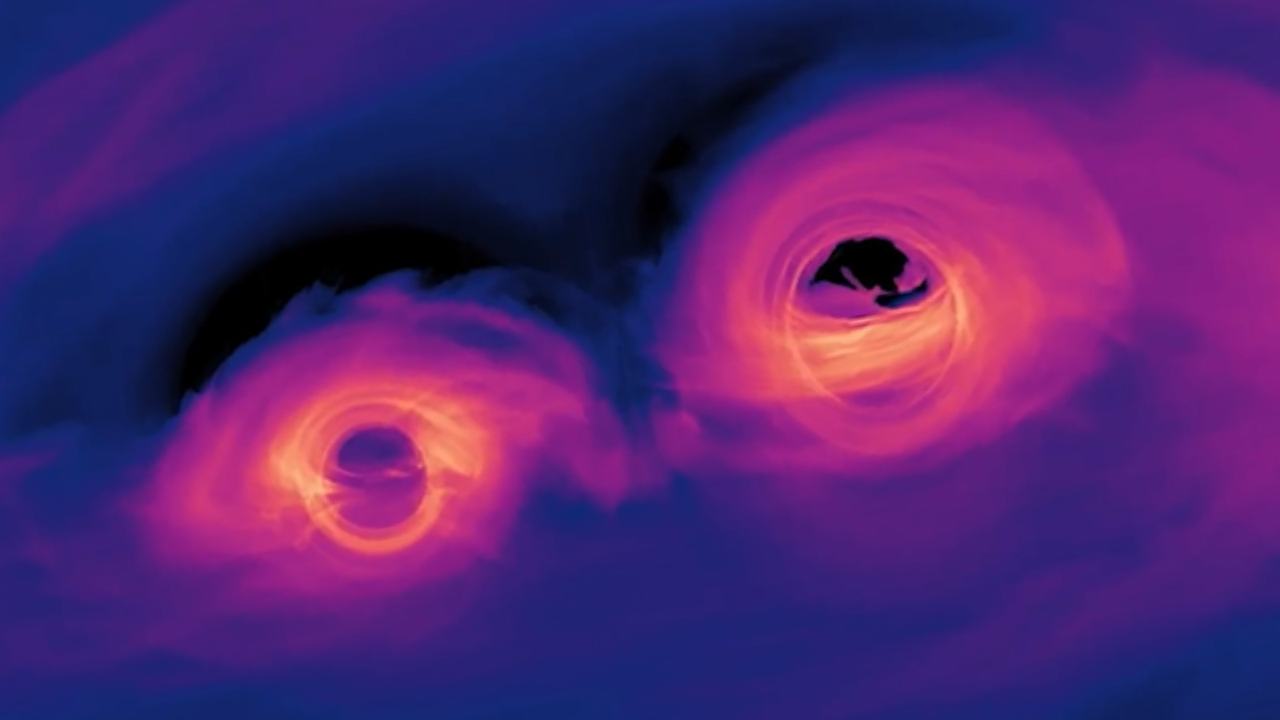
Scientists using the North American Nanohertz Observatory for Gravitational Waves have identified two supermassive black hole binaries—dubbed Gondor and Rohan—after famous locations from J.R.R. Tolkien's Middle‑earth. The pairs were spotted by cross‑checking gravitational‑wave ripples with quasar light, a method that turns bright galactic nuclei into cosmic beacons of merging titans.
A mystery object is dimming a distant star. Could it be a massive exoplanet, or a 'failed star'?
Original Publication Date: 2026-02-13 21:00
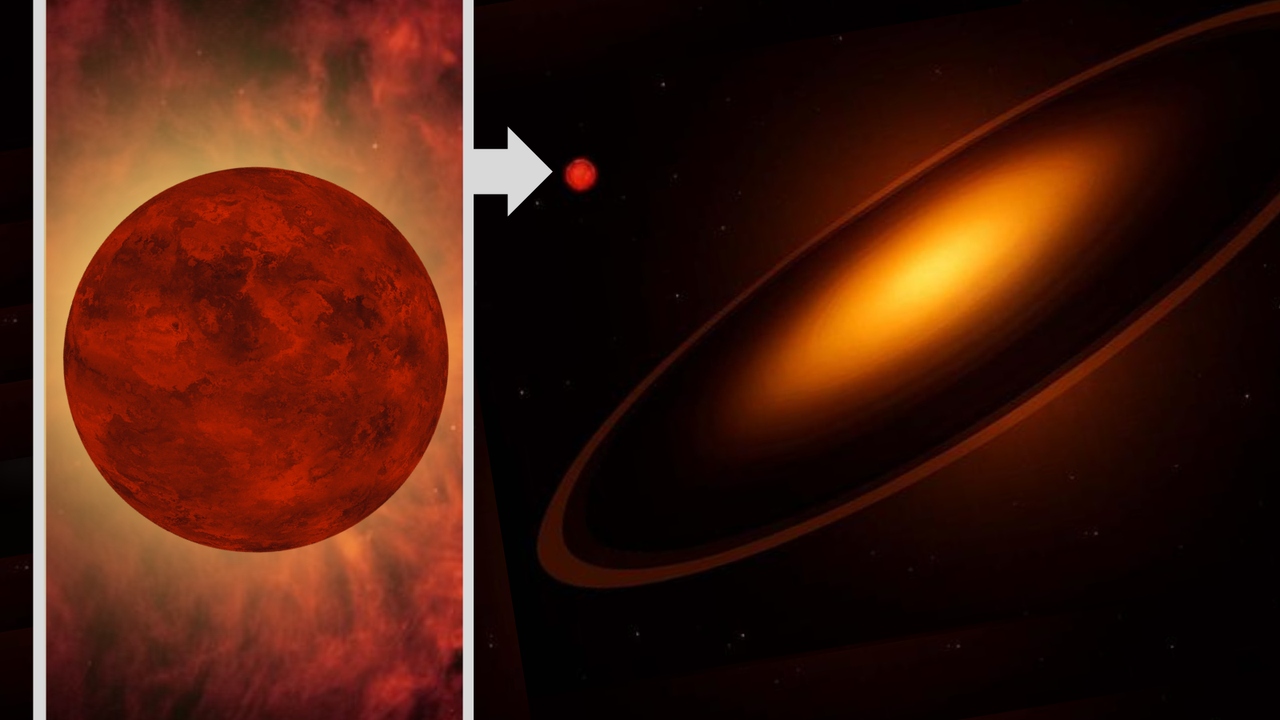
A star in the Monoceros constellation, about 3,200 light‑years away, has dimmed by 97 % over 200 days, an event so extreme it has stunned astronomers. Scientists think a massive ring system—spanning roughly 15.8 million miles—has passed in front of the star, causing the prolonged eclipse. The most likely culprit is a brown dwarf, a “failed star” heavier than a planet but lighter than a true star, orbiting the star with its dense rings. While a super‑Jupiter exoplanet cannot yet be ruled out, the evidence points to this brown dwarf as the source of the mysterious dimming.
Artemis 2 rocket photobombs SpaceX Crew-12 | Space photo of the day for Feb. 13, 2026
Original Publication Date: 2026-02-13 15:00
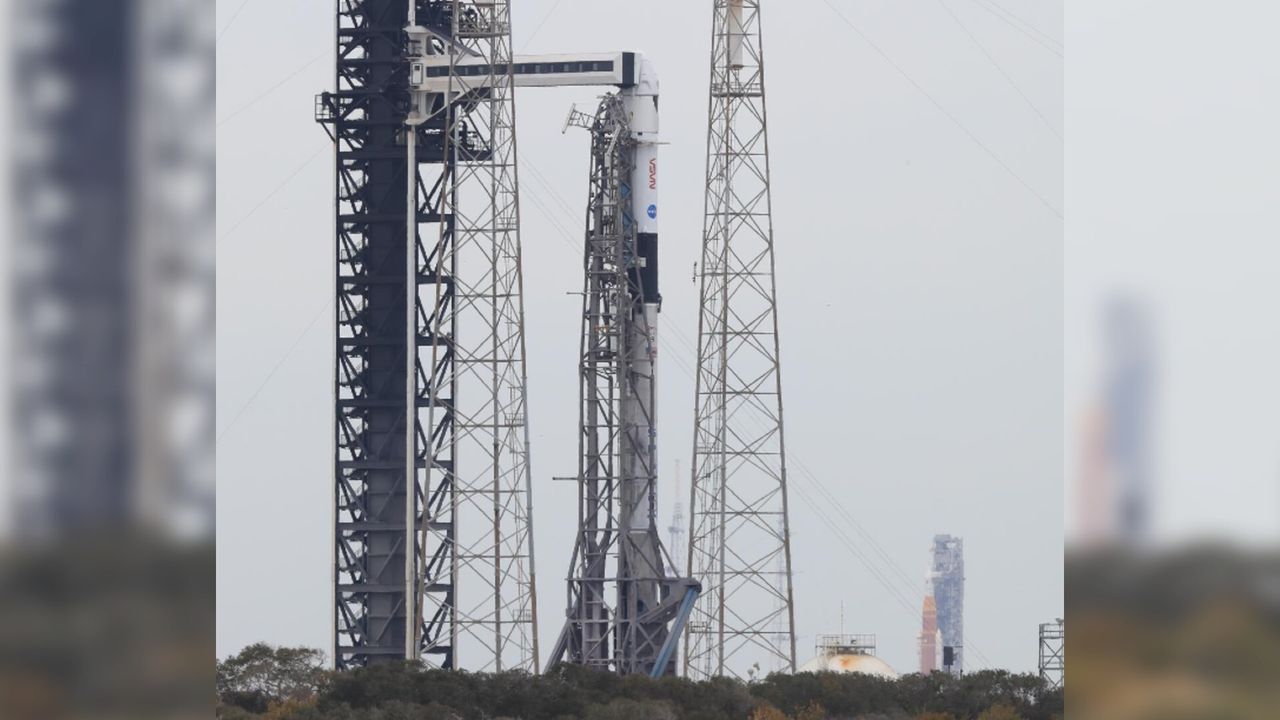
This morning, SpaceX launched its Crew‑12 Dragon spacecraft, carrying NASA’s Jessica Meir and Jack Hathaway, ESA’s Sophie Adenot, and Roscosmos’s Andrey Fedyaev, to the International Space Station for an eight‑month stay. The launch took place alongside NASA’s Artemis 2 Space Launch System, which was visible on the pad but remains delayed until early March after a hydrogen fuel leak during a rehearsal. Artemis 2 will carry astronauts Reid Wiseman, Victor Glover, Christina Koch and Canadian Jeremy Hansen on a historic 10‑day mission to the far side of the moon.
If the Winter Olympics went interplanetary, where else could you ski in the solar system?
Original Publication Date: 2026-02-13 14:00
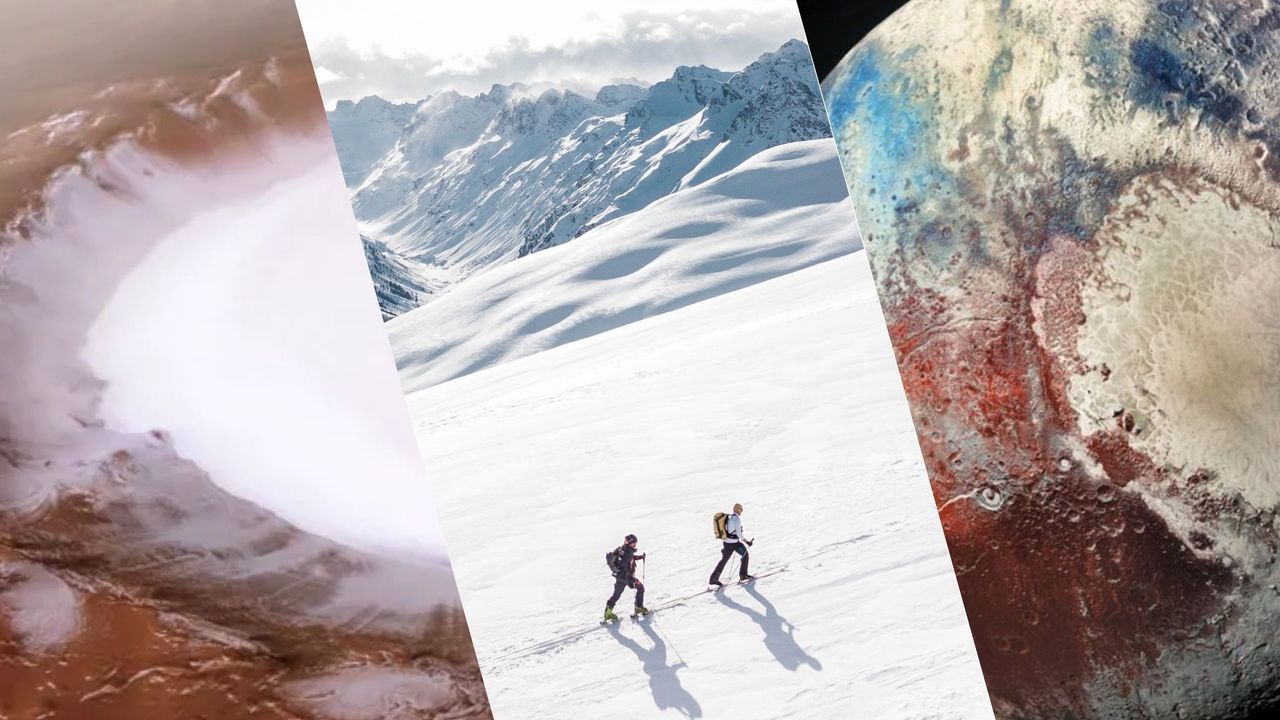
While the 2026 Winter Olympics keep us on Earth, a recent article imagines where else in the solar system you could hit the slopes if travel logistics were a non‑issue. Earth remains the gold standard, thanks to its seasonal snowfall, water‑ice physics and 1‑g gravity that together create ideal carving conditions. The Moon offers a dust‑covered surface that would let you glide rather than slide, and Mars has polar caps and steep slopes but its winter snow is mostly non‑water ice, making it a poor choice for skiers.