 Spotify
 Apple Podcasts
 Podcast Addict
 Overcast
 Podcast RSS
U.S. Space Force adds second surveillance sensor to Japanese constellation
Original Publication Date: 2026-08-14 22:26
The U.S. Space Force has now placed its second space‑surveillance sensor aboard a Japanese navigation satellite, completing the Quasi‑Zenith Satellite System‑Hosted Payload program. Launched on August 10 with Japan’s H3 rocket, the sensor sits in geosynchronous orbit over the Indo‑Pacific and feeds real‑time data into the U.S. Space Surveillance Network. Built by MIT’s Lincoln Laboratory and hosted on a Mitsubishi‑made QZS‑7 satellite, the payload enhances U.S. Ability to track and characterize objects in deep space.
Wallops gears up for an increase in launches
Original Publication Date: 2026-08-14 22:02
NASA’s Wallops Flight Facility in Virginia is set to become a launch hub, with flights expected to rise from 17 in 2025 to 44 by 2030 as companies like Firefly Aerospace and Rocket Lab expand operations. To support this boom, the site is upgrading power, wastewater, and road access while the Eastern Shore of Maryland faces a growing need for housing, healthcare, and transportation to retain its expanding workforce. Local leaders are urging the addition of amenities—from 24‑hour dining to grocery stores—to meet the demands of launch crews and their families.
Spire and PlanetiQ win NOAA radio-occultation contracts
Original Publication Date: 2026-08-14 16:33
The National Oceanic and Atmospheric Administration has awarded contracts to Spire Global and PlanetiQ to supply radio‑occultation data for both terrestrial and space weather forecasts. This data will help NOAA refine its predictive models and improve forecast accuracy. Spire Global and PlanetiQ will use their satellite constellations to collect the necessary measurements. The move underscores NOAA’s commitment to advancing weather science with cutting‑edge technology.
Cheaper launch has moved the spacecraft bottleneck. Mass is out, surface area is in.
Original Publication Date: 2026-08-14 13:00
Lower launch costs have shifted the primary design bottleneck from mass to surface area and volume, forcing engineers to rethink how they fit solar arrays, radiators, and antennas within the fairing. Spacecraft now trade weight for power, thermal margin, and redundancy, so each extra watt demands more deployed area and heat‑rejection hardware. The emerging metric is deployed area per cubic meter per kilogram, making mechanism reliability and packaging critical trade‑offs. As rideshare launches become cheaper, volume constraints often limit payloads before mass, reshaping the way missions are designed.
Blue Origin outlines plans for second Cape Canaveral launch pad
Original Publication Date: 2026-08-14 12:08
Blue Origin announced plans to add a second launch pad, LC‑36B, at Cape Canaveral’s Launch Complex 36 to support a larger New Glenn 9×4 rocket, while rebuilding the damaged LC‑36A for the current 7×2 version. The company secured a $78.2 million contract from the Space Force for a new payload‑processing facility that will accompany the new pad. Blue’s chief executive, Dave Limp, emphasized that restoring LC‑36A and achieving flight this year remain top priorities, even as the company tests a hybrid horizontal‑to‑vertical integration process using cranes at LC‑11. These developments signal a rapid push toward expanding launch capacity and advancing New Glenn’s next‑generation capabilities.
Novaspace Projects $3 Billion Cumulative In-Orbit Servicing Market Over the Next Decade
Original Publication Date: 2026-08-14 20:29
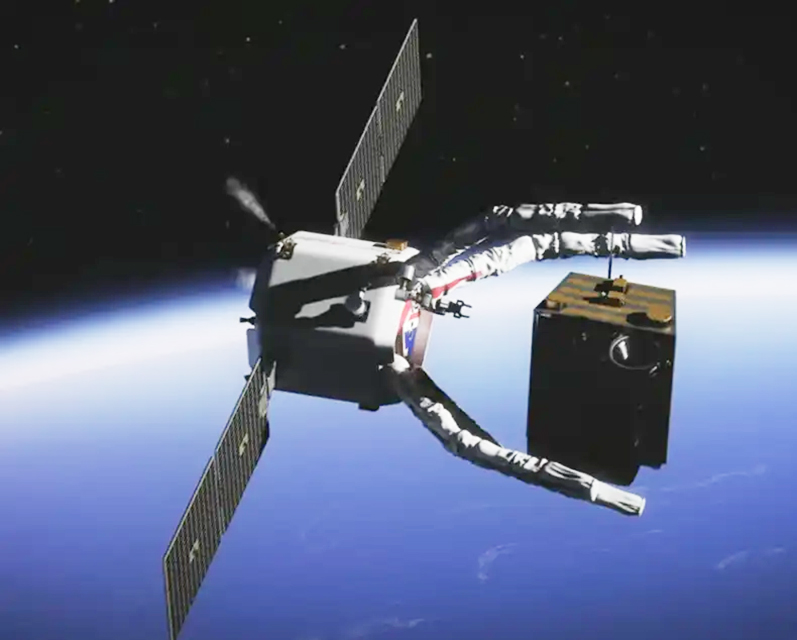
Novaspace’s August 14, 2026 In‑Orbit Services Markets report projects the emerging satellite‑in‑orbit services sector to reach roughly $3 billion in revenue, a jump of about 30 % over the previous year. The forecast highlights key growth drivers such as on‑orbit refueling, propulsion, and data‑relay services, with small‑satellite constellations expected to dominate the market share. Leading players—including SpaceX, OneWeb, and Relativity Space—are poised to capture the largest portions of the market, according to the firm’s analysis. The report also warns that regulatory and spectrum‑allocation challenges could temper growth if not addressed in the coming years.
Silicon Valley Space Week Speaker Focus: Joseph Yaffe, Cowboy Space Corporation
Original Publication Date: 2026-08-14 19:21

Joseph Yaffe, COO and Chief Legal Officer of Cowboy Space Corporation, announced the company’s plan to launch up to 20,000 orbital data center satellites after filing the necessary paperwork with regulators. The firm’s ambitious deployment aims to create a massive space-based data storage network. Yaffe will also join the orbital data center panel on the opening day of Satellite Innovation at Silicon Valley Space Week, where industry leaders will discuss the future of space-based data services. This bold move could reshape how data is stored and accessed from orbit.
Volunteer Develops Machine-Learning Tool to Identify Rare Clouds
Original Publication Date: 2026-08-14 17:35

NASA’s Space Cloud Watch project is counting on citizen scientists to photograph elusive noctilucent clouds that are appearing lower and more often than before. Volunteer Namai Chandra has built a machine‑learning tool that pre‑screens images, classifies clouds, and routes uncertain cases for human review, dramatically speeding up verification. The new Noctilucent Cloud Detector lets observers confirm whether their photos show true night‑shining clouds before sharing them with the team. With this tool, more people can confidently join the effort to track our changing atmosphere.
Rocket Lab advances via series of announcements
Original Publication Date: 2026-08-15 03:42

Rocket Lab has opened a new German subsidiary, Rocket Lab Germany, headquartered in Munich, to expand its European manufacturing footprint and deliver satellites and components without relying solely on New Zealand or U.S. Facilities. The company also unveiled GHOST, a container‑based mobile launch system that can deploy an Electron or HASTE rocket anywhere in the world on short notice, with its first permanent site at Kodiak, Alaska. Meanwhile, progress on the Neutron heavy‑lift vehicle continues, with its nine Archimedes engines now in production and the first launch slated for 2027 after extensive hot‑fire testing. These moves position Rocket Lab to meet growing demand for rapid, high‑volume launch and satellite production across both commercial and defense markets.
The New Middle Ground in Spacecraft Development
Original Publication Date: 2026-08-14 19:45
Blue Canyon Technologies, part of RTX’s Raytheon, has unveiled its FleXbus subsystem—a modular, flight‑proven platform that lets customers build custom spacecraft without designing every component from scratch. The system bundles power, avionics, guidance, navigation, control and software drawn from more than 90 missions, giving engineers a solid anchor point to focus on unique payloads. By reducing the engineering overhead of creating a new bus, FleXbus speeds development while still meeting the high precision, stability and agility demands of modern payloads.
Exclusive: Reflect Orbital Responds to its Critics
Original Publication Date: 2026-08-14 12:45
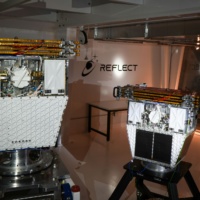
Reflect Orbital has received FCC approval to launch its first sunlight‑reflecting satellite, promising to beam artificial light for events and rescue operations. The company’s plan to deploy a 50,000‑satellite constellation has drawn fire from astronomers, environmentalists, and bird conservation groups worried about light pollution, astronomy interference, and ecological impacts. CEO Ben Nowack says the mirrors will illuminate only about 200 sites worldwide, with strict on/off modes and local consent to mitigate concerns, and the firm is working with NASA and the NSF to protect observatories.
NASA Opens Call on Moon Base Health Research
Original Publication Date: 2026-08-14 12:40
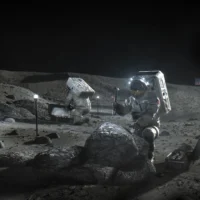
NASA’s Human Research Program has issued a request for information, inviting scientists to submit questions that will shape health‑research for future long‑duration Moon bases. The call focuses on the five key hazards of lunar exploration—radiation, isolation, distance from Earth, altered gravity, and closed environments—and seeks to understand how these factors affect bone, vision, immune function, and more. With only about 80 hours of surface time logged by past missions, NASA aims to use data from Artemis II and other studies to fill the gaps left by long‑duration ISS research. By gathering expert input now, the agency hopes to reduce risks to astronauts and unlock the full potential of a permanent lunar laboratory.
'Strap yourself in and feel the Gs': NASA announces 'Max Power' aerospace expo
Original Publication Date: 2026-08-14 22:00
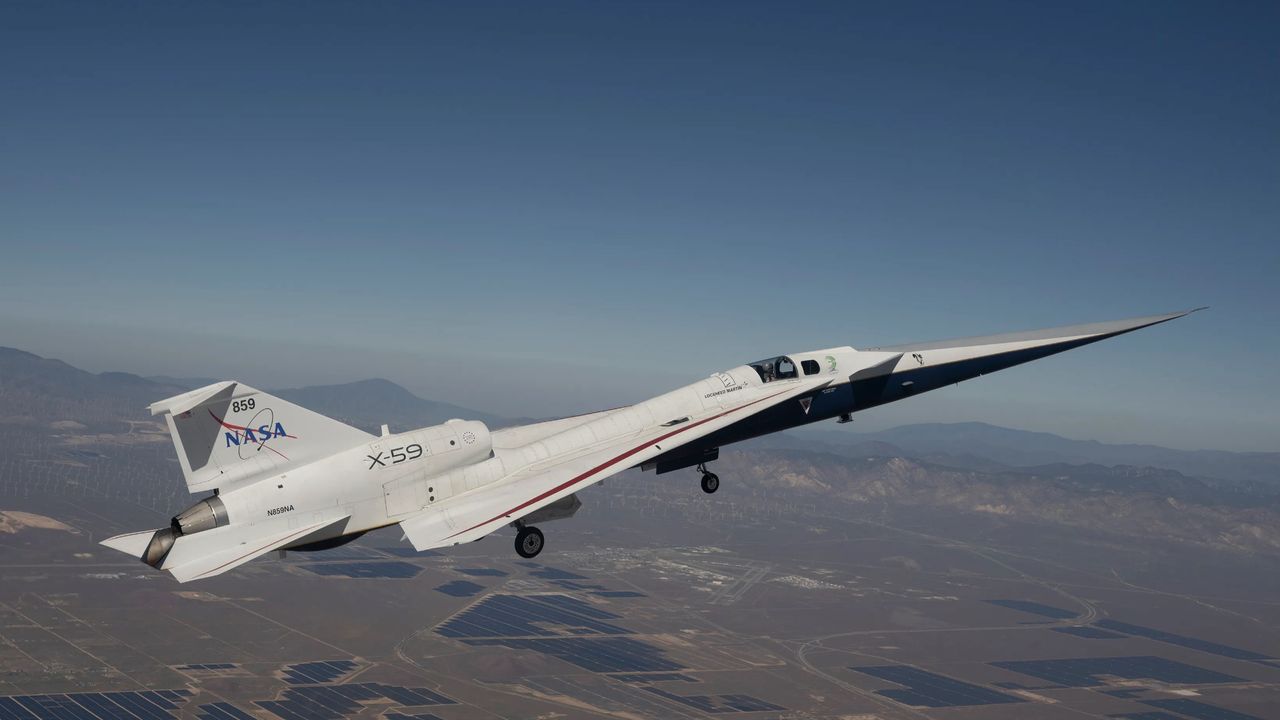
NASA will host a two‑day aerospace expo called “Max Power” at Kennedy Space Center on Nov. 7‑8, drawing a playful nod to a famous Simpsons character. The event promises immersive experiences for all ages, including air shows, skydiving stunts, technology demonstrations, military aircraft displays, and behind‑the‑scenes access to the spaceport. Attendees can hear talks from NASA experts and meet astronauts from some of the agency’s most celebrated missions. Administrator Jared Isaacman, a pilot and private astronaut, will even participate in the air show, and officials say this is the first of many such events.
Is empty space really empty? This magnetic star may finally solve a 90-year-old mystery
Original Publication Date: 2026-08-14 21:00
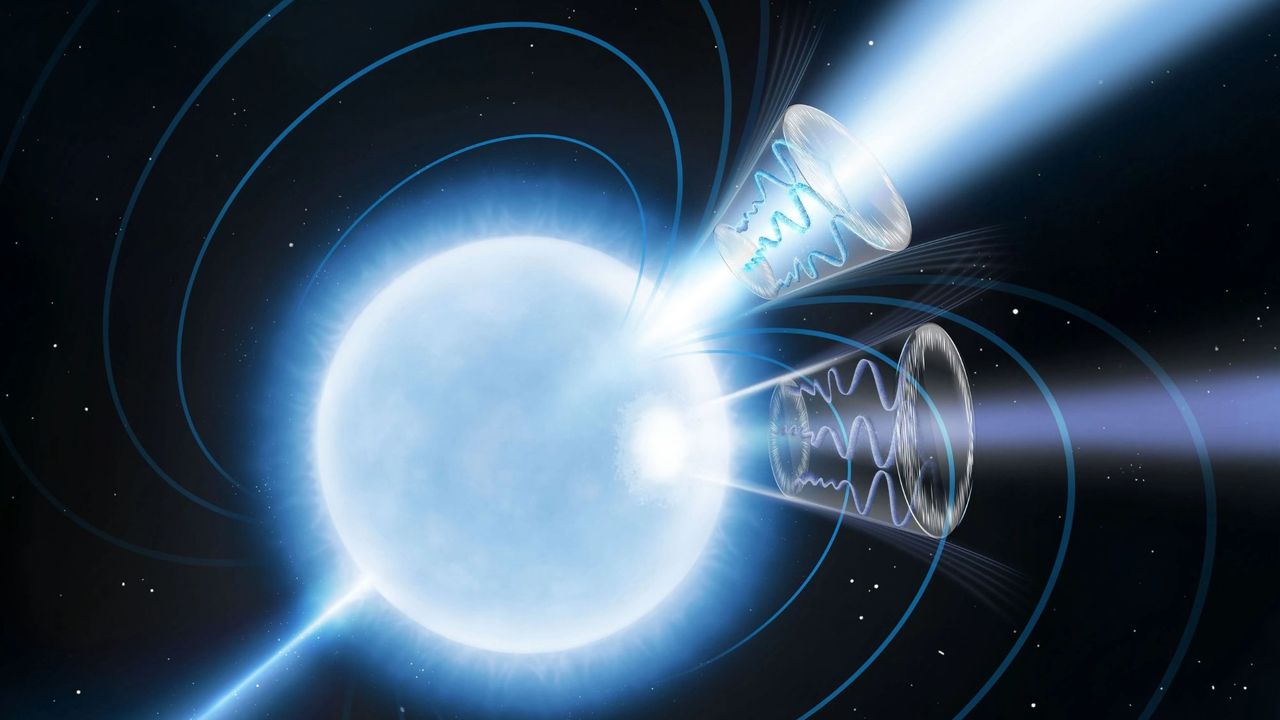
Scientists using NASA’s IXPE telescope observed the magnetar 1E 1547‑5408 and found its X‑rays were highly polarized, a clear sign of vacuum birefringence. This effect, predicted by Heisenberg and Euler in 1936, shows that extreme magnetic fields can make empty space act like a prism, bending light in ways ordinary physics cannot explain. The discovery confirms a 90‑year‑old quantum theory and reveals that the universe’s “empty” space is in fact a dynamic froth of virtual particles. It demonstrates how cosmic laboratories can test physics under conditions impossible to recreate on Earth.
Cards Against Humanity wants to erect a monument to 'honor' Elon Musk
Original Publication Date: 2026-08-14 20:00

Cards Against Humanity is calling on the public to help design a monument titled “Elon Musk Is a Sad Little B‑‑‑‑ with No Friends” on land it owns near SpaceX’s Starbase in Texas. The company sued SpaceX in 2024 over alleged trespassing and illegal dumping, settled in 2025, but remains aggrieved after the land was annexed into the newly formed city of Starbase. By inviting people to join a design committee for a $10 fee and pledging 10 % of new game expansion sales, CAH hopes to provoke a moment of introspection for Musk. The move underscores the ongoing feud between the card‑game maker and the space‑rocket giant over property rights and corporate influence.
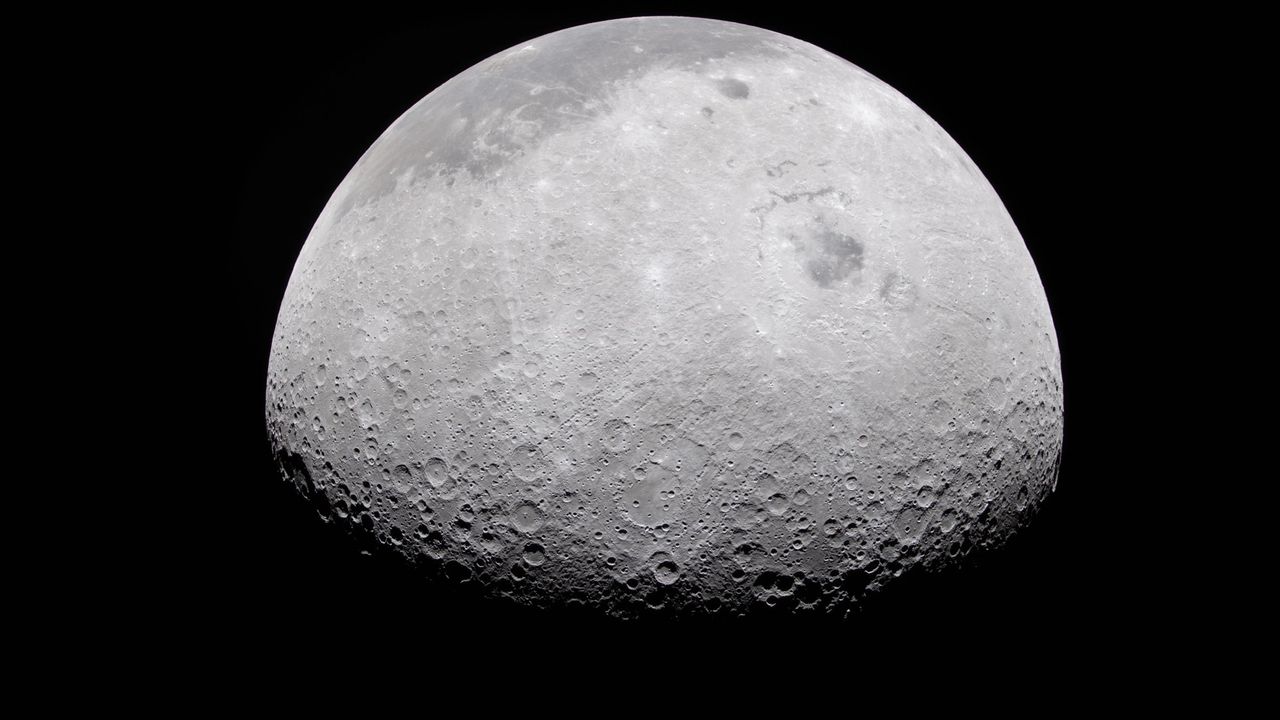
Will the new moon race turn Earth's nearest neighbor into a dumping ground?
Original Publication Date: 2026-08-14 18:00
London‑based science journalist Tereza, originally from Prague, blends her media experience with a strong academic background, holding a Master’s in Science from the International Space University and degrees in journalism and cultural anthropology from Charles University. After seven years of reporting, script‑writing and presenting for Czech public‑service TV, she took a career break to pursue further studies and returned to journalism, freelancing for outlets such as Live Science, Space.com, and Professional Engineering. Tereza has also served as a maternity‑cover science editor at the European Space Agency, cementing her reputation as a versatile science communicator.
US Space Force gives Rocket Lab $397 million to build threat-tracking 'Flatellites'
Original Publication Date: 2026-08-14 17:00
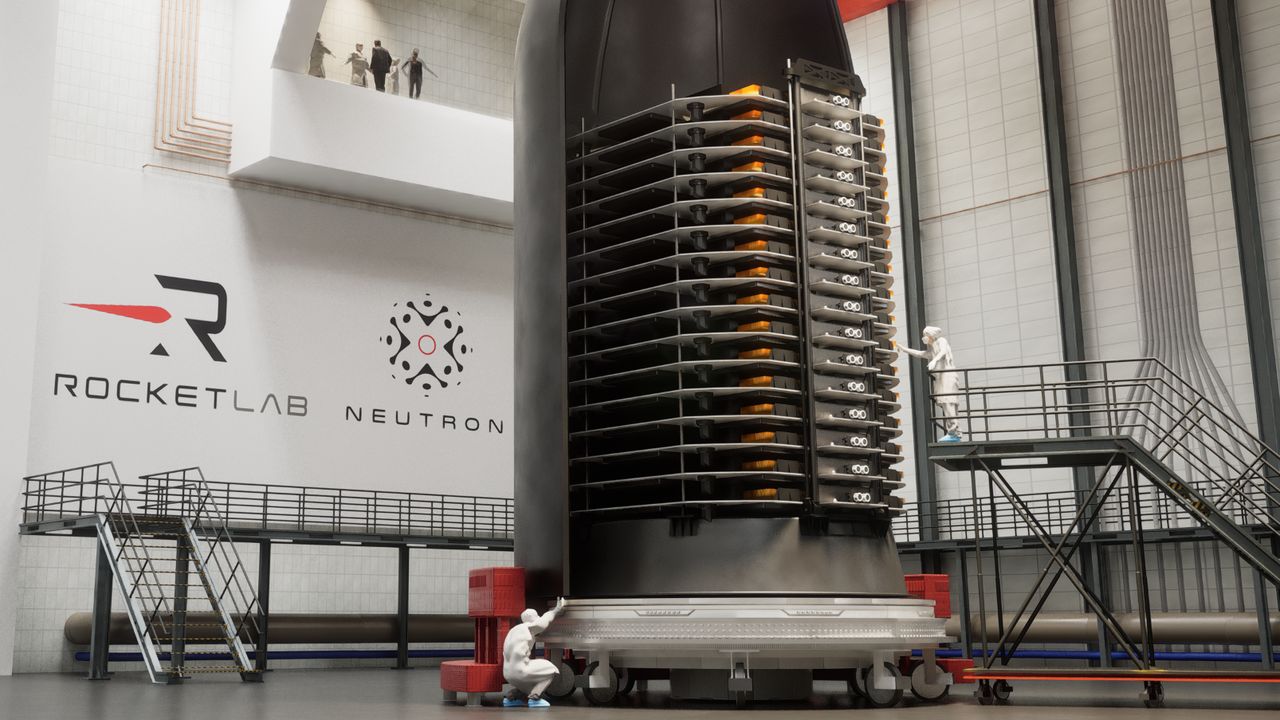
The U.S. Space Force awarded Rocket Lab a $397 million contract to design, build, and launch a fleet of “Flatellites”—flat satellites optimized for large constellations—to enhance real‑time tracking of airborne threats. The Flatellites will be carried on Rocket Lab’s upcoming Neutron rocket and are part of the Space‑Based Airborne Moving Target Indicator program. This deal marks Rocket Lab’s largest defense contract this year and follows a string of $943 million in U.S. Government defense contracts that began earlier this year. The flat design will allow more satellites per launch, improving coverage and responsiveness for the Joint Force.