 Spotify
 Apple Podcasts
 Podcast Addict
 Overcast
 Podcast RSS
U.S. Space Command Directs New Zealand to Withhold Operational Data on Auckland Tracking Hub
Original Publication Date: 2026-10-25 23:37

On Sunday, October 25 2026, Radio New Zealand reported that U.S. Space Command instructed the New Zealand Defence Force to withhold operational details of the Joint Commercial Space Operations. The directive aims to protect sensitive satellite and launch information amid growing international cooperation in space security. New Zealand officials said they will comply while continuing to support joint missions. The move underscores the increasing importance of space as a contested domain.
Hunting Red Leaves with Satellites
Original Publication Date: 2026-10-26 04:01

NASA’s PACE satellite has mapped the world’s fall foliage by measuring leaf pigments, revealing a dramatic shift of red vegetation from the high latitudes of Alaska and Canada into the Mid‑Atlantic and U.S. Southeast between late September and early October 2026.
Possible Roberts Road Expansion as SpaceX pushes for Flight 16
Original Publication Date: 2026-10-25 18:21

SpaceX is pushing ahead with its Starship program, preparing for Flight 15’s successful static‑fire test at Starbase and aiming to launch Flight 16 from LC‑39A as soon as possible. The company has built a Gigabay at Kennedy to host Booster 23 and Ship 43, both of which have completed cryo‑proof testing, and is expanding the Roberts Road campus from 167 to nearly 400 acres to add more Gigabays, a ship static‑fire stand, and a payload‑processing facility. LC‑39A has received new liquid‑methane storage tanks, reinforced tower roofs, and a fully tested deluge system, positioning it to host a booster static fire in mid‑December and a full Starship launch potentially in late January. Meanwhile, SpaceX continues to construct SLC‑37A with large LOX and LCH₄ tanks, while groundwork for SLC‑37B remains in the early stages.
On this day in space! Oct. 25, 1671: Astronomer Giovanni Cassini discovers Iapetus, Saturn's 'yin-yang' moon
Original Publication Date: 2026-10-25 13:17
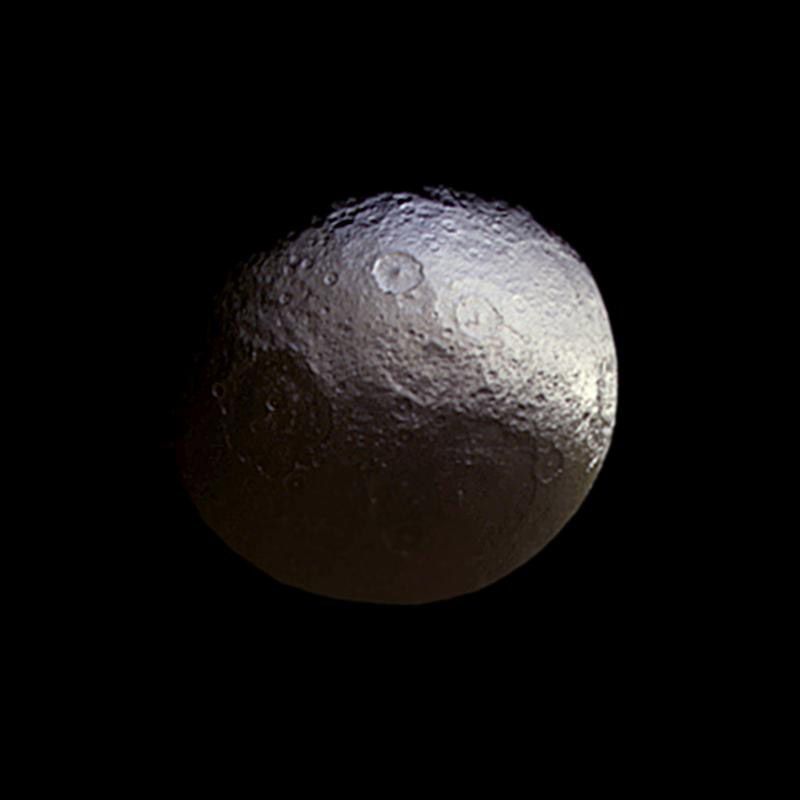
On October 25, 1671, Italian astronomer Giovanni Cassini discovered Iapetus, the second moon ever found orbiting Saturn and the first of four he would later identify at the ringed planet. Cassini noted its striking two‑tone surface—one bright, one dark—which earned the moon the nickname the “yin‑yang moon” and made it difficult to spot when its dark side faced Earth.