 Spotify
 Apple Podcasts
 Podcast Addict
 Overcast
 Podcast RSS
Starcloud files plans for 88,000-satellite constellation
Original Publication Date: 2026-03-15 22:32
Starcloud, a Redmond‑based startup, has filed with the FCC to launch up to 88,000 satellites that would serve as orbital data centers for AI and other high‑compute applications.
OSTP taking on space policy coordination work in place of National Space Council
Original Publication Date: 2026-03-15 16:04
With the National Space Council quietly dissolved by a December executive order, the White House Office of Science and Technology Policy has taken on the role of coordinating U.S. Space policy. The OSTP, led by Assistant Director Charlie Powell, is aligning federal agencies on initiatives ranging from a lunar fission power system to new launch‑licensing reforms, and is slated to release guidance on the space nuclear power initiative by early 2024. Meanwhile, the Office of Space Commerce—now reporting directly to the secretary of commerce—is drafting a mission‑authorization framework to streamline commercial space activities.
Strait of Hormuz crisis drives demand for commercial geospatial intelligence
Original Publication Date: 2026-03-15 15:06
The Strait of Hormuz carries roughly one-fifth of the world’s seaborne oil trade. Tehran effectively shut down most commercial traffic through the strait as mines and missile strikes made transit too risky for shipping companies. The crisis is driving demand for tools that combine satellite imagery with other sources of intelligence.
Raytheon contract for protected satellite communications terminals raised by $2 billion
Original Publication Date: 2026-03-15 13:14
The U.S. Air Force has raised the ceiling of its Raytheon contract for Advanced Extremely High Frequency (AEHF) terminals by $2 billion, bringing the total potential value to nearly $3 billion over five years. The deal, originally awarded in 2021 at $960 million, covers production, integration, and sustainment of secure satellite‑communication terminals that keep aircraft, ground stations and command posts linked to the Pentagon’s nuclear command and control network. Key assets include the Family of Advanced Beyond‑Line‑of‑Sight Terminals—installed on the E‑4B Nightwatch and B‑52 Stratofortress—and the Secure Mobile Anti‑Jam Reliable Tactical Terminal, which provide jam‑resistant, encrypted voice and data links even in contested environments.
General John Hyten Joins Astranis as Chairman of New Strategic Advisory Board
Original Publication Date: 2026-03-15 21:11

Astranis Space Technologies Corp. Announced on March 12 2026 that it has hired Retired General John E. Hyten as its first Chief Defense Officer, a move that signals the company’s intent to strengthen its defense portfolio. Hyten, who led the U.S. Space Force from 2018 to 2021, brings decades of experience in space warfare and national security strategy. In his new role, he will oversee the development and deployment of Astranis’s growing satellite defense programs and forge partnerships with U.S. Military and intelligence agencies. This appointment underscores Astranis’s commitment to becoming a key player in the commercial space‑defense arena.
Orbital Data Centers: Data or Debris?
Original Publication Date: 2026-03-15 21:04
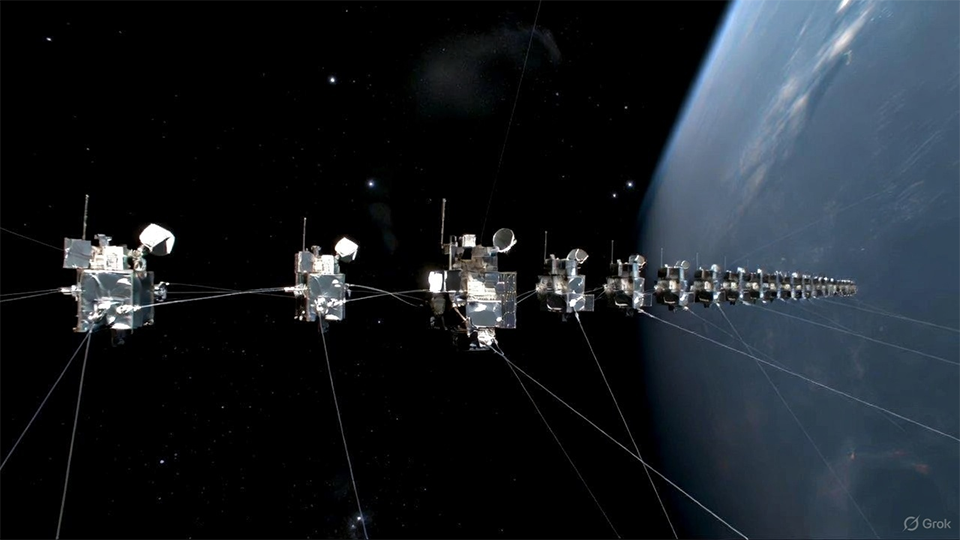
Chris Forrester is an investment‑bank analyst who specializes in researching listed companies. He issues buy, sell, or hold recommendations to clients based on his analysis of these public businesses. His insights help institutional investors navigate market opportunities and risks. The article highlights the critical role analysts play in shaping investment decisions.
Volatus Aerospace Finalizes 100% Acquisition of Synergy Aviation
Original Publication Date: 2026-03-15 21:03

On March 13, 2026, Volatus Aerospace Inc. Announced it had finished buying the remaining 41.53 % minority stake in Synergy Aviation Ltd., taking full ownership of the company. The deal places Synergy’s electric aircraft fleet under Volatus’s control, boosting its presence in the fast‑growing electric aviation market. Completed at a purchase price of $XX million, the acquisition is expected to accelerate Volatus’s growth strategy and broaden its product lineup. This move positions Volatus as a leading player in the future of sustainable flight.
Contrivian Named Authorized Reseller for Amazon Leo Government Connectivity
Original Publication Date: 2026-03-15 21:03

On March 11, 2026, San Francisco‑based tech firm Contrivian announced a strategic partnership to become an authorized reseller of Amazon Leo. The move positions Contrivian as a key player in delivering mission‑critical connectivity solutions to state and local government agencies. Amazon Leo, a robust networking platform, offers secure, high‑performance connectivity for public sector infrastructure. This collaboration is expected to streamline deployment of reliable network services across government operations.
ICEYE Targets €1 Billion Revenue Threshold as Defense Demand Drives Production Scaling
Original Publication Date: 2026-03-15 21:02

Finnish synthetic‑aperture‑radar firm ICEYE is targeting revenue above €1 billion in 2027 after a year of aggressive expansion into the sovereign intelligence market. The company has ramped up satellite imaging services to meet growing demand from governments and security agencies. ICEYE’s growth strategy hinges on deploying new constellations and enhancing data‑analytics capabilities.
Blue Origin Unveils NEO Hunter: A Hybrid Planetary Defense Concept
Original Publication Date: 2026-03-14 21:15

Blue Origin has unveiled its NEO Hunter concept, a hybrid asteroid‑deflection plan that combines CubeSat reconnaissance, a continuous ion‑beam nudge, and a heavier kinetic‑impact option if needed. Built on the company’s versatile Blue Ring platform, the design was co‑developed with NASA’s Jet Propulsion Laboratory and Caltech and is currently undergoing structural load tests at NASA Marshall Space Flight Center and flight‑ready unit trials at Blue Origin’s own facilities.
2 seconds that changed the world: Robert Goddard launched the 1st liquid-fueled rocket 100 years ago today
Original Publication Date: 2026-03-16 10:00
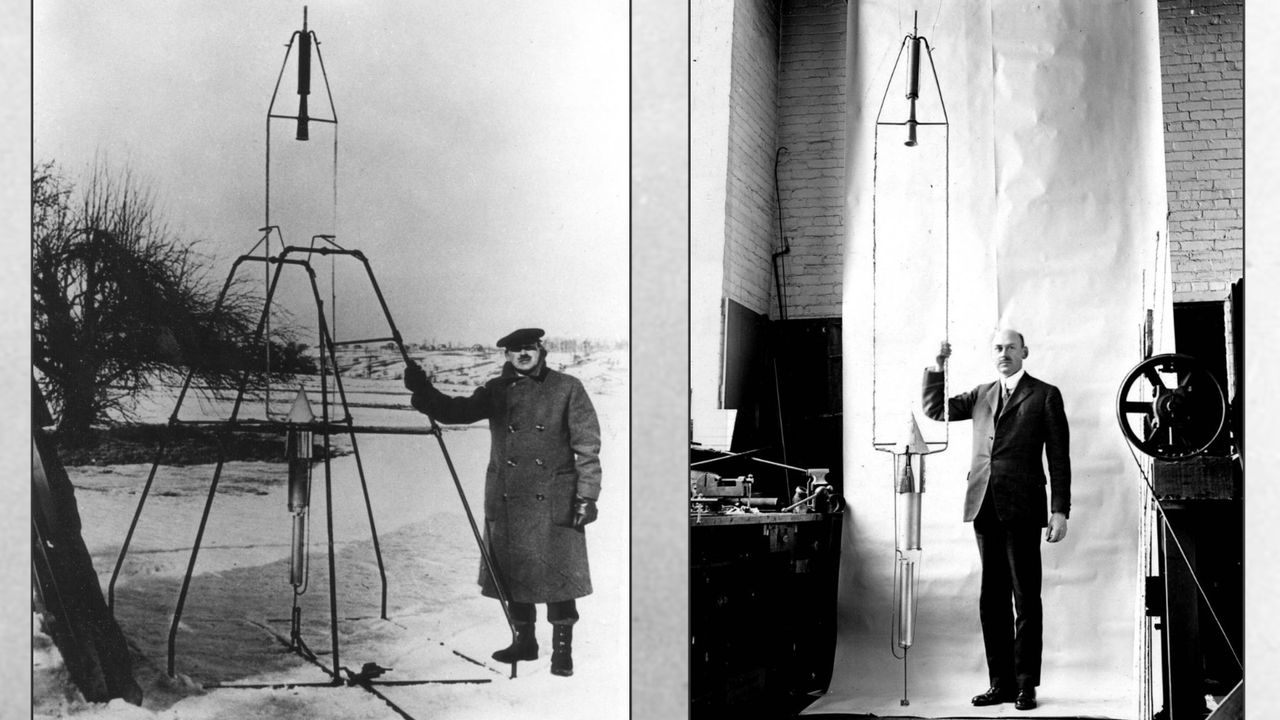
Today marks the 100th anniversary of Robert Goddard’s historic launch of the first liquid‑fuel rocket in Auburn, Massachusetts, a brief two‑second flight that proved liquid propulsion could be controlled. Goddard, assisted by his wife Esther who kept the records and secured patents, pioneered key technologies still used in modern rockets, such as cryogenic cooling of the combustion chamber. Inspired by science fiction and a childhood dream, he went on to build more than two dozen rockets before his death in 1945, long before Sputnik. His legacy lives on in NASA’s Goddard Space Flight Center and the ongoing quest to reach the stars.
Deep underground, a telescope may soon detect ghosts of stars that died before Earth existed
Original Publication Date: 2026-03-15 14:00

Japan’s upgraded Super‑Kamiokande neutrino detector, buried deep underground, is poised to capture ghost neutrinos from ancient supernovae, potentially revealing stars that exploded before Earth existed. The enhanced sensitivity will allow it to detect the faint glow of billions of neutrinos that carry most of a supernova’s energy. Scientists expect this breakthrough to let us observe particles that have been traveling for over 10 billion years, offering unprecedented insight into the universe’s earliest stellar deaths.