 Spotify
 Apple Podcasts
 Podcast Addict
 Overcast
 Podcast RSS
Study argues bigger launch vehicles may not always be better
Original Publication Date: 2026-06-30 01:45
A June 29 study by The Aerospace Corp warns that the next generation of super‑heavy lift rockets could hit a point where bigger is actually more expensive per kilogram. Like the Airbus A380, the report argues that beyond a certain size the added complexity and operational costs can outweigh economies of scale.
Pegasus XL set to air launch Swift Boost Mission to save NASA space telescope
Original Publication Date: 2026-06-29 22:51

NASA’s Swift Observatory, a gamma‑ray burst telescope launched in 2004, is at risk of re‑entering Earth’s atmosphere by the end of 2026 due to orbital decay.
US Army Establishes a Space Operations Branch
Original Publication Date: 2026-06-29 12:39
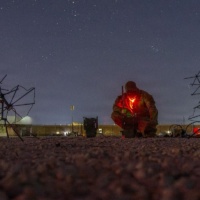
The U.S. Army has created a new Space Operations Branch to consolidate its space capabilities into a dedicated unit of trained soldiers, aiming to deliver space‑based effects directly to frontline units. Lt. Gen. John Rafferty emphasized that space integration is critical for winning in contested, multidomain environments. The branch will initially comprise 1,000 Tactical Space Operations Specialists (40D MOS) and could grow to 1,500 by 2032, providing satcom and missile‑warning systems to support soldiers in deep‑enemy areas. This move seeks to relieve operational pressure on other corps and streamline the Army's use of its vast array of space‑enabled systems.
Think tank games out how to respond to disaster scenarios in space warfare
Original Publication Date: 2026-06-29 15:21
The U.S. Military spotted a mysterious spacecraft near a costly Space Force missile‑warning satellite more than 22,000 miles over the equator. The satellite, one of a handful that constantly monitors for ballistic missile launches, suddenly went dark, prompting controllers near Denver to scramble. Analysts are debating whether the unknown craft disabled the satellite or whether a technical failure in the unforgiving space environment caused the outage. If it was an intentional strike, questions arise about who was responsible and why; if a malfunction, officials must figure out how to bring the satellite back online.