 Spotify
 Apple Podcasts
 Podcast Addict
 Overcast
 Podcast RSS
Israeli startup targets the economics of high-resolution Earth observation
Original Publication Date: 2026-02-23 10:00
Israeli startup Remondo claims it can extract sub‑30 centimeter high‑resolution imagery from small, low‑cost satellites by shifting the burden from large telescopes to computation. The company plans to launch its first mission in 2027 using a partial aperture imaging system (PAIS) that works on 12U or 16U cubesats, potentially reducing launch and manufacturing costs. Remondo has raised $20 million from private investors and Israeli government grants and has already tested the system in laboratories and a collimator setup. If proven in orbit, this technology could allow smaller satellites to rival the image quality of larger spacecraft, giving governments and commercial operators affordable high‑resolution Earth observation.
German defense firm said to be weighing bid for Mynaric
Original Publication Date: 2026-02-22 11:50
Germany’s largest defense contractor Rheinmetall is reportedly eyeing a purchase of Munich‑based laser‑communications firm Mynaric, a move that could derail Rocket Lab’s $150 million acquisition plan. The German government and European regulators are keen to keep this critical aerospace technology under European control amid heightened scrutiny of foreign takeovers. Rocket Lab’s purchase, still pending approval, would have secured a key subsystem for its growing satellite and launch services. The potential shift underscores Europe’s push to build sovereign space and defense capabilities in the wake of rising defense spending and uncertainty about U.S. Commitments.
Tory Bruno Leads Blue Origin’s National Security Push Following ULA Departure
Original Publication Date: 2026-02-22 22:11
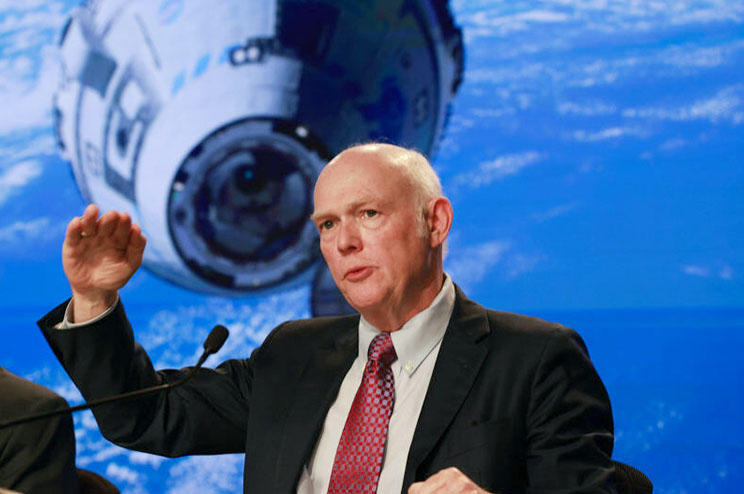
Former ULA chief Tory Bruno has joined Blue Origin as president of its new National Security Group, a move aimed at speeding up critical U.S. Defense projects. He will oversee the company’s heavy‑lift New Glenn rocket and the Blue Ring orbital logistics platform, which will support missions from space‑domain awareness to the Space Force’s DarkSky‑1 refueling test and the Golden Dome missile‑defense initiative.
Deep Space Energy Secures Funding for High Efficiency Lunar Nuclear Power
Original Publication Date: 2026-02-22 22:04

Latvian startup Deep Space Energy has secured almost €1 million in private and public funding to push forward its revolutionary RTALIG radioisotope generator, which converts Americium‑241 decay into electricity with five times the efficiency of traditional RTGs.
HEO and UNSW Partner for Australia’s First Active Propulsion RPO Mission
Original Publication Date: 2026-02-22 21:43

Australia’s first rendezvous and proximity operations mission with active propulsion has begun, thanks to a partnership between HEO and UNSW Canberra Space that leverages the newly acquired Continuum‑1 satellite as a sovereign in‑orbit testbed. Funded by the Defence Trailblazer’s Advanced Innovation Fund, the project will validate fuel‑efficient algorithms, sub‑meter resolution proximity imaging, and sensor‑network calibration to enhance space domain awareness. By delivering real manoeuvres and data, the initiative strengthens Australia’s defence‑ready space capabilities and supports the creation of the nation’s first experimental SDA Operations Centre on campus. The mission is now moving into the planning phase, with results expected to immediately boost training and technology development for future Australian Defence Space Command operations.
Tehran Reconstitutes Air Defense Perimeter Amid Regional Buildup
Original Publication Date: 2026-02-22 00:51
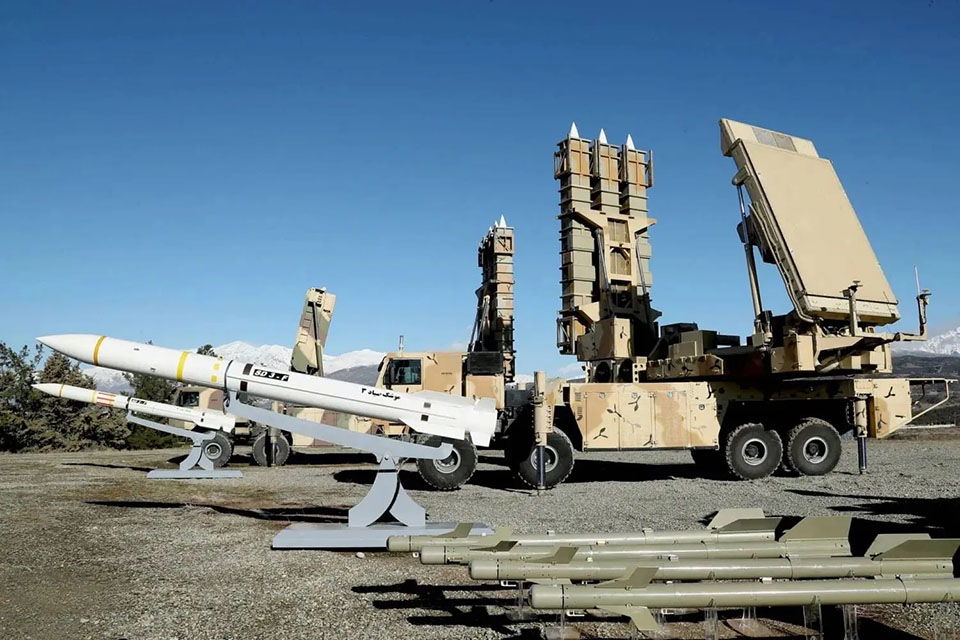
High‑resolution satellite images show Iran re‑deploying S‑300 missile launchers near Tehran, a move that signals the IRGC’s effort to rebuild its long‑range air defense after recent strikes. While the launchers are back in place, key radar components remain missing, hinting at possible decoy tactics, remote integration with domestic systems, or underground storage to reduce detection. This redeployment comes amid a U.S. Air power buildup in the CENTCOM region and follows similar efforts to harden nuclear sites with concrete sarcophagi. The presence of these launchers complicates any future U.S. Or Israeli strike plans, requiring a sustained campaign to secure air superiority.
The State of the “Legacy Primes” And a Few Billionaires
Original Publication Date: 2026-02-21 22:32
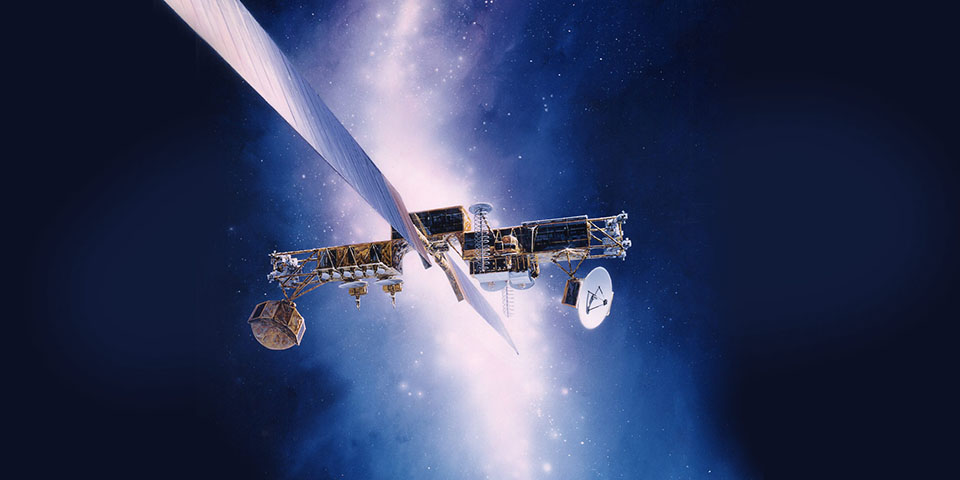
Northrop Grumman is steering the Space Development Agency with contracts for over 150 satellites, pivoting from large GEO platforms to mass‑produced “spiral development” units, and forecasts a rebound to $
Meet Regina Senegal, Acting Chief of Johnson’s Quality and Flight Equipment Division
Original Publication Date: 2026-02-23 10:00

NASA’s Johnson Space Center safety chief Regina Senegal oversees quality and safety for 13 key programs, from Orion to the Human Landing System and spacewalk operations. She leads a diverse team that writes program requirements, monitors hardware safety, and ensures government‑furnished equipment meets strict standards. After 28 years at Johnson, she now owns mission outcomes, budget, culture, and decision‑making, pushing faster, higher‑quality choices. Senegal urges the next generation to learn the history behind safety rules and to speak up, believing that caring for team strengths makes every mission safer.
Juno data provides insight into thickness of Europa’s surface ice sheet
Original Publication Date: 2026-02-23 00:50

NASA’s Juno orbiter used its Microwave Radiometer during a 2022 flyby to measure Europa’s ice shell, finding it averages about 29 km thick—supporting the thick‑shell model. The data also show that surface cracks and pores, though present, are only a few inches wide and do not extend to the subsurface ocean, limiting potential pathways for nutrients. These findings refine our understanding of Europa’s habitability and will guide the upcoming Europa Clipper and ESA’s JUICE missions. The results were published in Nature Astronomy on December 17, 2023.
NASA to rollback SLS, delaying Artemis II to April
Original Publication Date: 2026-02-21 20:45

NASA has decided to roll back the Space Launch System and Orion spacecraft to the Vehicle Assembly Building after an unexpected helium flow interruption in the rocket’s interim cryogenic propulsion stage was detected overnight.
Is time a fundamental part of reality? A quiet revolution in physics suggests not
Original Publication Date: 2026-02-22 15:00

A quiet revolution in physics is challenging the long‑held belief that time is a fundamental part of reality. Einstein’s relativity showed time as elastic, while quantum mechanics treats it as an external clock, creating a “problem of time” when scientists attempt to unite gravity and quantum theory. Recent research using Shannon’s information theory suggests that time may actually emerge from the flow of information rather than being a basic ingredient. This new perspective could reshape our understanding of the universe and the arrow of time.
NASA's Perseverance rover now has its own 'GPS' on Mars: 'We've given the rover a new ability'
Original Publication Date: 2026-02-22 14:00
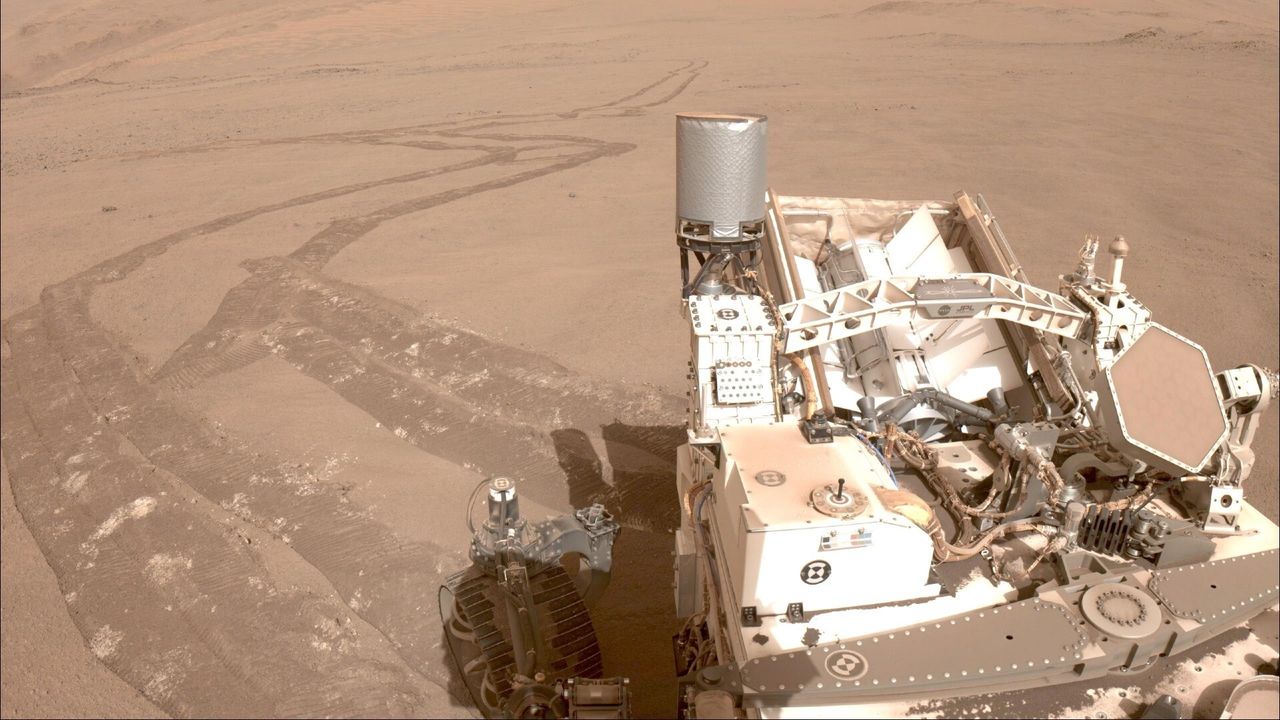
NASA has equipped its Perseverance rover with a new on‑Mars GPS system, called Mars Global Localization, that lets the six‑wheeled explorer pinpoint its position to about 10 inches using panoramic images matched to orbital maps.
Falcon 9 rocket sets new reuse record on SpaceX's 2nd Starlink launch of the day (video)
Original Publication Date: 2026-02-22 04:03
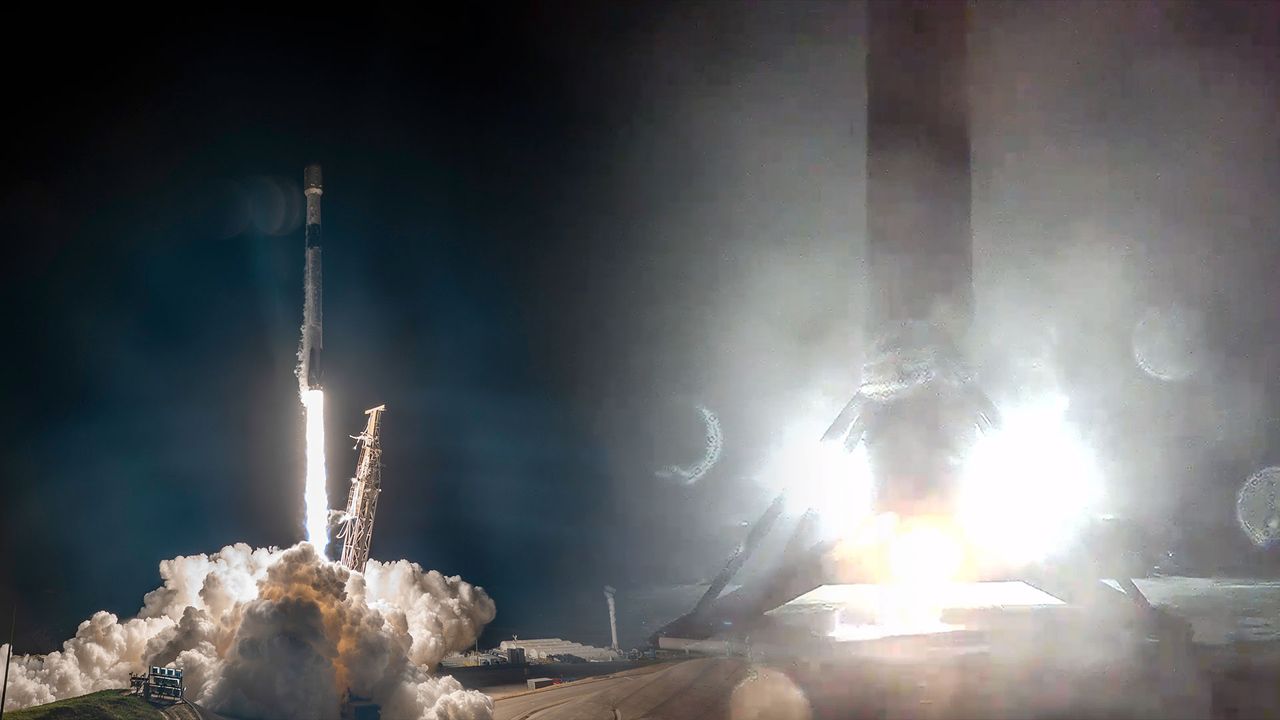
SpaceX fired off two Falcon 9 rockets on Saturday, February 21, 2026, each carrying a payload of Starlink satellites. The first launch from Vandenberg, California, lofted 25 satellites and the booster landed on the droneship “Of Course I Still Love You.” Later that night, a second Falcon 9 from Cape Canaveral, Florida, deployed 28 satellites and set a new reuse record with its 33rd flight. Together, the missions added 53 new broadband relays to SpaceX’s expanding constellation of more than 9,700 satellites.
NASA's Artemis 2 moon rocket has a problem and it's leaving the launch pad. Don't expect a moonshot in March
Original Publication Date: 2026-02-21 17:11
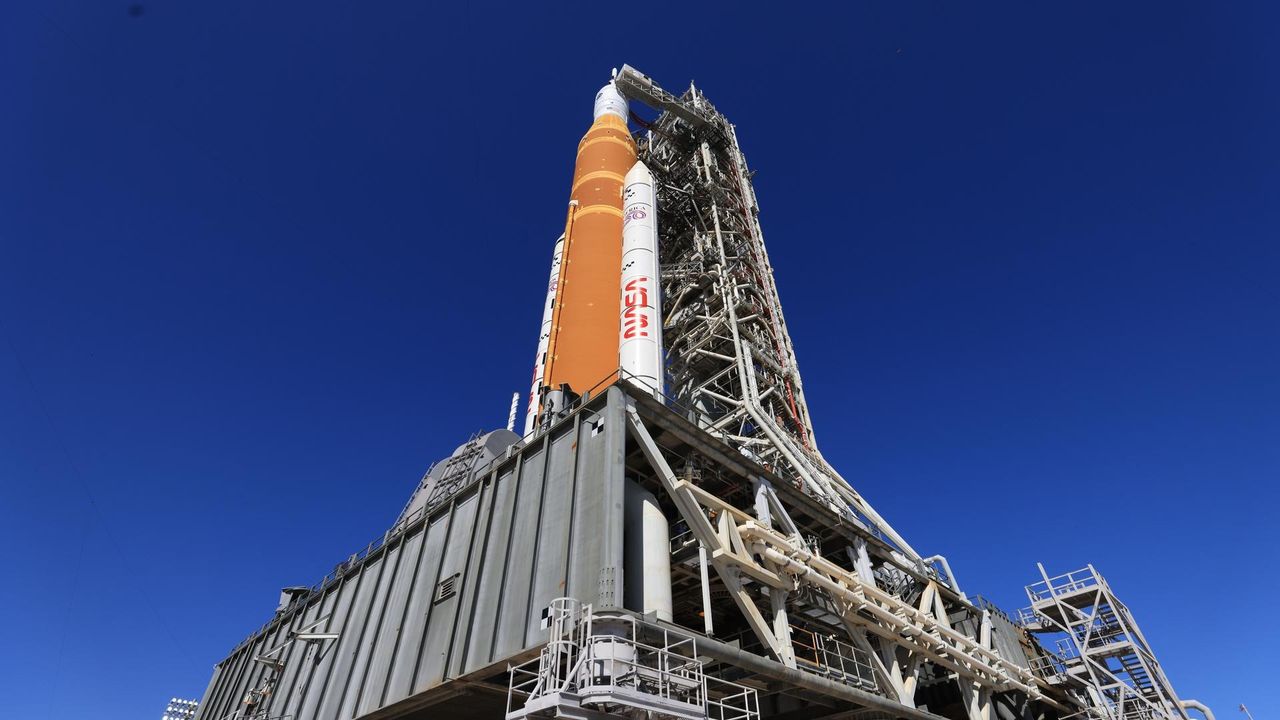
NASA’s Artemis 2 mission, which was slated to launch crewed astronauts on March 6, has been forced to roll the 322‑foot‑tall Space Launch System rocket back from Launch Pad 39B to the Vehicle Assembly Building to fix a helium supply problem in the upper stage. The glitch in the cryogenic propulsion system means the launch window in March is lost, pushing the earliest possible launch to early April. NASA officials say the rollback will likely preserve the April launch window, pending repairs and weather, but the mission’s historic lunar orbit will be delayed by at least a month. The delay underscores the challenges of getting humanity back to the Moon after the Apollo era.