 Spotify
 Apple Podcasts
 Podcast Addict
 Overcast
 Podcast RSS
SpaceX flies 25 Starlink satellites to orbit on its 50th Falcon 9 launch of the year
Original Publication Date: 2026-04-26 13:38
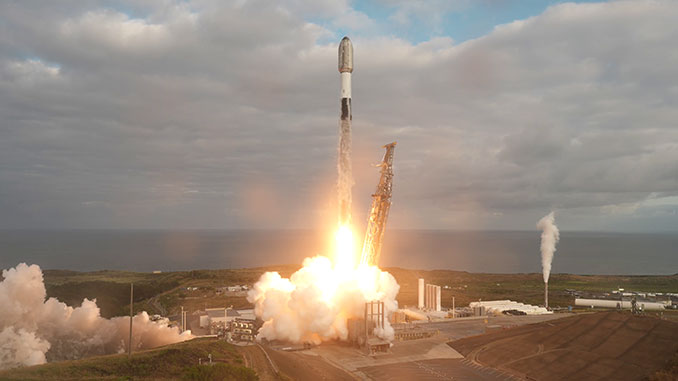
SpaceX launched its 50th Falcon 9 rocket of the year from Vandenberg Space Force Base, carrying 25 Starlink V2 Mini satellites. The B1088 first‑stage booster lifted off at 7:37 a.m. PDT and later performed an autonomous landing on the drone ship Of Course I Still Love You. This marks the booster’s 15th flight and the 603rd successful Falcon 9 landing to date. The second stage deployed the satellites a little over an hour after liftoff, completing the mission.
Vision Meets Profit: Why Modern Space Exploration Requires Both Dreamers and Business
Original Publication Date: 2026-04-26 21:50

In 2026, the space industry has blurred the line between exploration and commerce, forming a synergistic partnership. This fusion has enabled new collaborative projects that leverage both visionary ambition and practical business models. As a result, innovations in satellite technology, deep‑space missions, and commercial launch services are advancing at an unprecedented pace. The industry now thrives on this blended approach, driving growth and expanding humanity's reach into space.
How CubeSat Proliferation is Redefining Sovereignty and Diplomatic Leverage at the United Nations
Original Publication Date: 2026-04-26 21:34
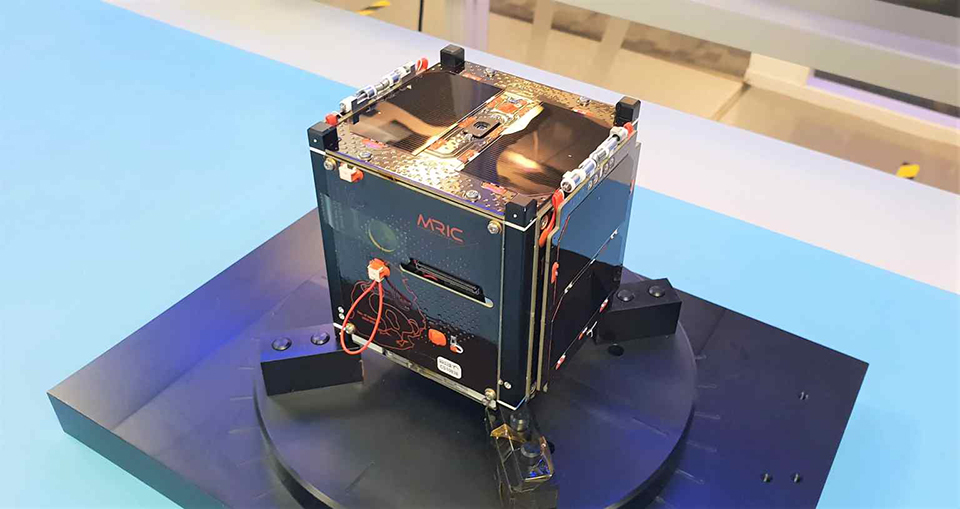
CubeSat technology has turned space from an elite domain into a shared playground, allowing dozens of countries to launch their own satellites with minimal cost. This surge of small, independent space actors is reshaping the United Nations Committee on the Peaceful Uses of Outer Space, diluting the traditional dominance of a handful of superpowers.
FCC Modernization of Spectrum Rules Unlocks Sevenfold Gain in Satellite Capacity
Original Publication Date: 2026-04-26 21:06
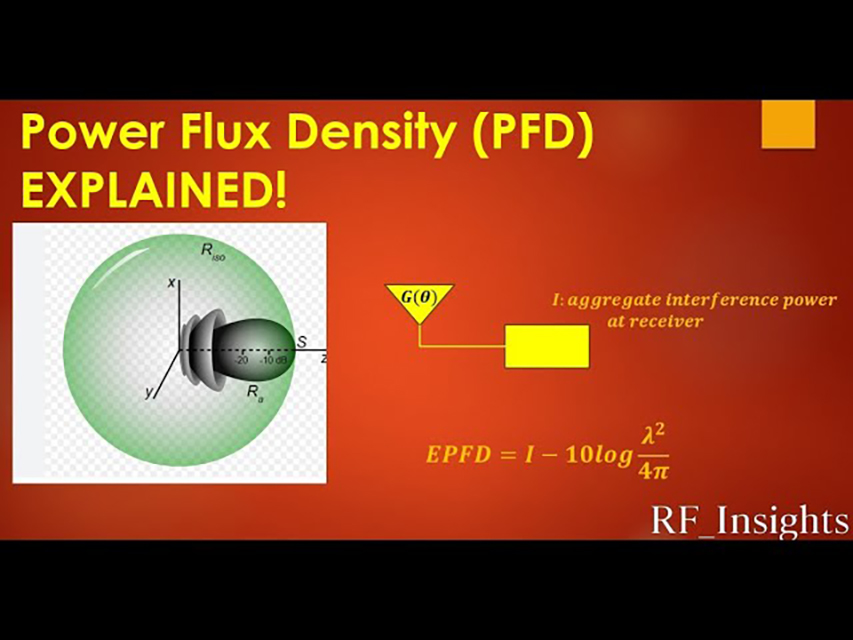
On Sunday, April 26, 2026, policy experts Kristian Stout and Michael Calabrese highlighted the Federal Communications Commission’s upcoming vote to revise long‑standing satellite power limits. They argued that the new rules could reshape how satellites transmit signals, affecting everything from broadband service to national‑security communications. The experts warned that higher power thresholds might increase interference risks and space debris, while also offering operators greater flexibility to deploy next‑generation constellations. As the FCC prepares to decide, stakeholders across industry, defense, and academia are watching closely for the implications of this pivotal regulatory shift.
Bad news, but good news followed
Original Publication Date: 2026-04-26 15:18
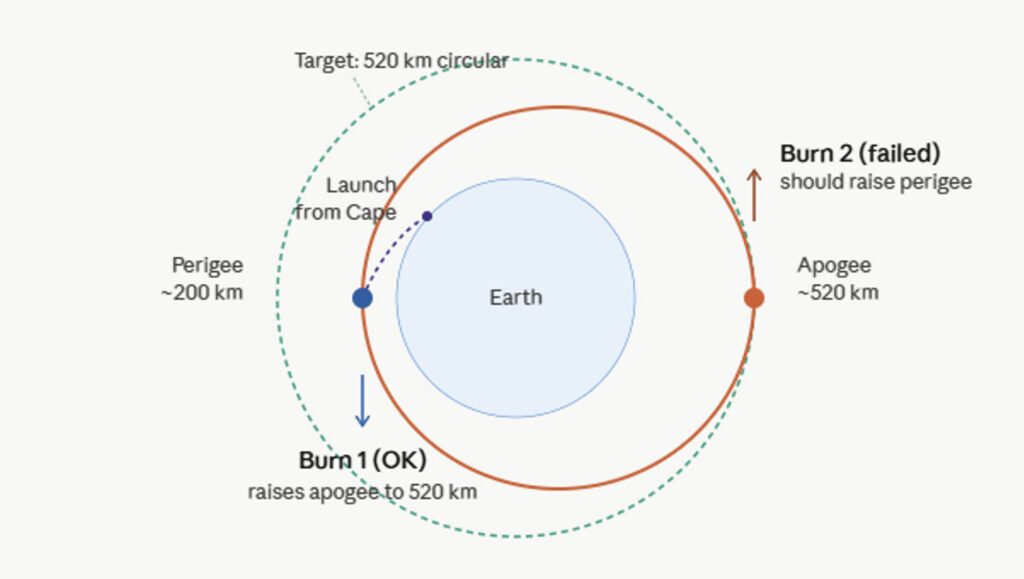
Blue Origin’s suborbital launch vehicle, BlueBird #7, failed to deploy the AST Space Mobile satellite on April 19, marking the company’s first launch loss. Launch director Chris Forrester said a propulsion system anomaly prevented the vehicle from reaching its intended trajectory.
SpaceX set to launch Falcon Heavy on Monday after 18 month hiatus
Original Publication Date: 2026-04-26 20:37

SpaceX’s Falcon Heavy is set to resume flights after a year‑and‑a‑half hiatus, launching the ViaSat‑3 F3 internet satellite from historic Launch Complex 39A on April 27 at 10:21 AM
Curiosity Rover uncovers fresh organic clues on Ancient Mars
Original Publication Date: 2026-04-26 19:10

NASA’s Curiosity rover has detected 21 organic molecules in a Martian rock, seven of which have never been seen on the Red Planet before, including a nitrogen‑rich ring that is a precursor to the DNA and RNA building blocks. The discovery came from the rover’s first wet‑chemistry experiment, where it mixed the sample with a powerful solvent, proving a new technique that will aid future missions like ESA’s Rosalind Franklin rover and NASA’s Dragonfly rotorcraft. While these organics do not prove life, they confirm that ancient Mars had the complex chemistry, water, and energy needed to possibly support microbes billions of years ago. Meanwhile, Mars Express images show dramatic changes in surface color, suggesting wind‑driven dust and ash redistribution rather than new volcanic activity, underscoring the planet’s dynamic evolution.
Pentagon Taps 12 Companies for Golden Dome SBI Tech
Original Publication Date: 2026-04-27 01:38
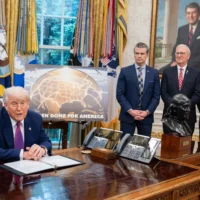
The Pentagon has awarded space‑based interceptor contracts to 12 companies for the Golden Dome missile‑defense system, a program that began under President Trump to shield the United States from aerial threats. These 20 awards, totaling up to $3.2 billion, bring together traditional defense firms and new entrants like SpaceX and Anduril. The initiative, which saw a major funding milestone in December, aims to deliver an initial operational capability by 2028. With this mix of industry partners, the Space Force plans to demonstrate its new space‑combat power in the coming years.
SpaceX launching powerful Falcon Heavy rocket today for 1st time in 18 months: Watch it live
Original Publication Date: 2026-04-26 16:00
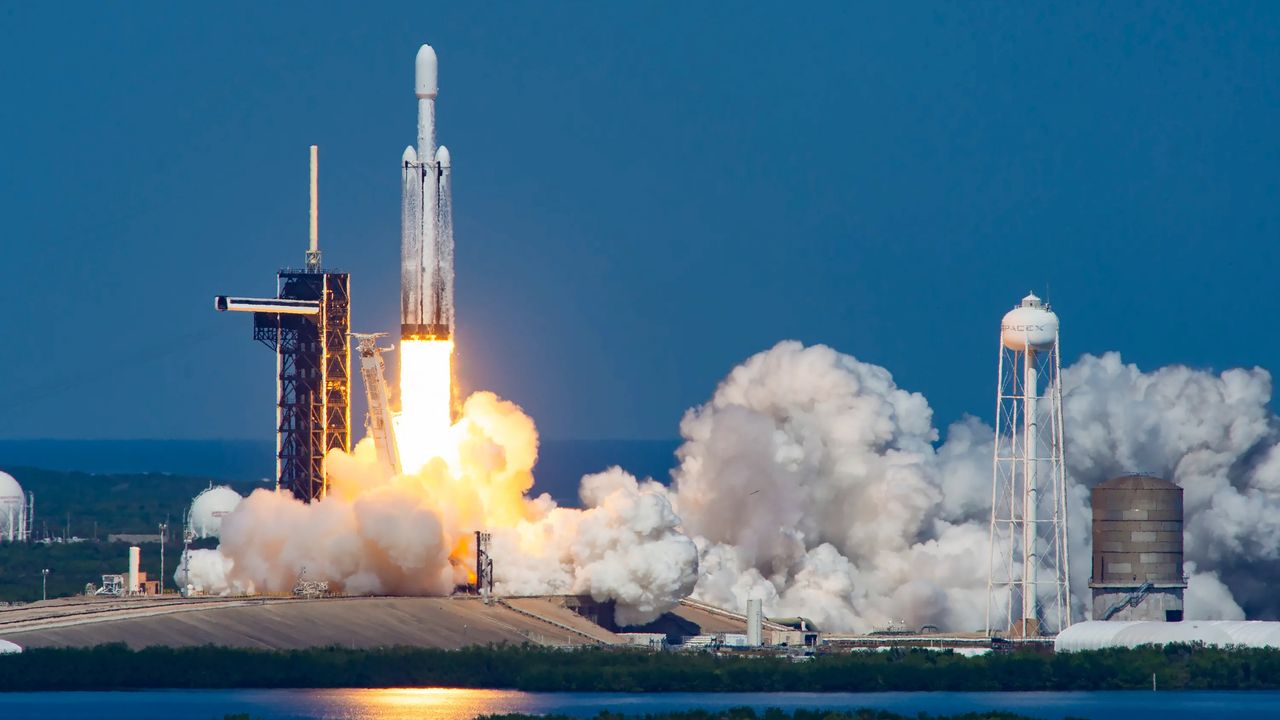
SpaceX’s powerful Falcon Heavy will lift off from Kennedy Space Center at 10:21 a.m. ET on Monday, marking its first launch in 18 months and the rocket’s 12th ever liftoff. The vehicle will carry the 6.6‑ton ViaSat‑3 F3 communications satellite into geostationary orbit, where it will provide high‑throughput broadband across the Asia‑Pacific region. With three modified Falcon 9 first stages, Falcon Heavy generates about 5.1 million pounds of thrust, making it the second‑most powerful launcher in operation today. The two side boosters are expected to return for a landing at Cape Canaveral, while the central booster will splash down in the Atlantic.
The 'Oscars of Science': Breakthrough Prize 2026 awards over $18 million for discoveries across space, physics and more
Original Publication Date: 2026-04-26 14:00

The 2026 Breakthrough Prize, dubbed the “Oscars of Science,” awarded six mainstage prizes of $3 million each across life sciences, physics, mathematics, and a lifetime‑achievement honor, with a total of over $18 million in cash. The life‑sciences laureates include Jean Bennett, Katherine High, and Albert Maguire for the first FDA‑approved gene therapy for retinal degeneration, and Stuart Orkin and Swee Lay Thein for unlocking fetal‑to‑adult hemoglobin switching, paving the way for new treatments for sickle cell and thalassemia. In physics, the Muon g‑2 collaboration at CERN, Brookhaven, and Fermilab earned a prize for measuring the muon’s magnetic moment with unprecedented precision, probing potential cracks in the Standard Model. The mathematics prize went to Frank Merle for breakthroughs in nonlinear evolution equations, deepening our understanding of complex systems from turbulence to astrophysics.