 Spotify
 Apple Podcasts
 Podcast Addict
 Overcast
 Podcast RSS
China ramps up satellite production capacity amid constellation ambitions
Original Publication Date: 2026-04-20 09:14
China is rapidly expanding its satellite manufacturing, with 36 factories already in operation and plans to produce over 7,000 satellites a year, far exceeding current launch capacity. Despite this, only about 371 satellites were launched in 2025, less than 10% of its production potential, highlighting bottlenecks in launch infrastructure and market demand. The government’s designation of commercial space as a pillar industry and the rollout of new reusable Long March rockets promise to lift launch rates, but commercial viability of large constellations remains uncertain. Once launch constraints are addressed, China could match or surpass the deployment pace of companies like SpaceX.
Space Force weighs Vulcan flights without solid boosters
Original Publication Date: 2026-04-19 17:59
The U.S. Space Force is exploring whether United Launch Alliance’s Vulcan rocket can fly without its solid rocket boosters after a Feb. 12 anomaly, a change that could keep some missions on schedule while the vehicle remains grounded for investigation. Lt. Gen. Philip Garrant said planners could reconfigure lower‑energy launches to fly without boosters, but higher‑performance missions would still face delays or reassignments.
Third New Glenn launch suffers upper stage malfunction
Original Publication Date: 2026-04-19 13:54
Blue Origin’s New Glenn NG‑3 launch on April 19 ended in failure when the second stage malfunctioned, leaving the payload in an unrecoverable, low orbit. The BlueBird 7 satellite was placed into a 154 × 494 km orbit, too low for its electric propulsion, and will de‑orbit; insurance may cover a portion of the loss. Despite the setback, the first stage landed successfully, and Blue Origin plans to reuse engines and boost launch cadence. AST SpaceMobile still targets frequent launches to deploy its D2D constellation, aiming for 45 satellites in orbit by year‑end, though it will need alternative vehicles while New Glenn is out of service.
Rhea Space Activity raises $6 million to develop GPS-free spacecraft navigation
Original Publication Date: 2026-04-19 10:41
Washington‑based startup Rhea Space Activity has raised $6 million in a Series A round to develop GPS‑free navigation software for spacecraft. The funding round drew investors including Boston Global Space Tech Investors, Iron Prairie Ventures, Blackbird Capital Group, Purdue Research Foundation, New Mexico Vintage Fund and SpaceFund. Rhea’s visual‑based system, AutoNav, uses onboard cameras to identify and track celestial bodies, calculating position and trajectory without satellite signals. The company plans to test AutoNav on a Varda Space Industries reentry capsule launched on March 30, aiming to enhance autonomy for missions where GPS is unavailable.
Blue Origin Unveils Project Quartz Global Ground Station Network
Original Publication Date: 2026-04-19 23:26
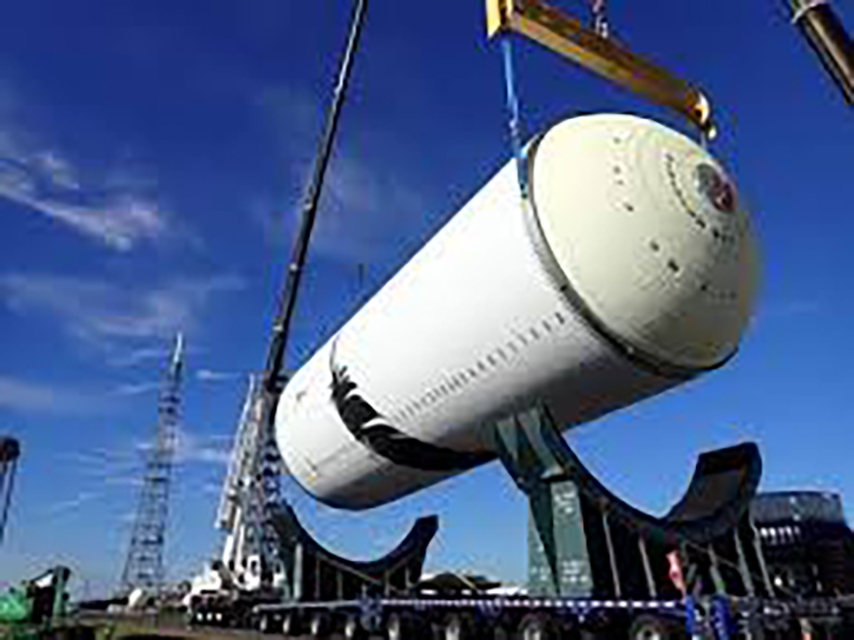
Blue Origin President Tory Bruno unveiled Project Quartz on April 16, 2026, a new global network of ground stations designed to enhance secure communications for U.S. Space assets.
NASA Shuts Off Instrument on Voyager 1 to Extend Interstellar Mission
Original Publication Date: 2026-04-19 19:37
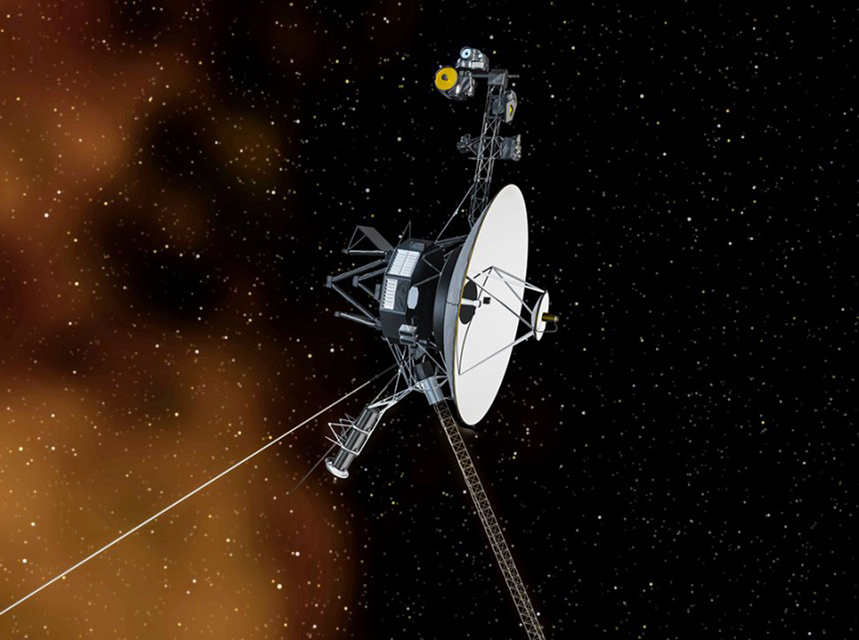
On April 17, 2026, NASA’s Jet Propulsion Laboratory deactivated one of Voyager 1’s remaining science instruments, a move aimed at conserving power and extending the spacecraft’s operational life.
Blue Origin Achieves First Booster Reuse but Satellite Enters Off-Nominal Orbit
Original Publication Date: 2026-04-19 19:22
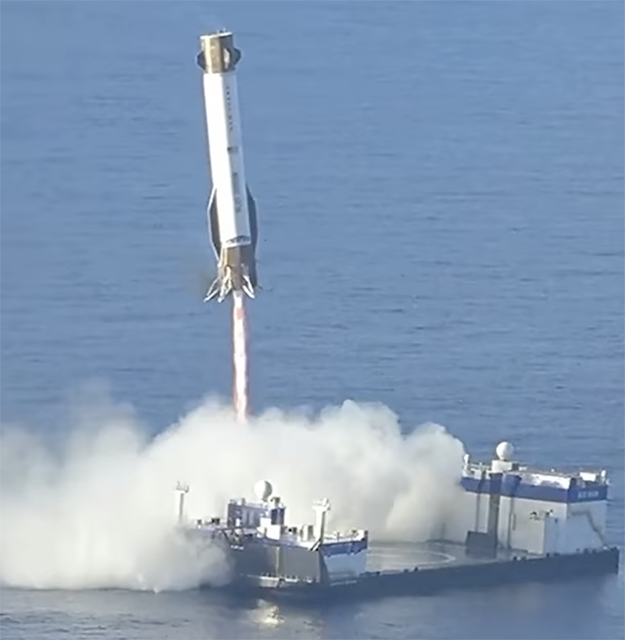
On Sunday, April 19, 2026, Blue Origin marked a new milestone in orbital reusability by successfully launching and recovering a previously flown New Glenn first‑stage booster. The mission demonstrated that the booster could return to Earth intact, a first for the company and a significant step toward reducing launch costs. Engineers noted the booster’s engines performed flawlessly during ascent, and the vehicle landed cleanly in the Atlantic Ocean. This achievement underscores Blue Origin’s commitment to reusable rocket technology and sets the stage for future missions.
Geographic Hotspots: Where Demand Is Accelerating
Original Publication Date: 2026-04-19 16:59

Terrestrial infrastructure is reaching its physical and economic limits, prompting a shift in how connectivity is delivered.
New Glenn launches on third mission, successfully reuses booster for the first time
Also covered by: Space.com
Original Publication Date: 2026-04-18 23:04

On April 19 2026, Blue Origin’s New Glenn 3 lifted off from Cape Canaveral carrying AST SpaceMobile’s BlueBird 7 satellite. The reusable first‑stage booster, Never Tell Me The Odds, landed on the Jacklyn barge, becoming Blue Origin’s first orbital‑class booster to be reused and only the second after SpaceX.
SpaceX Won A Mars Mission That Might Get Cancelled
Original Publication Date: 2026-04-20 02:55
NASA may have chosen SpaceX’s Falcon Heavy to launch the ESA Rosalind Franklin rover to Mars, but the mission’s future is uncertain as the White House’s FY2027 budget request hints at canceling NASA’s role. The rover, slated for launch as early as late 2028, is priced at $175.7 million and would mark SpaceX’s second major deep‑space flight.
'Dark subhaloes' may explain why galaxies seem to form pre-determined shapes
Original Publication Date: 2026-04-20 10:00
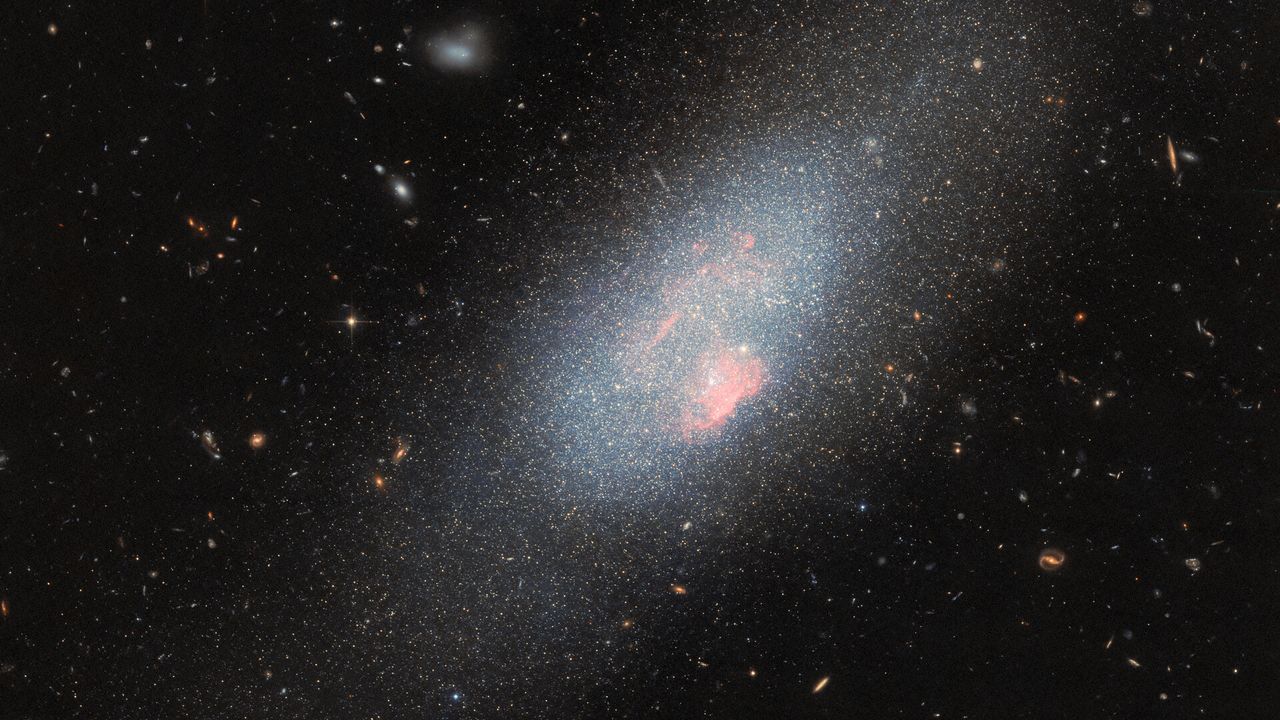
Scientists have found that tiny clumps of dark matter inside dwarf galaxies—called dark subhaloes—give stars a random jostle that heats and expands their orbits, turning steep “cusp” density profiles into flatter “core” shapes. This internal heating drives the galaxies toward a stable, predictable form, a “dynamical attractor,” according to new research by Jorge Peñarrubia and Ethan Nadler. The finding offers a natural explanation for the long‑standing cusp‑core discrepancy in the cold dark matter model. It suggests that the invisible structure of dark matter may be guiding the evolution of the universe’s smallest galaxies.
Blue Origin's rocket reuse achievement marred by upper stage failure
Original Publication Date: 2026-04-19 18:19
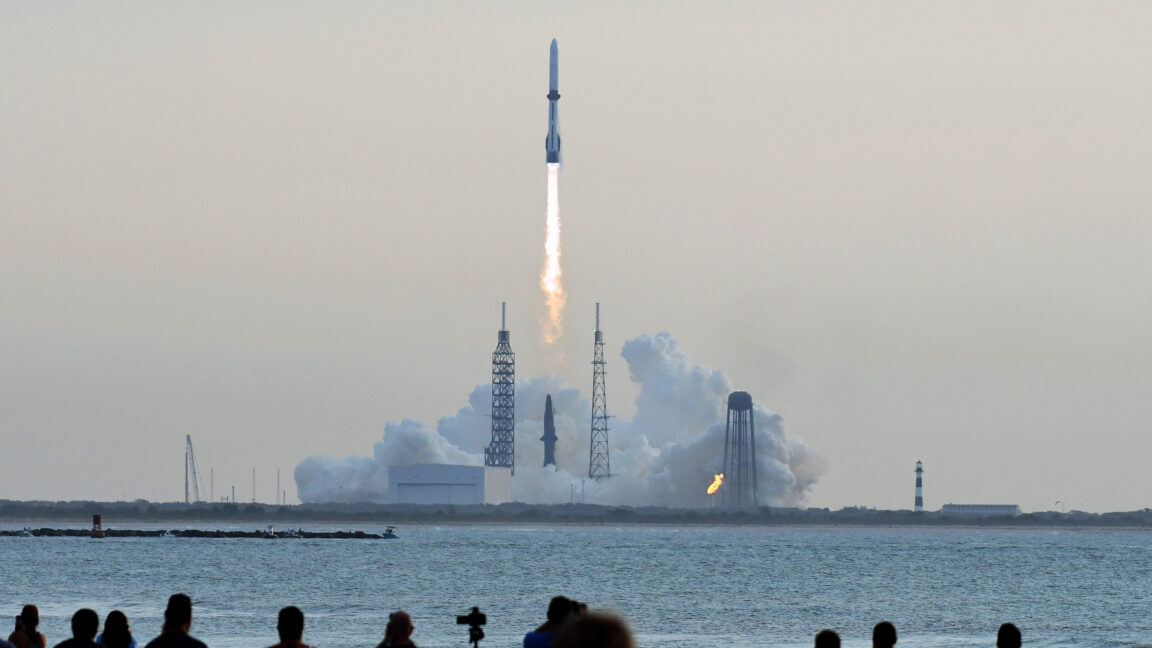
Blue Origin’s New Glenn launched from Cape Canaveral on Sunday, marking the first successful reflight of its orbital‑class booster.