 Spotify
 Apple Podcasts
 Podcast Addict
 Overcast
 Podcast RSS
SBQuantum and Spire to send quantum diamond magnetometer into orbit
Original Publication Date: 2026-03-27 09:00
Canadian startup SBQuantum will launch its quantum diamond magnetometer into low‑Earth orbit on March 30 aboard a Spire Global satellite carried by a SpaceX Falcon 9 rideshare. The compact device, roughly the size of a quart of milk, will be deployed from the satellite and monitored through Spire’s ground stations and data‑processing network. This partnership provides a low‑cost platform for quantum sensing technology in space. The mission underscores the growing commercial use of quantum devices for Earth observation.
ispace redesigns lunar lander, introduces lunar communications service
Original Publication Date: 2026-03-27 08:50
Japanese space company ispace has postponed its first U.S. Lunar lander launch to 2030 after deciding to replace the VoidRunner engine it was co‑developing with Agile Space and to unify its Japanese and American lander designs into a single “Ultra” model. The switch will also push the launch of the NASA Commercial Lunar Payload Services mission, now renamed Mission 5, and will require a modest restructuring of the company’s workforce. While the lander changes delay the U.S. Program, ispace is launching a new Lunar Connect Service, aiming to deploy five communication satellites by 2030 to provide lunar surface imaging, navigation and situational awareness. These satellites will begin with a 2027 launch on a vehicle from U.S. Firm Argo Space, positioning ispace to tap a projected $3 billion annual market by 2040.
U.S. GSSAP satellites execute GEO handoff to monitor China’s Shijian-29 spacecraft
Original Publication Date: 2026-03-26 23:12
Commercial space tracking data shows U.S. Satellites are coordinating maneuvers to stay close to and continuously monitor two Chinese spacecraft in geostationary orbit. The satellites are executing a GEO handoff to keep an eye on China’s Shijian‑29 probe. This information was first reported by SpaceNews. The U.S. Effort underscores heightened surveillance of foreign space assets.
Space Command begins phased move to Alabama
Original Publication Date: 2026-03-26 21:20
U.S. Space Command is beginning a phased relocation to Alabama, with a new headquarters slated for Huntsville and an initial secure facility at Redstone Arsenal set to open in April. The command will shift roughly 200 personnel to the Redstone SCIF by year‑end while construction ramps up for a permanent site expected to be finished by 2031. Senators pressed for details on the construction agent, and the Pentagon is finalizing the team that will oversee design and contracts, accelerated by provisions in the 2026 defense bill. Throughout the transition, the command is offering relocation incentives to staff in Colorado and retention bonuses to maintain operational readiness.
Government use of commercial procurement models has limitations in space
Original Publication Date: 2026-03-26 20:36
U.S. Government agencies are increasingly adopting commercial contracting models to acquire space capabilities. Yet this shift does not automatically translate into more work for the companies that supply those services. Analysts note that procurement procedures can still limit the amount of new business firms receive. The trend underscores a growing gap between government purchasing practices and commercial sector growth expectations.
SpaceX launches batch of Starlink satellites from the West Coast
Original Publication Date: 2026-03-26 16:50
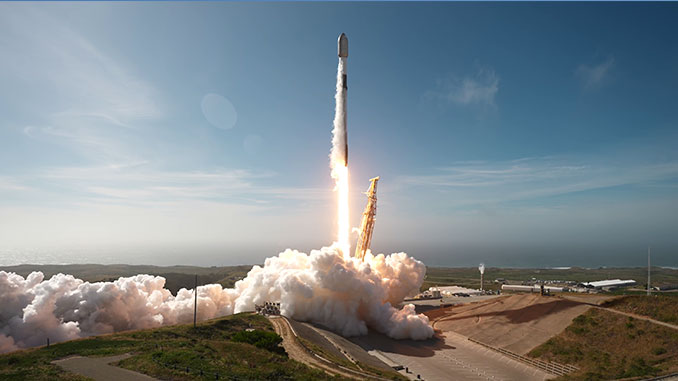
SpaceX launched its Starlink 17‑17 mission from Vandenberg Space Force Base on March 26, 2026, after a two‑day delay. A Falcon 9 carrying 25 new satellites lifted off at 4:03 p.m. PDT and followed a southerly trajectory before the first‑stage booster B1081 landed on the drone ship “Of Course I Still Love You” 8½ minutes later. This booster, now on its 23rd flight, has previously supported numerous missions including Crew 7 and CRS‑29. The second stage deployed the Starlink satellites just over an hour into flight, adding to SpaceX’s expanding global internet network.
Firefly Aerospace Supports U.S. Space Force VICTUS DIEM Exercise
Original Publication Date: 2026-03-26 20:14

Firefly Aerospace revealed on March 25, 2026 that it will take part in two key responsive space exercises for the U.S. Space Force, both under the VICTUS DIEM mission umbrella. The company’s involvement will support the Space Force’s rapid deployment and rapid response capabilities by providing launch services and on‑orbit logistics. These exercises aim to validate the Force’s ability to quickly mobilize and sustain space assets in dynamic operational scenarios. Firefly’s participation underscores the growing partnership between commercial launch providers and national defense space initiatives.
CubeSpace Challenges Vertical Integration with Record ADCS Production Milestone
Original Publication Date: 2026-03-26 19:56

CubeSpace announced on March 23, 2026 that it will dramatically ramp up production of its Attitude Determination and Control Systems, positioning the company as a serious industrial alternative to the do‑it‑yourself approach that has dominated the market.
HTS Market Projected to Reach $76 Billion as NGSO Constellations Reset Industry Benchmarks
Original Publication Date: 2026-03-26 17:18

On March 24, 2026, Novaspace released the eighth edition of its High Throughput Satellites (HTS) report, highlighting a seismic shift in satellite communications economics. The report attributes the change to the rapid maturation of HTS technology, which has dramatically lowered launch and operational costs while boosting data capacity. Analysts note that this evolution is prompting new market entrants and reshaping pricing models for broadband and connectivity services.
GomSpace Joins Danish LUNA Consortium to Advance Nanosatellite Antenna Performance
Original Publication Date: 2026-03-26 14:07
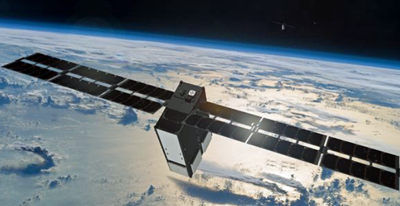
GomSpace has joined Denmark’s flagship LUNA project, a research initiative focused on creating low‑loss, multiband nanosatellite antennas with high gain and mechanical beam‑steering capabilities. The partnership will see GomSpace supply cutting‑edge antenna hardware designed to boost the communication performance of small satellites. By contributing its expertise in nanosatellite systems, GomSpace is helping to advance next‑generation space communication technology. This collaboration underscores the growing importance of compact, high‑efficiency antennas for future space missions.
OrbitsIQ Global and Wrocław Tech Validate E-SSA Waveform for Space-Based IoT
Original Publication Date: 2026-03-26 13:59
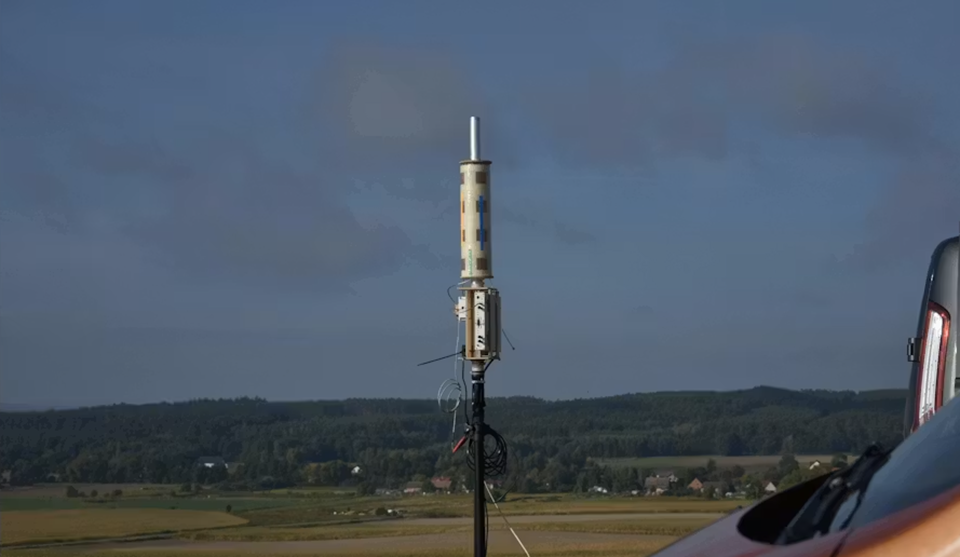
OrbitsIQ Global has announced a breakthrough in satellite‑based IoT connectivity with the development of its Enhanced Spread Spectrum Aloha (E‑SSA) waveform. The new technology, created in partnership with industry leaders, promises to boost data throughput and reduce latency for low‑Earth‑orbit satellite networks. By enabling more efficient spectrum use, E‑SSA could support a growing number of connected devices across remote regions.
Satellite Spots a Spawn
Original Publication Date: 2026-03-27 04:01

NASA’s Landsat 9 satellite captured a vivid Pacific herring spawn off Vancouver Island on February 19, 2026, turning the nearshore waters a bright green‑turquoise as thousands of silvery fish released eggs and milt into the shallow, protected waters of Barkley Sound. The event, which drew whales, sea lions, and even eagles, is a key part of the herring life cycle and a vital food source for First Nations and commercial fisheries. Researchers at the University of Victoria are using decades of satellite imagery to map and monitor these spawning sites, offering new insights into marine ecosystem health. This satellite‑visible spectacle underscores how modern technology can illuminate critical natural events from space.
La NASA presentará el telescopio Roman completo y ofrecerá una conferencia de prensa
Also covered by: NASA
Original Publication Date: 2026-03-26 20:53
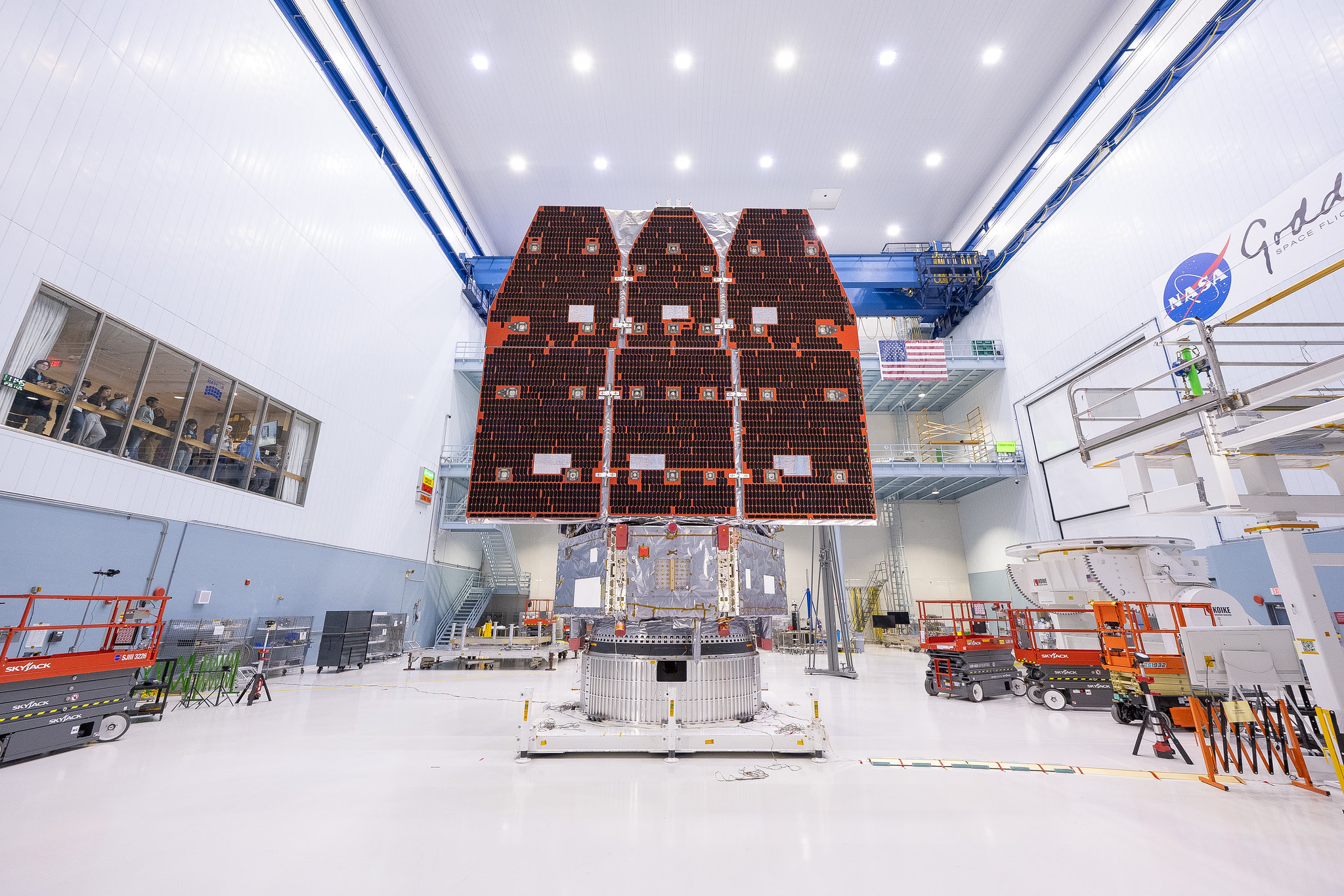
NASA unveiled the fully assembled Nancy Grace Roman Space Telescope on April 21 in Goddard’s largest cleanroom after integrating its two primary segments. A press conference gave journalists a rare look before the telescope is shipped to Kennedy Space Center for final preparations and a live‑streamed news conference. The mission is slated to launch by May 2027, with a possible earlier launch as early as fall 2026. The Roman telescope will deliver unprecedented deep‑field images and test cutting‑edge technology to directly image exoplanets, ushering in a new era of cosmic surveys.
NASA Releases Artemis II Moon Mission Launch Countdown
Original Publication Date: 2026-03-26 20:12
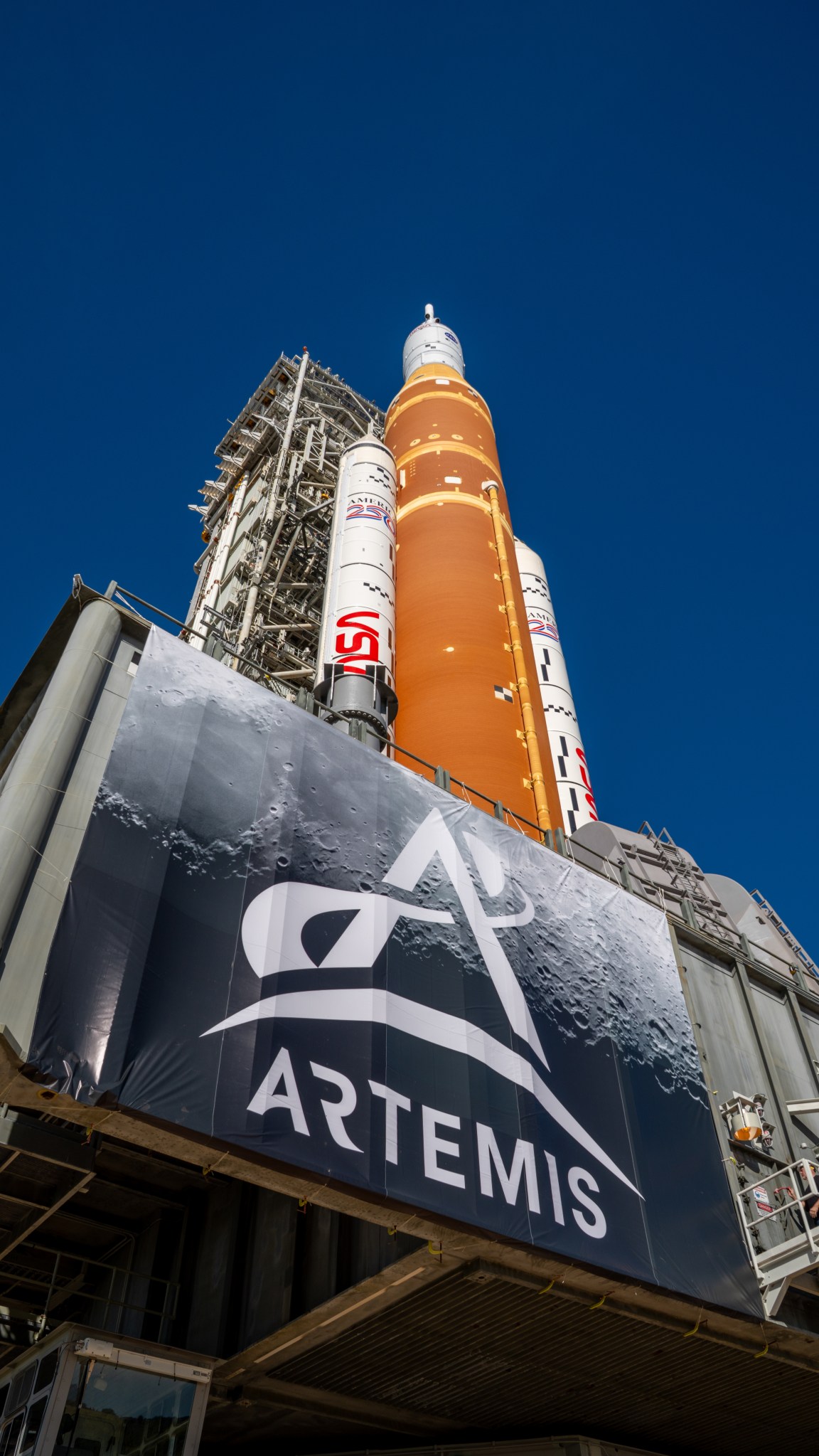
NASA’s crawler‑transporter has moved the powerful Space Launch System rocket and Orion spacecraft from the Vehicle Assembly Building to Launch Pad 39B at Kennedy Space Center in preparation for the Artemis II mission, scheduled
NASA Unveils Initiatives to Achieve America’s National Space Policy
Original Publication Date: 2026-03-26 23:00
NASA unveiled a suite of agency‑wide initiatives at its “Ignition” event on March 24, aimed at fulfilling President Donald Trump’s National Space Policy and strengthening U.S. Leadership in space. The plan calls for a return to the Moon, the construction of a lunar base, and a sustained American presence in low Earth orbit. It also seeks to accelerate world‑changing science missions and transition nuclear power and propulsion from the lab to space. The Jet Propulsion Laboratory will support several of these efforts, and more details are available at NASA.gov.
With Artemis Changes, Europe is Left Holding the Bag
Original Publication Date: 2026-03-27 06:01
NASA Administrator Jared Isaacman announced a pause of the Lunar Gateway, redirecting its assets toward a future lunar base. European partners, who poured hundreds of millions of euros into modules such as Lunar I‑Hab and Lunar View, are now reassessing their roles amid growing distrust of U.S. Space plans. While some hardware could be repurposed for missions like the SR‑1 Freedom Mars probe or LEO projects, many components designed for free‑flying microgravity are unlikely to be reused. European companies—including Airbus, Thales Alenia Space, and Redwire—await Congressional approval to determine the fate of their investments and the next steps in the U.S. Lunar strategy.
Arkadia Space Secures €14.5M to Develop New Biprop Engine
Original Publication Date: 2026-03-27 05:55

Spanish propulsion startup Arkadia Space has secured €14.5 million in funding from the European Innovation Council, combining €2.5 million in grants with €6 million in equity and matching private investment, to develop an upgraded bipropellant engine for high‑power missions. The company recently validated a 5‑Newton monopropellant test on a D‑Orbit ION satellite, proving that green hydrogen peroxide can rival toxic hydrazine while reducing ground handling costs. Arkadia plans to scale production, targeting up to 500‑Newton thrust engines for future lunar landings and European launch vehicles, and aims to build a new facility to meet rising demand. With the EIC backing, the firm expects streamlined access to mentorship, client opportunities, and additional capital to accelerate its growth.
Lawmakers Question NASA’s Shifting Vision for CLDs
Original Publication Date: 2026-03-26 12:00
NASA Administrator Jared Isaacman unveiled a new plan to transition the International Space Station to commercial LEO destinations, proposing a core module that could host up to two commercial modules and detach after the ISS’s life. The proposal, aimed at avoiding a single provider and accelerating commercial development, sparked confusion among lawmakers and commercial companies, who question its economic viability and the likelihood of a single contract award.
Directed Energy: An Alternative to Space-Based Interceptors
Original Publication Date: 2026-03-26 11:16

The article examines directed‑energy weapons as a potential alternative to space‑based interceptors for missile defense. It highlights the speed and precision of lasers, their lower cost per shot, and the flexibility they offer compared to traditional missile interceptors. The piece also discusses technical hurdles such as power generation, beam control, and atmospheric distortion that must be overcome. Ultimately, directed energy could provide a more agile and scalable solution to emerging ballistic‑missile threats.
NASA is developing the '1st nuclear powered interplanetary spacecraft.' What about the Voyager probes?
Original Publication Date: 2026-03-27 10:00
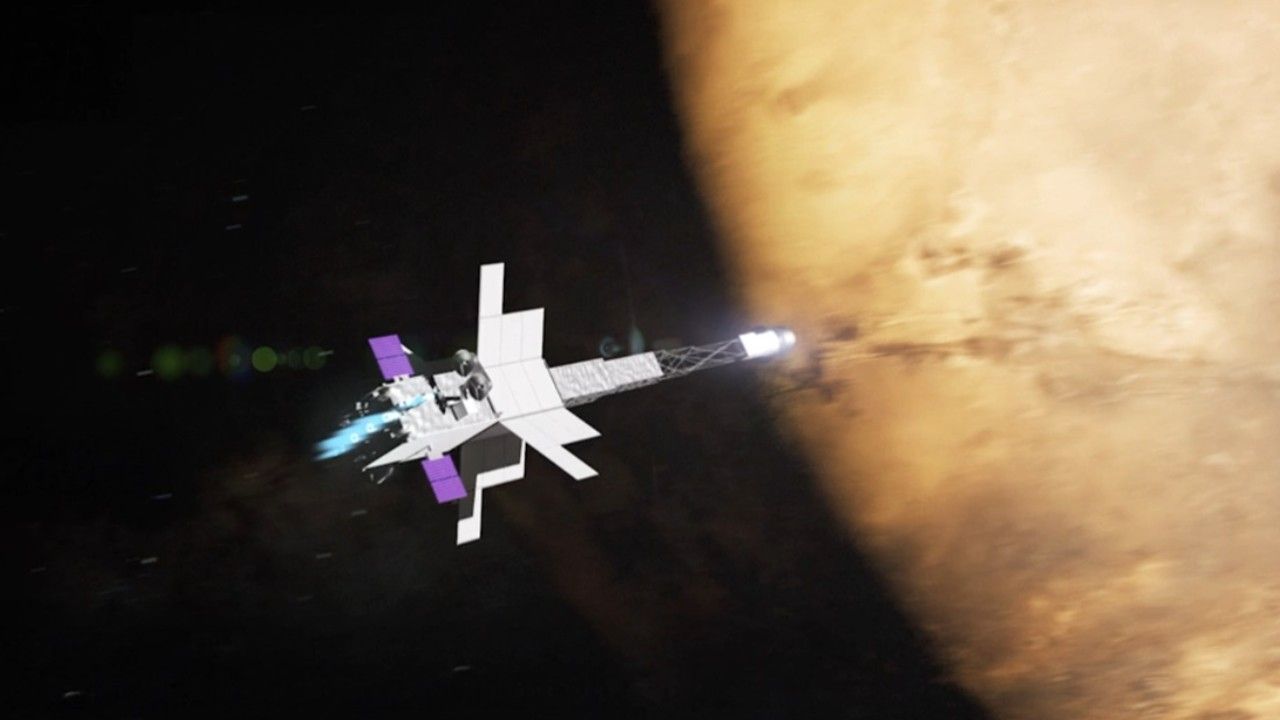
NASA is developing the first nuclear‑powered interplanetary spacecraft, the SR‑1 Freedom, slated for a 2028 launch to Mars. The craft will use a fission reactor to generate electricity for an ion engine, offering far greater efficiency for deep‑space mass transport than the radioisotope thermoelectric generators that powered Voyager and other missions. This marks the culmination of more than 60 years of nuclear propulsion research, from Project Orion to modern RTG use. If successful, SR‑1 Freedom could revolutionize interplanetary travel and open new possibilities for future missions beyond Earth orbit.
Watch the BBC's Dr Who spin-off 'The War Between the Land and the Sea' and every episode of the classic Dr Who series on your travels with our exclusive NordVPN deal
Original Publication Date: 2026-03-27 08:00

Space.com reports an exclusive NordVPN deal that lets sci‑fi fans bypass geo‑restrictions to watch BBC iPlayer content, including Doctor Who and the new spin‑off, “The War Between the Land and the Sea.” The Prime plan is slashed to $177.36 from $691.32—a 74% discount—plus a free $50 Amazon gift card and four extra months at no cost.
Hitting the brakes: Hubble Space Telescope watches doomed comet reverse its spin
Original Publication Date: 2026-03-26 22:00

Hubble Space Telescope captured comet 41P/Tuttle–Giacobini–Kresák slowing its rotation and then spinning in the opposite direction, a first for cometary observations. The 0.6‑mile (1 km) nucleus, observed during its 2017 perihelion, showed a spin period drop from 46–60 hours to about 14 hours as uneven gas jets acted like tiny thrusters.
Sun storms are powered by a magnetic engine 16 Earths deep, study finds
Original Publication Date: 2026-03-26 20:02
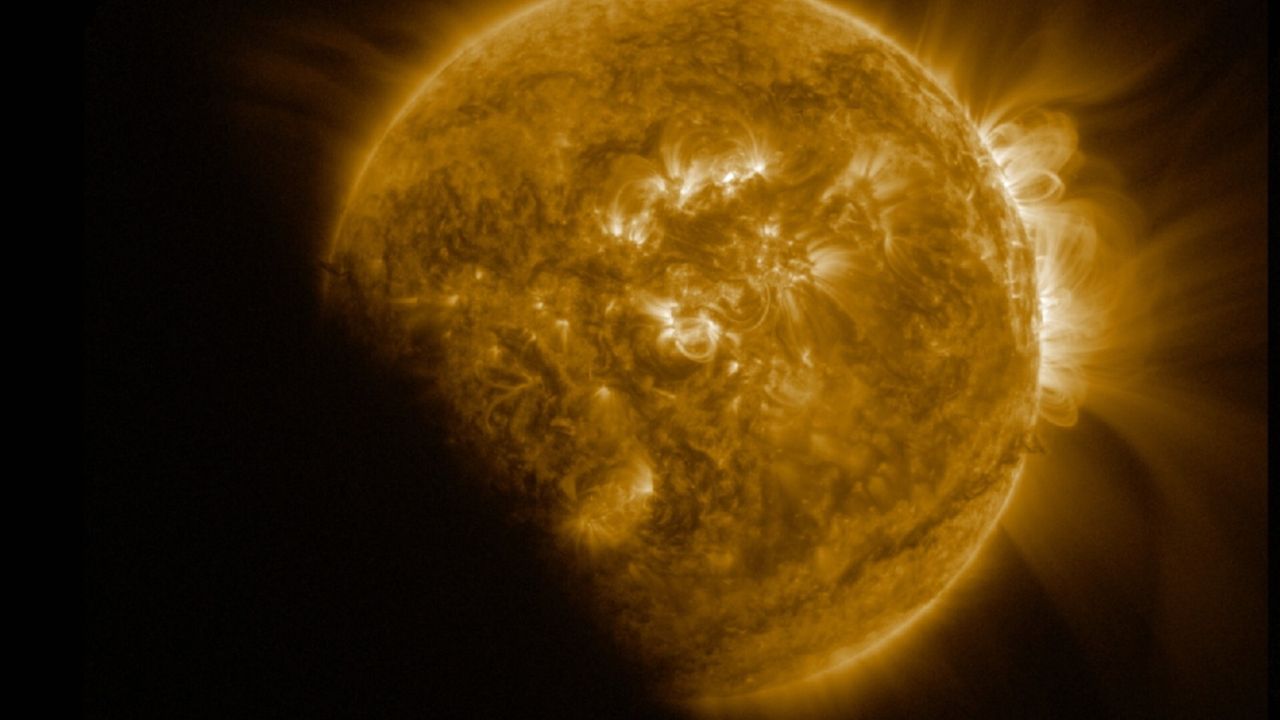
Scientists have finally pinpointed the Sun's magnetic engine to a layer 200,000 kilometers beneath its surface, deep within the tachocline where convection meets radiation. Using data from NASA’s SOHO and ground‑based telescopes, researchers mapped rotating plasma bands that mirror the butterfly‑shaped pattern of sunspots over the 11‑year cycle. This discovery confirms that powerful solar flares and coronal mass ejections are driven by magnetic fields generated at this boundary. The finding could improve our ability to forecast space weather that affects satellites and power grids.
Artemis 2 moon mission latest news: NASA prepares for April 1 launch for lunar astronauts
Original Publication Date: 2026-03-26 16:11
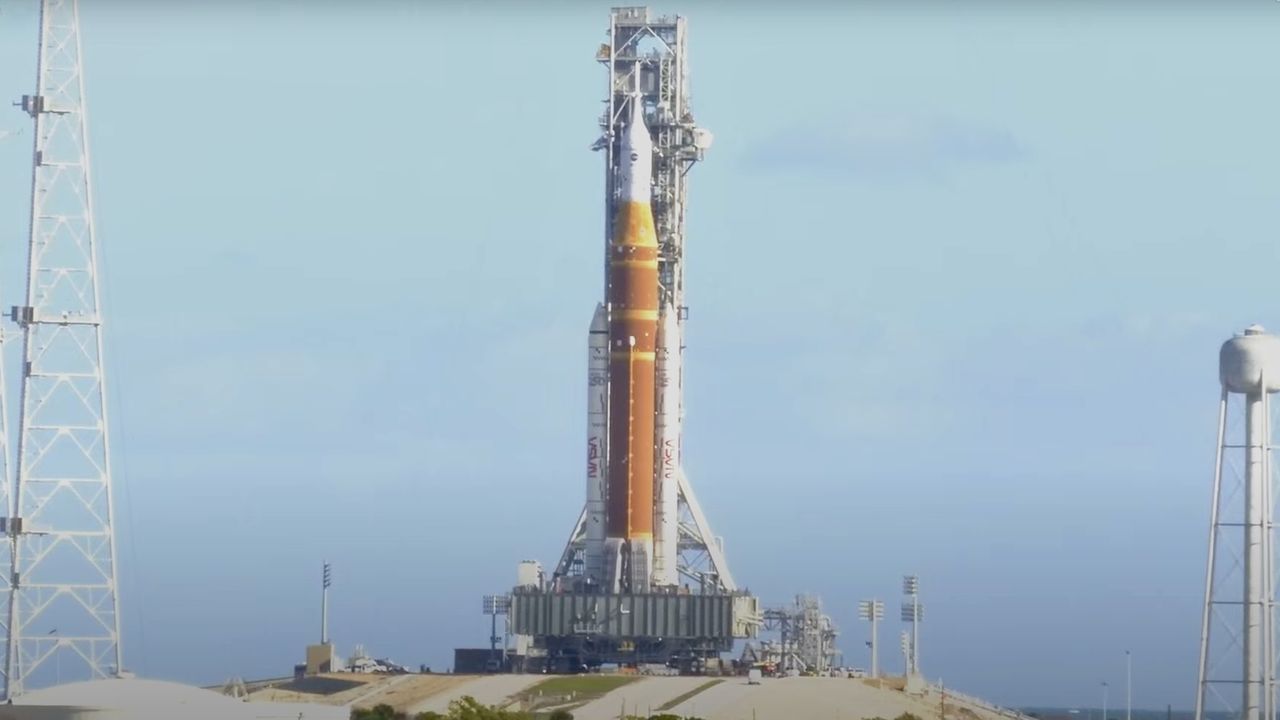
A striking orange rocket sits poised on a low mound, its bright paint contrasting sharply with the pale blue sky. The sleek silhouette is highlighted by the gentle rise of earth beneath it, creating a dramatic silhouette against the clear heavens. The scene evokes anticipation for launch, suggesting calm, favorable conditions for the mission. This vivid tableau captures the spirit of space exploration.