 Spotify
 Apple Podcasts
 Podcast Addict
 Overcast
 Podcast RSS
Austrian propulsion startup joins sovereign space funding surge
Original Publication Date: 2026-06-19 07:00
Austrian satellite propulsion startup Gate Space secured €6.3 million in funding from Europe’s government‑backed accelerator program, bolstering the nation's push toward space sovereignty. The investment places Gate Space among a growing cohort of European firms drawing capital to develop indigenous propulsion capabilities. The funding underscores Europe’s commitment to reducing reliance on external launch providers and enhancing its strategic autonomy in space. Gate Space’s success signals a broader momentum in the continent’s space industry.
EQT to acquire Exolaunch
Original Publication Date: 2026-06-18 19:45
EQT has agreed to acquire Berlin‑based Exolaunch, the company that has coordinated rideshare launches for over 790 satellites, for an undisclosed sum. The deal, announced June 18, is expected to close in Q4 2026 and marks EQT’s first investment in the space sector, giving Exolaunch the capital to scale amid surging launch demand. Exolaunch has already handled 47 missions, including every SpaceX Transporter and Bandwagon rideshare, and plans to secure dedicated Falcon 9 capacity for future launches. With EQT’s backing, Exolaunch aims to expand launch capacity and serve customers needing larger, more frequent rideshare payloads as the industry faces a growing gap between demand and available orbital slots.
Chinese startup Spark Space tests engine, raises funds for electric-pump rocket
Original Publication Date: 2026-06-18 14:37
Chinese startup Spark Space has secured nearly 100 million yuan in funding to develop the world’s largest electric‑pump‑fed rocket, the Jinhua‑1, a 27.5‑meter, two‑stage vehicle that will use nine Lieyan‑2 engines on its first stage and a single vacuum‑optimized engine on the second, delivering 90 tons of lift and up to 1,500 kg to low Earth orbit. Spark Space, founded in Hefei in 2024, plans its first flight in 2027 after successful March engine tests, aiming to offer a low‑cost, quick‑response launch option for small satellite constellations.
A legacy to help solve the space workforce pipeline
Original Publication Date: 2026-06-18 14:37
In the latest episode of Space Minds, host David Ariosto sits down with Mike Kincaid, president and CEO of the Challenger Center, to discuss the expanding space workforce pipeline and the center’s role in boosting STEM education. The podcast, part of SpaceNews’s new audio‑video series, spotlights leaders, technologies, and opportunities that inspire space enthusiasts. Episodes air every Thursday on SpaceNews.com, YouTube, Spotify, and Apple, and listeners can sign up for exclusive early access. Tune in this Thursday for fresh insights into the future of space careers.
The Satnews offices Will Be Closed Friday, June 19 for the Juneteenth Holiday.
Original Publication Date: 2026-06-18 15:36

Satnews will reopen its offices on Monday, June 22, 2026, after a brief closure. The newsroom is set to resume full operations, welcoming reporters and staff back to the building. Fresh stories will be coming straight from the new headquarters. The offices will be open to the public starting Monday.
Rideshare Reinforcements: Private Equity Giant EQT Enters Space Sector with Exolaunch Acquisition
Original Publication Date: 2026-06-18 15:21

European private equity firm EQT has signed a definitive agreement to invest in the commercial space economy, marking a significant shift as institutional private capital deepens its involvement in the sector. The deal underscores growing confidence in the space industry's commercial potential and signals a broader trend of private investment in space-related ventures across Europe. By committing substantial capital, EQT aims to support the development of satellite infrastructure, launch services, and related technologies. This move positions the firm at the forefront of Europe’s expanding space economy.
Tropical Storm Arthur
Original Publication Date: 2026-06-19 04:00
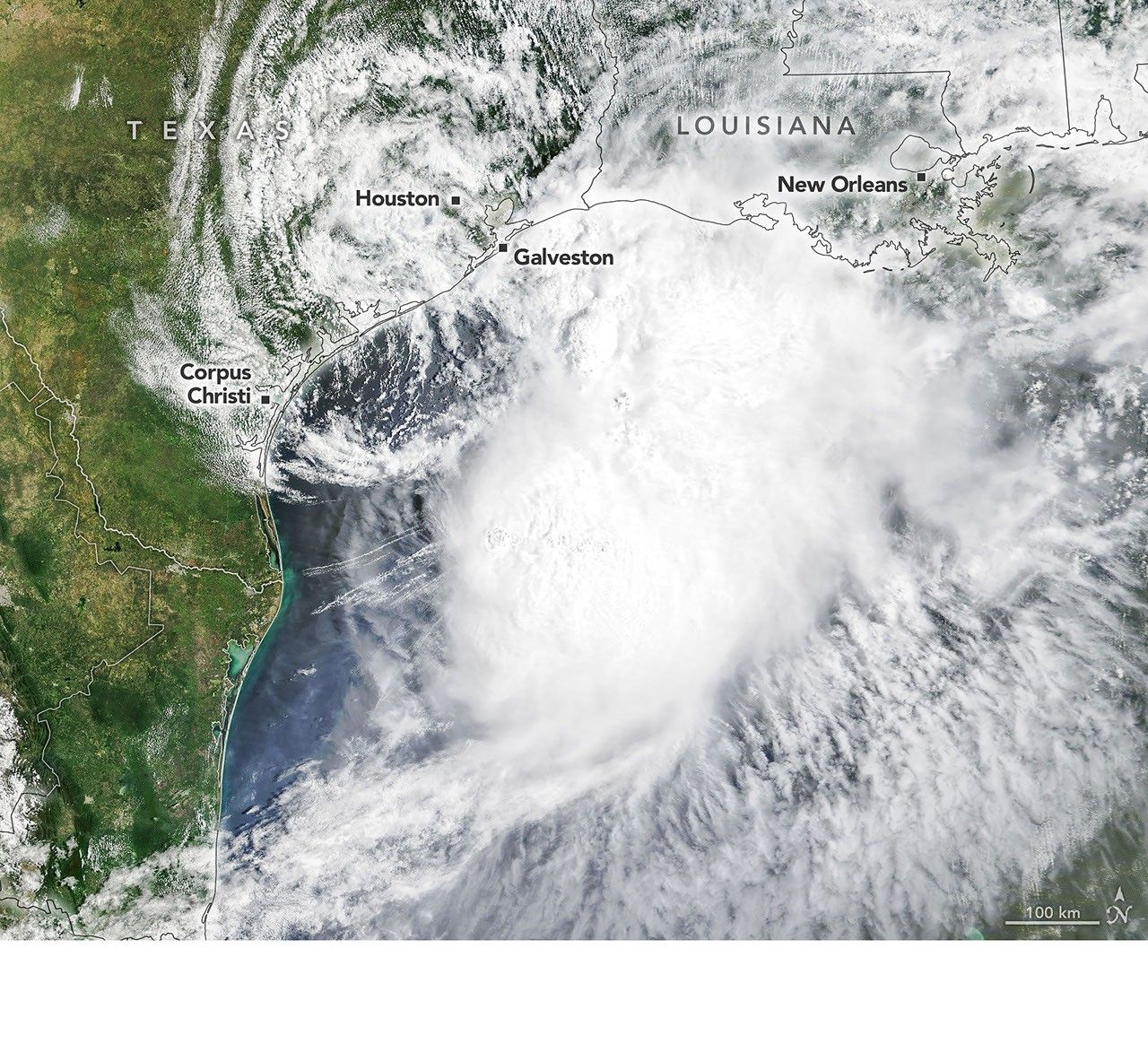
NASA’s Terra satellite captured Tropical Storm Arthur, the first named storm of the 2026 Atlantic season, as it rattled the Gulf Coast with 40‑mile‑per‑hour winds and gusts reaching 48 miles per hour in Galveston, Texas. The storm, though never reaching hurricane strength, dumped heavy rain—up to 20 inches in some areas—raising fears of life‑threatening flash flooding across southeastern Louisiana and neighboring states. NASA’s MODIS imagery, shown in natural color and infrared brightness temperature, highlighted the storm’s white, cool cloud tops and the warm waters below, providing crucial data for meteorologists. Arthur’s powerful winds and relentless rainfall underscored the importance of staying alert as the system weakened and moved inland.
Curiosity Blog, Sols 4920-4926: Surveying the Bands
Original Publication Date: 2026-06-19 00:50
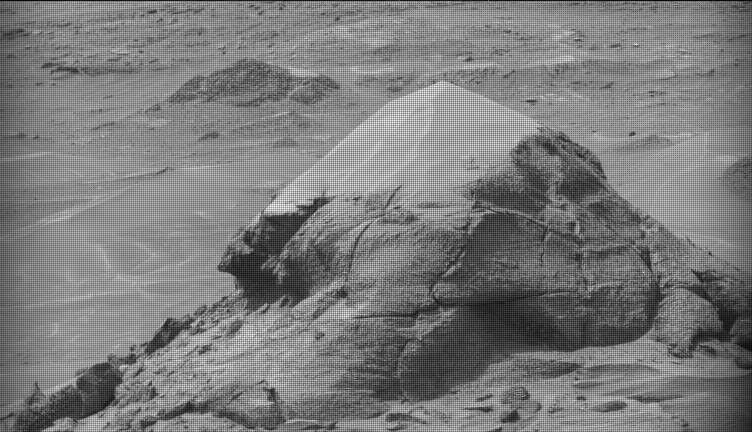
NASA’s Curiosity rover, now on Sol 4,922, captured a striking image of the Miraflores butte on Mount Sharp, showcasing layered dark‑
NASA Awards Contract for Commercial Satellite Data Acquisition
Original Publication Date: 2026-06-18 20:13

NASA has broadened its Commercial Satellite Data Acquisition program by adding eight new companies and securing additional data products from six existing contract holders, boosting the range of high‑resolution, frequent Earth observations available to researchers and decision‑makers.
From Suriname to Space: Rohit Goeptar Shares His Journey to NASA
Original Publication Date: 2026-06-18 19:06

Rohit Goeptar, an electromagnetic and radio‑frequency analyst with NASA’s Launch Services Program at Kennedy Space Center, has just been sworn in as
Canadarm2 repairs planned as CRS-34 departs ISS
Original Publication Date: 2026-06-18 22:34

Expedition 74 crew aboard the ISS have had a busy month of spacewalks and experiments, highlighted by the CRS‑34 cargo Dragon undocking on June 16 and its splashdown off California the next day.
Boeing Completes Quantum Lab Test Ahead of 2027 Flight
Original Publication Date: 2026-06-18 12:59
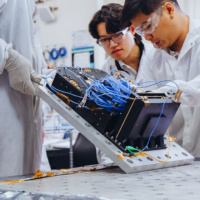
Boeing has confirmed that its quantum networking satellite, Q4S, successfully performed high‑fidelity quantum entanglement swapping during ground tests, a key milestone for the 2027 launch. The satellite will generate four entangled photons—effectively two pairs of “twin” photons—to create a networked quantum link rather than a simple point‑to‑point connection. This breakthrough demonstrates that the delicate quantum hardware can be miniaturized to fit within a spacecraft’s size, weight, and power limits while surviving launch and orbital conditions. With environmental qualification tests already passing, Q4S is poised to validate space‑based quantum swapping and pave the way for global quantum communication applications.
True Anomaly Declares Mission X-3 Success
Original Publication Date: 2026-06-18 12:45

True Anomaly announced that its autonomous spacecraft Jackal has completed all Mission X‑3 test objectives, clearing the final hurdles for full commission. The campaign proved Jackal’s ability to track, maneuver around, and execute propulsion changes on other space objects while countering GPS interference. CEO Even Rogers said the successful test established a strong feedback loop between operations and engineering, positioning the firm for future GEO and cislunar demonstrations. With a $650 million Series D round, True Anomaly now faces key Space Force contracts that will test Jackal in real‑world warfighting scenarios.
Scientists trace high-energy ghost particle to the 'Shadow Blaster' galaxy
Original Publication Date: 2026-06-18 21:00

IceCube’s 2021 detection of the high‑energy neutrino IC 210922A has now been traced to the gravitationally lensed galaxy “Shadow Blaster,” located 11 billion light‑years away. The discovery marks the first time a dusty, star‑forming galaxy has been directly linked to a high‑energy neutrino, pointing to such galaxies as powerful cosmic particle accelerators. Detailed observations with the JCMT, SMA, ALMA and Gemini telescopes revealed the galaxy’s dense, gas‑rich core—an environment theorized to produce neutrinos even in the absence of an active black hole.
James Webb Space Telescope finds a salty surprise on famous 'Pink Planet'
Original Publication Date: 2026-06-18 20:00

Using the James Webb Space Telescope, astronomers have detected salt clouds in the atmosphere of GJ504b, the so‑called “Pink Planet” orbiting a sun‑like star 57 light‑years away. This cold, 2.5–4 billion‑year‑old companion—massive enough to be a brown dwarf—shows a rich mix of water, CO₂, methane, and ammonia, but its spectrum only matches models when salt clouds are included. The discovery marks the first time salt has been identified as a key atmospheric component in an exoplanet or brown dwarf, raising new questions about its formation and composition. The findings were published in The Astronomical Journal on June 18.
Watch SpaceX launch new batch of US spy satellites from California early on June 19
Original Publication Date: 2026-06-18 17:00
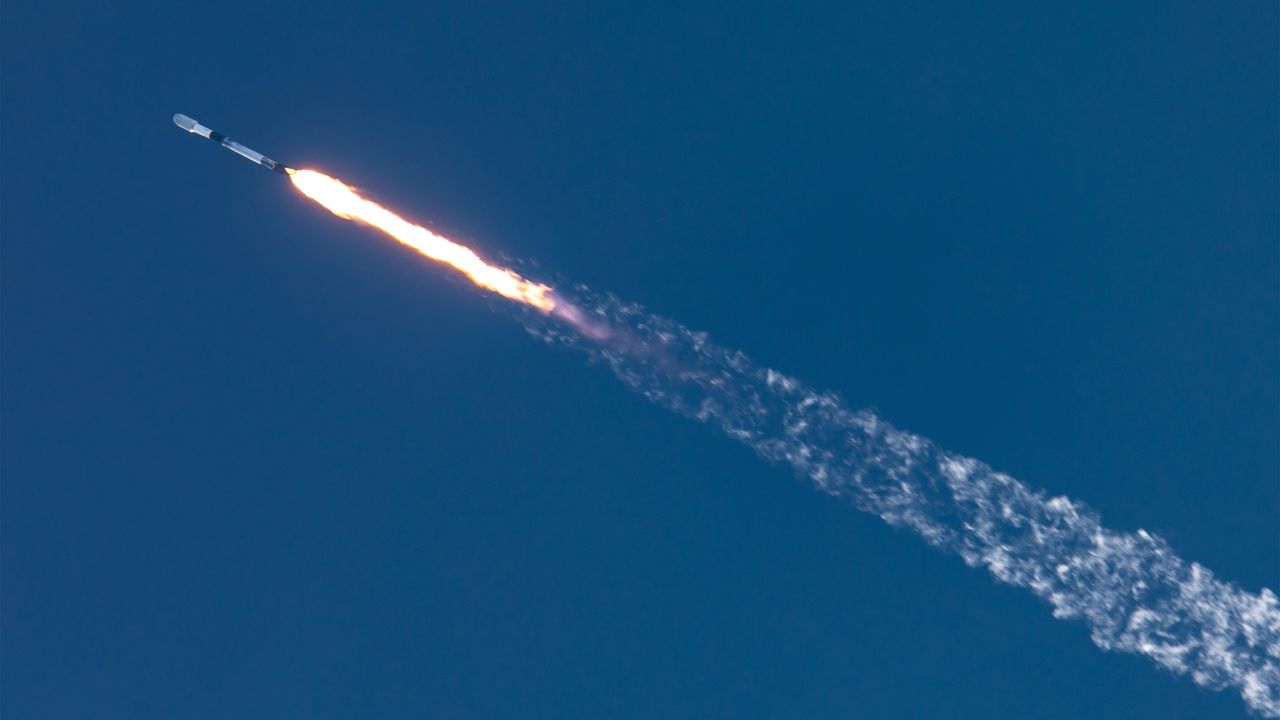
SpaceX is set to lift off early Friday from Vandenberg Space Force Base with a Falcon 9 carrying 45 U.S. Spy satellites for the National Reconnaissance Office’s NROL‑179 mission. The launch window opens at 4:40 a.m. Eastern, and viewers can stream the event live about ten minutes before liftoff. The NRO is expanding its “proliferated architecture” to deliver more signals and images in a heightened threat environment. If all goes as planned, the booster will return to land at Vandenberg’s Landing Zone 4, marking the 71st Falcon 9 flight of 2026.
Sun-like star may have swallowed an exoplanet with help from a mysterious companion: 'You are what you eat, right?'
Original Publication Date: 2026-06-18 16:00

Astronomers have found evidence that the distant star TOI‑5882, 1,300 light‑years away, may have devoured a super‑Earth exoplanet, judging by an unusually high lithium content in its atmosphere. The star’s brown dwarf companion, about 20 times Jupiter’s mass, could have nudged the planet into a fatal collision with the star. This engulfment event is rare, occurring over days or weeks, and offers a glimpse into the violent dynamics that shape planetary systems. The discovery underscores how precise stellar chemistry can reveal the hidden fates of distant worlds.
These Mars valleys are hiding 30 dust devils | Space photo of the day for June 18, 2026
Original Publication Date: 2026-06-18 14:00
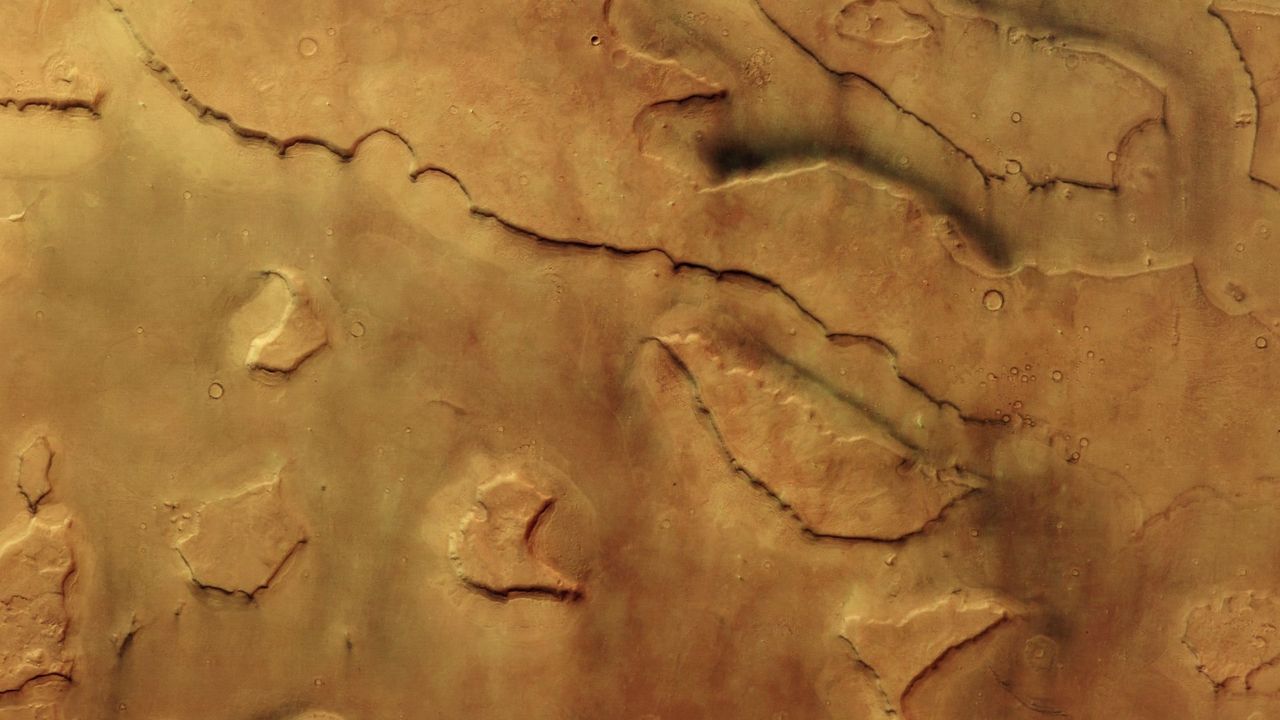
ESA’s Mars Express has sent back a stunning image of the Mamers Valles, revealing 30 tiny dust devils swirling in the valley’s crevices. These Martian vortices can reach almost 5 miles in height and spin at speeds of 148 ft/s, offering scientists a way to map the planet’s invisible winds and plan future missions. The vast valley system links Mars’ ancient southern highlands to its northern lowlands and surrounds ancient glacier deposits that may still hold water ice beneath the debris. Understanding these features could unlock clues about Mars’ past climate and guide explorers to promising targets for the next wave of robotic and human visits.
A bold satellite rescue mission came together in record time, but will it work?
Original Publication Date: 2026-06-19 00:39
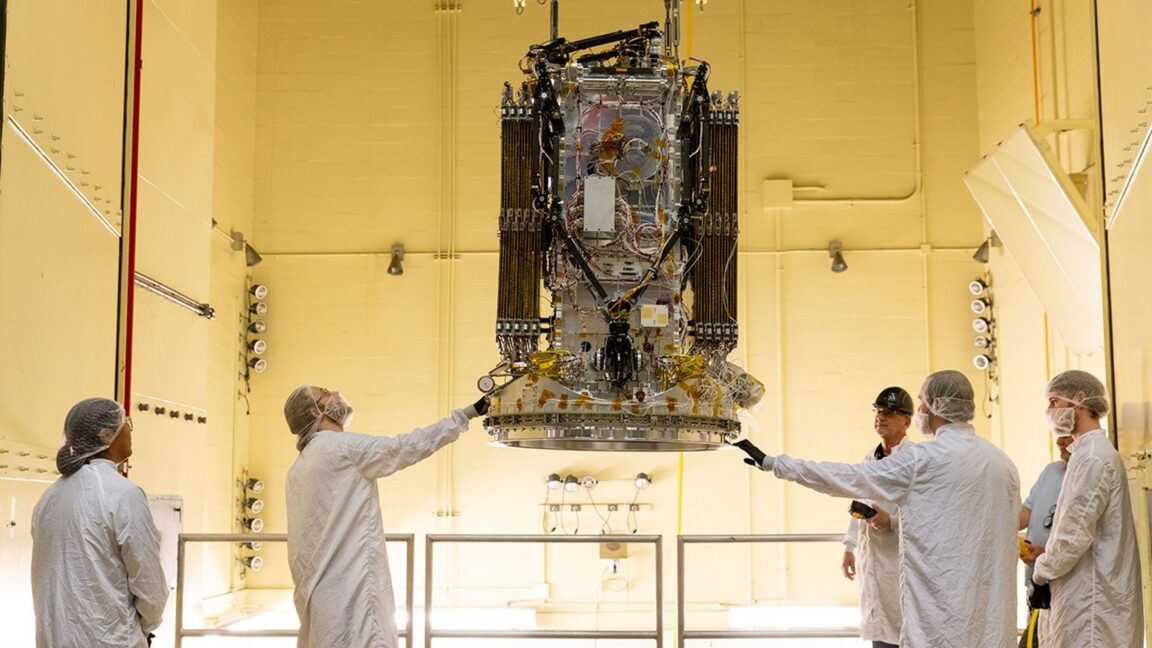
NASA challenged three companies to rescue a $500 million astronomy mission in under a year, and Katalyst Space Technologies, a 2020 startup, delivered the most compelling plan. In September, the agency awarded Katalyst a $30 million contract to build, test, and launch a small satellite that will chase the Swift telescope and latch onto it with three robotic arms. The satellite will then boost Swift’s orbit back to a safe altitude, allowing the observatory to resume scientific observations. This rescue effort preserves Swift’s valuable scientific legacy.