 Spotify
 Apple Podcasts
 Podcast Addict
 Overcast
 Podcast RSS
The Exploration Company completes drop test of Nyx capsule
Original Publication Date: 2026-06-05 08:30
The Exploration Company completed a drop test of its Nyx cargo capsule in California’s Mojave Desert, releasing a 2,800‑meter helicopter‑carried model that deployed drogue and main parachutes before landing on the desert floor. Initial analysis confirmed that extraction and handover timings met expectations, validating the parachute system ahead of a 2028 orbital flight that will include a docking with the International Space Station. The test follows earlier water‑impact trials and comes after a 2027 Mission Possible reentry where the capsule survived but was lost at splashdown.
Axiom Space adds more than $175 million to funding round
Original Publication Date: 2026-06-05 07:03
Axiom Space closed its latest funding round at more than $525 million after adding $175 million on June 4, building on a $350 million round led by Type One Ventures and the Qatar Investment Authority. The new capital, which includes investment from Japan’s MUFG Bank, will fund its commercial space station plans and lunar spacesuit work for NASA’s Artemis program. Axiom welcomed NASA’s decision to abandon a government‑owned core module concept, reaffirming the agency’s support for private space station developers. This influx of capital highlights growing investor confidence in Axiom’s role in shaping the next era of the space economy.
HASC NDAA markup challenges Space Force on satellite programs
Original Publication Date: 2026-06-04 22:32
The House Armed Services Committee is fighting to keep a missile‑warning satellite program that the Pentagon wants to cancel as part of its National Defense Authorization Act markup. Committee members also criticized the recent procurement of tactical communications satellites and raised concerns about GPS oversight. Their actions highlight growing tensions between lawmakers and the Space Force over the future of U.S. Space‑based assets. These moves could reshape the defense budget and satellite strategy in the coming years.
AstroForge completes DeepSpace-2 spacecraft
Original Publication Date: 2026-06-04 16:03
Asteroid mining startup AstroForge has finished building its DeepSpace‑2 spacecraft, which will launch later this year as a rideshare payload on a Falcon 9 carrying Intuitive Machines’ lunar lander. The new craft, designed after last year’s Odin failure, boasts redundant solar arrays and extensive preflight testing to ensure it can reach a near‑Earth asteroid within two to nine months and capture high‑resolution images. AstroForge plans to use this modular platform, capable of carrying up to 50 kilograms, to demonstrate low‑cost interplanetary travel and pave the way for future asteroid‑mining missions. The company’s $5 million craft and <$10.5 million mission budget underscore its ambition to revolutionize space exploration and resource extraction.
KSAT and iQPS Expand Strategic Alliance to Accelerate High-Frequency SAR Constellation
Original Publication Date: 2026-06-04 21:37
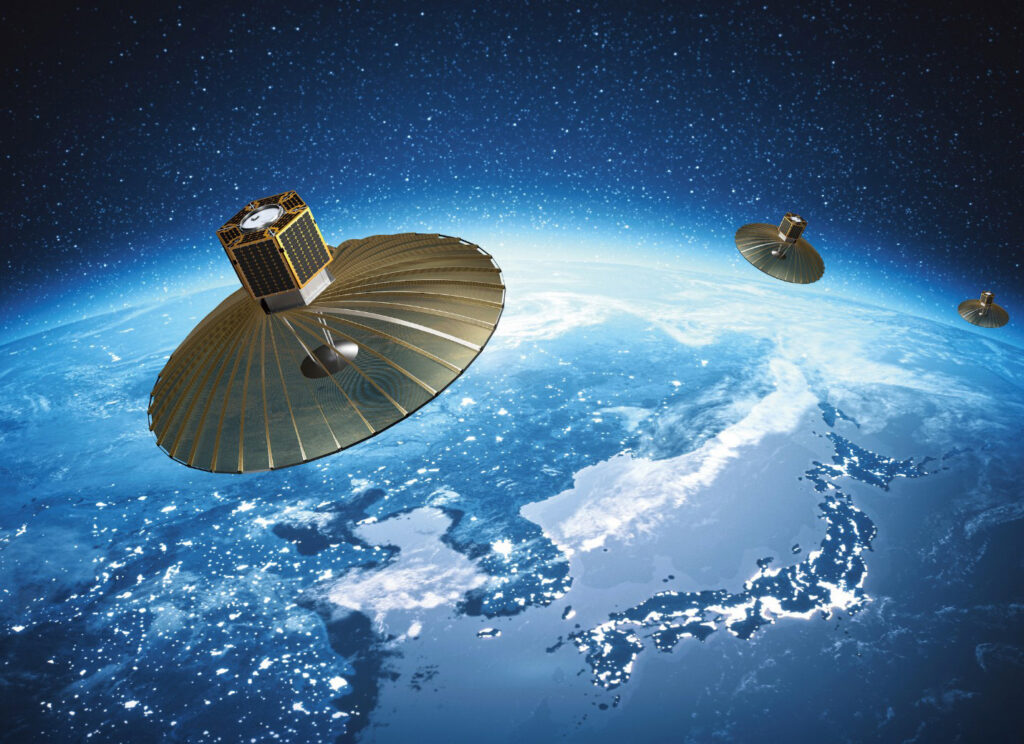
Kongsberg Satellite Services and Japan’s Institute for Q‑shu Pioneers of Space have announced a major expansion of their partnership, combining Kongsberg’s global mission‑operations expertise with the institute’s cutting‑edge aerospace technology. The collaboration will broaden service offerings for satellite operators, streamline launch support, and accelerate the deployment of next‑generation space assets. Together, the two firms aim to enhance operational efficiency and reduce costs for clients worldwide.
Kaman Precision Products Deploys Advanced Magnetic Sensors for Next-Generation Launch Propulsion
Original Publication Date: 2026-06-04 21:19

Kaman Precision Products’ Measuring Division has unveiled its Advanced Magnetic Sensing family, a new line of high‑precision,
Space Stocks in Focus: Zacks Investment Ideas Highlights Gilat, Satellogic, and EchoStar
Original Publication Date: 2026-06-04 15:48

Zacks Investment Ideas has released a detailed market analysis that spotlights the financial trajectories of three major players in the space economy, including Gilat Satellite Networks and Satellogic. The report examines each company's revenue growth, profitability trends, and valuation metrics, noting how Gilat’s satellite services are expanding in defense and telecom sectors while Satellogic’s high‑resolution imaging platform is poised for commercial growth. Analysts highlight the rapid expansion of the space market and the strategic advantages each firm holds, suggesting that investors should weigh both the growth prospects and potential risks associated with this emerging sector.
Fighting Fire With Fire
Original Publication Date: 2026-06-05 04:01

NASA’s Aqua satellite captured a plume of smoke from prescribed fires in Australia’s Northern Territory on May 28 2026, illustrating how land managers light controlled burns in the morning to reduce fuel loads. These early‑season burns target fire‑adapted grasses and underbrush in the region’s tropical savanna, creating firebreaks that lower the risk of later, high‑intensity fires. Satellite data show the practice has shifted fire activity to the start of the dry season, cutting emissions and helping meet conservation goals. This strategy blends Indigenous land‑management traditions with modern technology to protect both ecosystems and communities.
NASA Hosts 2026 Review on Advanced Composite Manufacturing
Original Publication Date: 2026-06-04 20:36
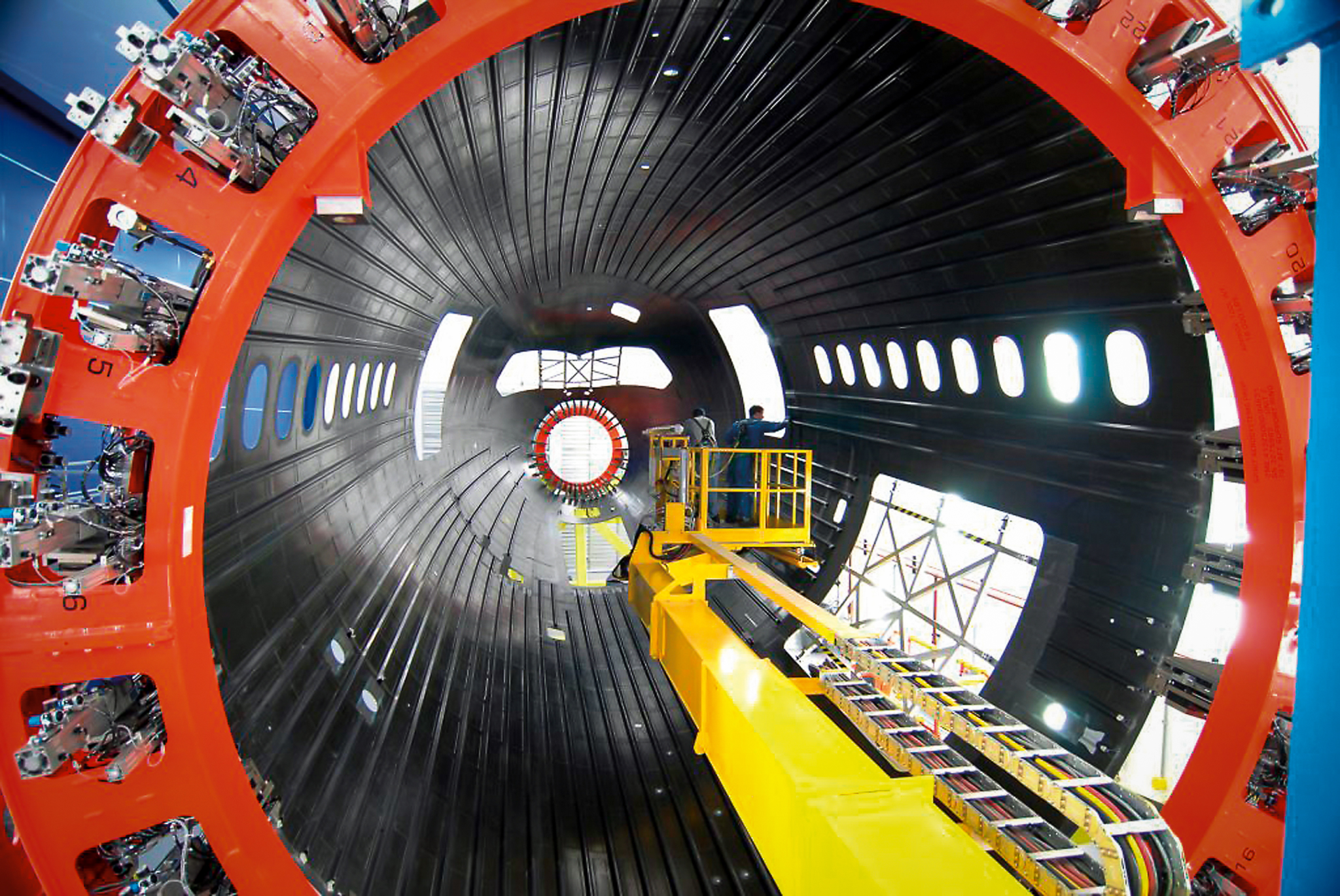
NASA and Boeing’s HiCAM consortium convened a spring review in May 2026 at Langley, drawing about 150 experts to assess progress and chart next steps for advanced composite aircraft manufacturing. The meeting highlighted new technologies selected to boost production speed and featured full‑day workshops where teams assembled large composite wing and fuselage sections. Collaboration across the 22‑member public‑private partnership has deepened, positioning the program to demonstrate full‑scale composite fuselage barrels and wing boxes in 2028 and 2029. These milestones could pave the way for faster, lower‑cost production of lightweight aircraft structures.
Colorful, Chaotic Jupiter
Original Publication Date: 2026-06-04 15:58
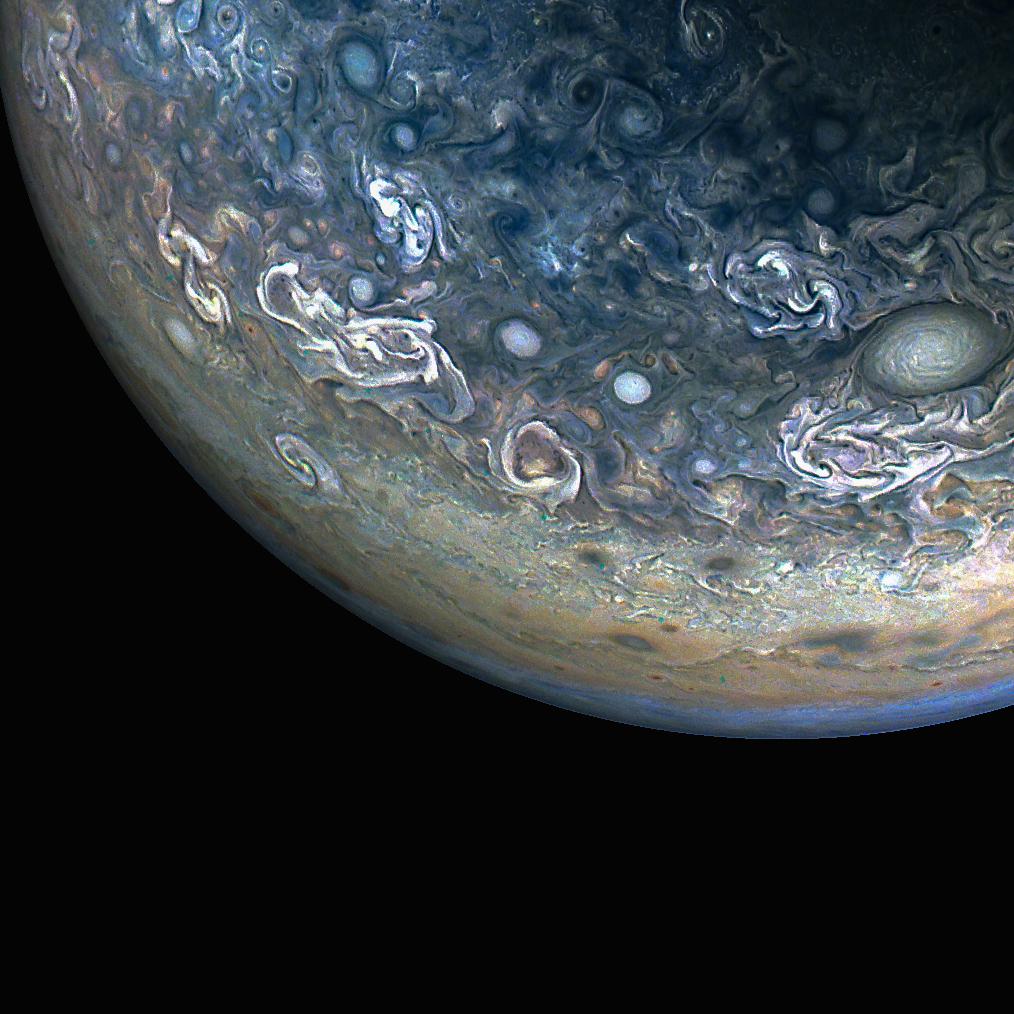
NASA’s Juno spacecraft captured a color‑enhanced image of Jupiter’s northern hemisphere during its 61st close flyby on May 12, 2024. Citizen scientist Gary Eason processed the raw JunoCam data to reveal chaotic clouds and cyclonic storms in a folded filamentary region where Jupiter’s zonal jets break down. The image showcases turbulent patterns that evolve rapidly over a few days, offering scientists new insights into the planet’s atmospheric dynamics. This project highlights how citizen science can contribute to NASA’s exploration of the giant planet.
Apex Raises $200M At $2.3B Valuation
Original Publication Date: 2026-06-05 09:15
Apex Space closed a $200 million funding round at a $2.3 billion valuation, led by Glade Brook Capital Partners with Washington Harbour Partners and other investors. The new capital will add 30,000 square feet to its California factory, increase in‑house subsystem production, and build satellites for an upcoming customer order as the company pushes toward full vertical integration. Apex also named former Axon VP of finance Michael Kopet as CFO to support this expansion. Meanwhile, the company plans to launch its Project Shadow space‑based interceptor demo this summer on its Nova bus, and is partnering with Northrop Grumman on SBI satellites for the Golden Dome program.
US Commercial Space Stations Expand to Europe
Original Publication Date: 2026-06-05 06:14
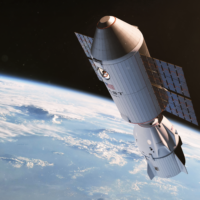
Vast and Axiom Space are opening offices in France and Switzerland to tap European markets as the ISS winds down. Vast’s Paris hub will bring French astronauts Thomas Pesquet and Arnaud Prost aboard its Haven‑1 station, while Axiom’s Swiss base offers the flexibility of non‑EU status and ESA membership. Both companies are vying for NASA’s Commercial LEO Development funds and have already raised additional private capital—Axiom just secured $175 million. These moves underscore a growing partnership between public agencies and private space stations, with European investment key to long‑term viability.
Glittering star cluster image reveals missing patch of stars: 'We were not looking for the gap, but we found it'
Original Publication Date: 2026-06-04 21:00
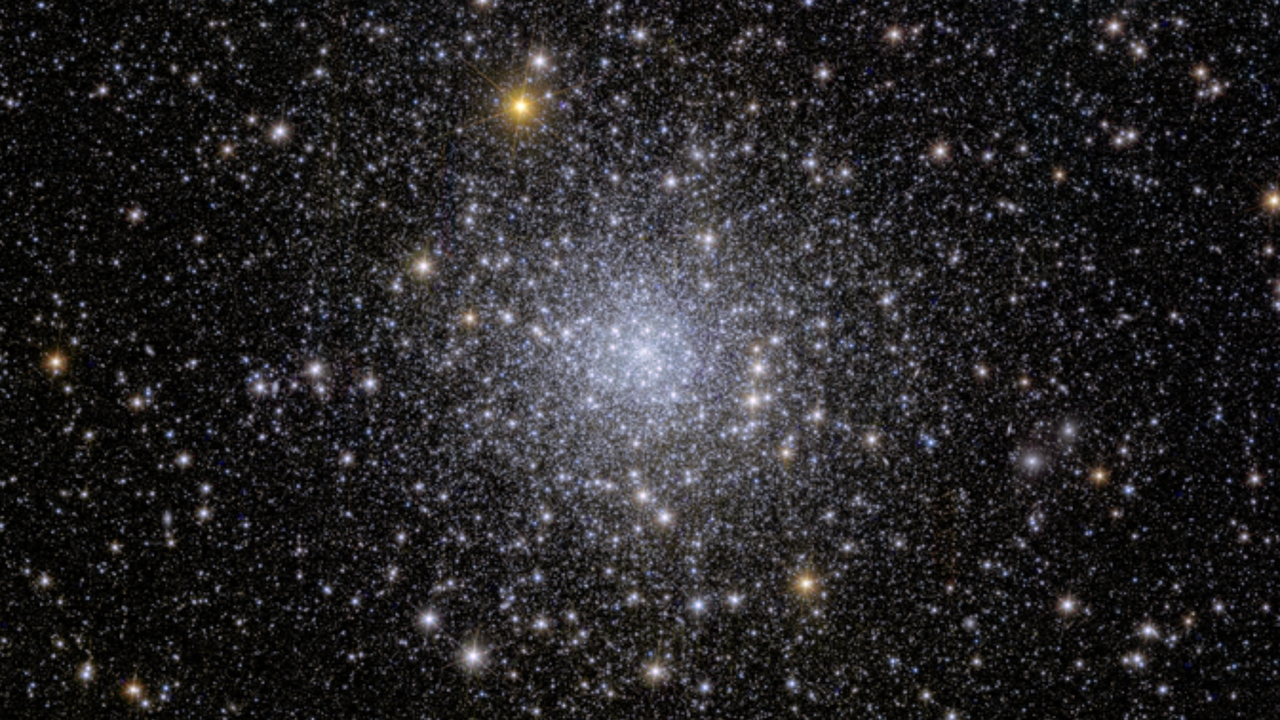
ESA’s Euclid space telescope has uncovered a surprising gap in the brightness distribution of red dwarf stars within the ancient globular cluster NGC 6397, located about 8,000 light‑years away in the constellation Ara. The missing band, visible on a Hertzsprung–Russell diagram, appears when stars transition from partially to fully convective interiors, leaving few stars at those luminosities. This serendipitous discovery— the first of its kind in a globular cluster—offers a new laboratory for testing stellar evolution models and refining distance estimates to one of the Milky Way’s oldest star systems. The findings were published in Astronomy & Astrophysics on May 12.
SpaceX launches back-to-back Starlink missions from both coasts 19 hours apart (photos)
Original Publication Date: 2026-06-04 18:06
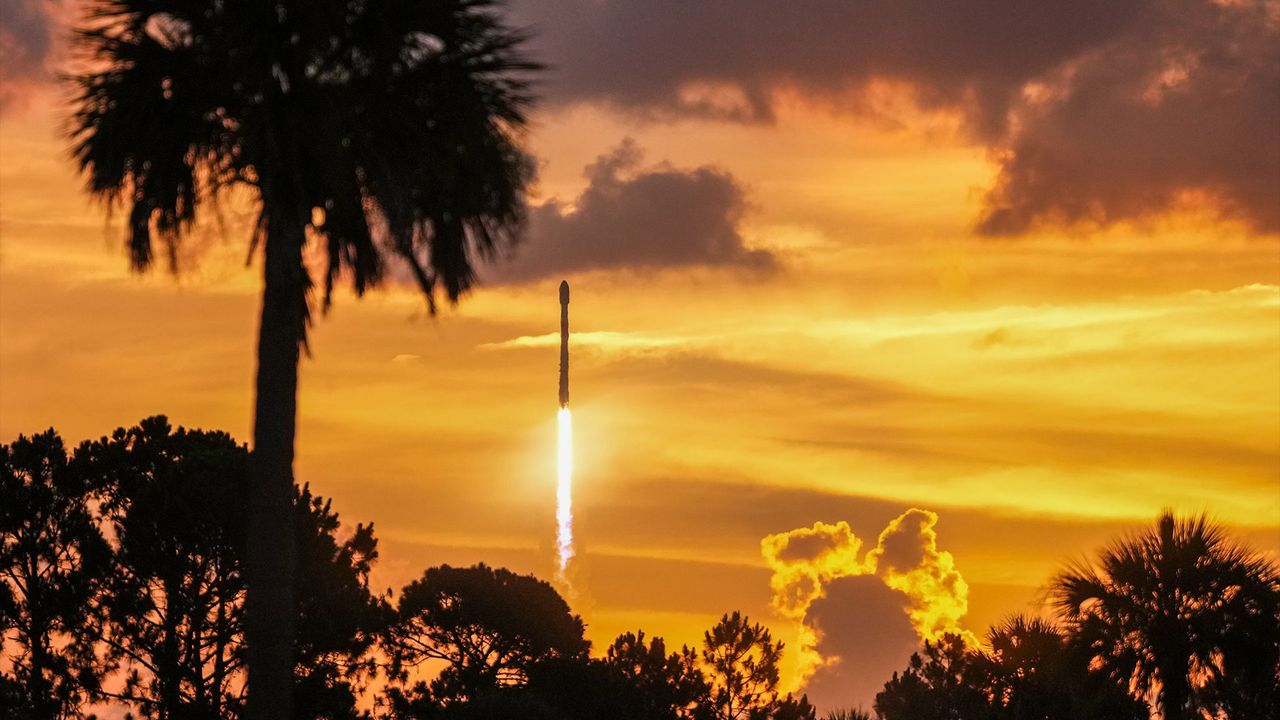
SpaceX completed two Falcon 9 launches less than 19 hours apart, one from Vandenberg in California and another from Cape Canaveral in Florida, deploying 53 new Starlink satellites into low‑Earth orbit. The first flight, carrying 24 satellites, lifted off at 11:40 a.m. EDT on June 3, while the second, with 29 satellites, launched at 6:26 a.m. EDT on June 4.
Most exoplanets might be 'soot factories,' scientists say: 'Like you have a natural diesel engine'
Original Publication Date: 2026-06-04 16:00

Scientists have discovered that the hazy atmospheres of many mini‑Neptune exoplanets may be filled with soot‑like particles, similar to the black smoke from diesel engines. Chemical engineer Jeehyun Yang noticed that the James Webb Space Telescope’s spectra of these planets matched the signature of polycyclic aromatic hydrocarbons, indicating high‑temperature combustion reactions deep in their atmospheres. These soot clouds could explain why the planets appear featureless and opaque, and measuring their carbon‑to‑oxygen ratio might reveal how far from their stars the planets originally formed. Yang’s cross‑disciplinary work demonstrates how insights from chemical engineering can unlock the mysteries of distant worlds.
After 11 years at Mars, NASA's MAVEN spacecraft went out with a whisper
Original Publication Date: 2026-06-04 16:21
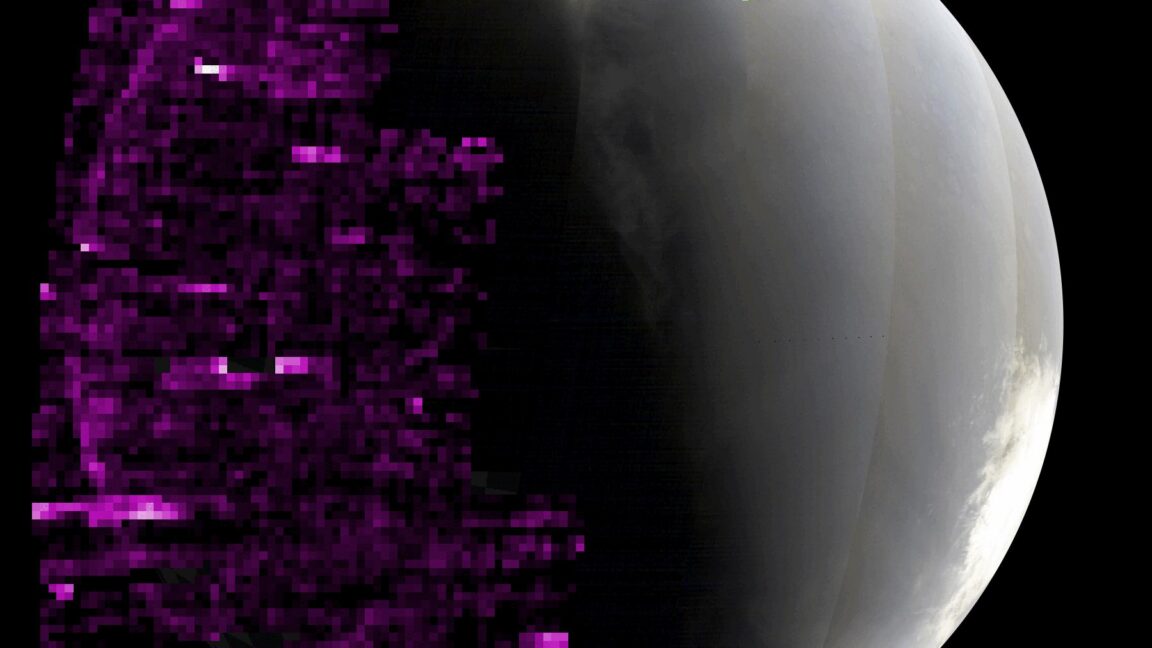
NASA’s MAVEN spacecraft vanished behind Mars on December 6 during a routine occultation, losing contact with Earth after an expected one‑hour pass. Engineers scoured the 200‑million‑mile distance for a signal, but the mission was eventually declared lost. NASA officials have now halted search efforts and begun decommissioning the spacecraft. This marks a significant setback for Mars atmospheric research.